
Famous landmarks in Austria
3 landmarks
Austria on My Earth Toy, the free 3D toy globe for kids: 3 landmarks. Here you can see its flag, capital and size, then fly to every place on the globe.
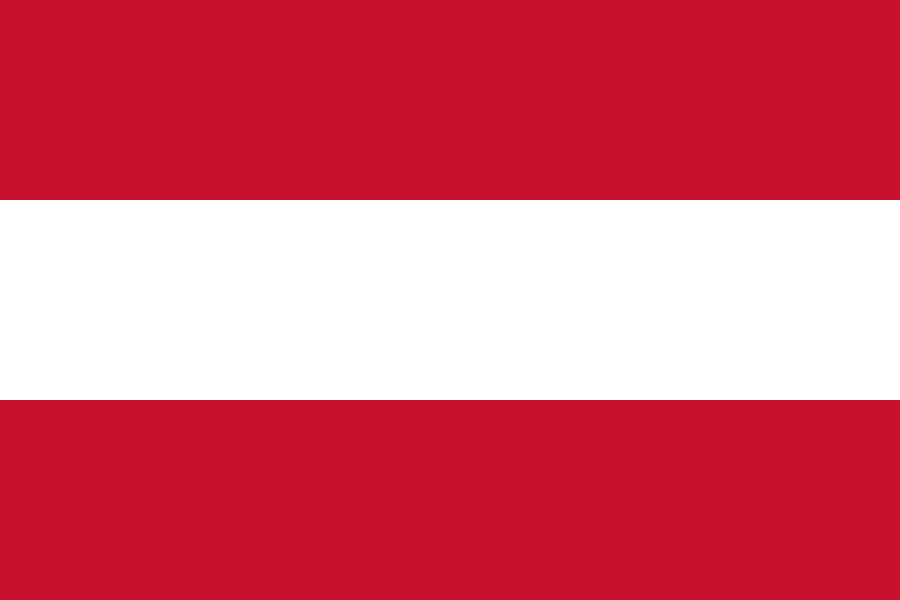
The flag of Austria has three equal horizontal stripes: red, white and red.
Read about this flag →Austria at a glance
- Capital
- Vienna
- Continent
- Europe
- Area
- 83,879 km²
- Population
- 9.1 million
Austria is a landlocked country in Central Europe, best known for the Alps, classical music and grand palaces. Its capital is Vienna, a city on the Danube River, and about 9 million people live in the country. For centuries Austria was the heart of the Habsburg Empire, one of the most powerful families in European history, and the composer Wolfgang Amadeus Mozart was born here.
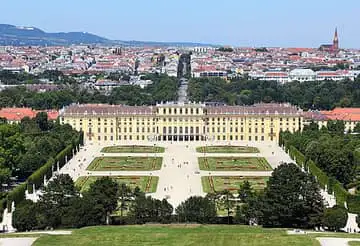
On My Earth Toy you can visit Schönbrunn Palace, the Habsburgs' summer palace with its huge gardens; Hallstatt, a pastel lakeside village beneath steep mountains; and St. Stephen's Cathedral in Vienna, with its zigzag tiled roof and tall Gothic tower.
Geography and nature
The Alps cover most of western and southern Austria, with glaciers, high meadows and ski slopes. The highest peak is the Grossglockner, about 3,798 metres tall. The Danube River flows across the north through Vienna. In the east the land flattens into farmland, vineyards and Lake Neusiedl, a shallow steppe lake shared with Hungary. Forests cover a large part of the country, and alpine animals such as chamois, ibex and marmots live in the mountains.
People, languages and culture
Austrians speak German, with their own regional words and accents. Music is a huge part of Austrian culture: Mozart, Haydn, Schubert and Johann Strauss all lived and worked here, and the Vienna Boys' Choir and the Vienna Philharmonic are world famous. Vienna's coffee houses are listed by UNESCO as cultural heritage. Popular foods include Wiener schnitzel, apple strudel and Sachertorte, a rich chocolate cake. Skiing is a favourite winter sport.
History in a nutshell
The Habsburg family ruled from Vienna for more than six centuries, and their empire once stretched across much of Central Europe. After World War I the empire broke up, and Austria became a small republic in 1918. It was taken over by Nazi Germany in 1938. After World War II, Austria regained full independence in 1955 and declared itself permanently neutral. It joined the European Union in 1995.
Fun facts
- Tiergarten Schönbrunn, the zoo in the palace grounds, opened in 1752 and is the oldest zoo still running.
- People have mined salt near Hallstatt for thousands of years, and the salt mine there is still open to visitors.
- The Krimml Waterfalls drop about 380 metres, making them the highest in Austria.
- Austria's flag of red, white and red is one of the oldest national flags in the world.
Famous landmarks in Austria
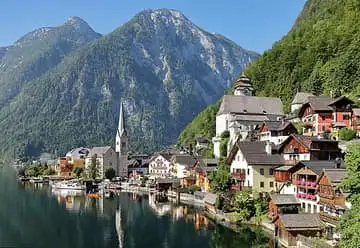
Hallstatt
Austria · Europe
A lakeside Alpine village of pastel houses beneath steep mountains, a UNESCO site with a salt mine worked for 7,000 years.
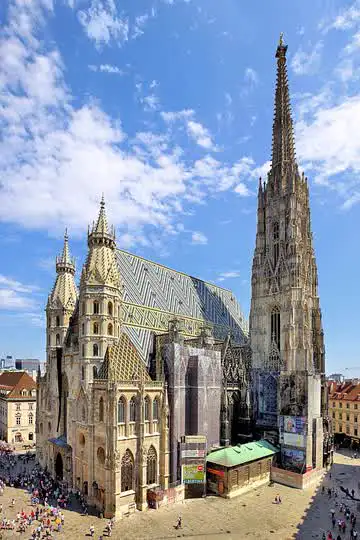
St. Stephen's Cathedral
Austria · Europe
Vienna’s Gothic landmark, known for its zigzag glazed-tile roof and 136 m south tower.
Questions
What is the capital of Austria?
The capital of Austria is Vienna.
Which continent is Austria in?
Austria is in Europe.
How big is Austria?
Austria covers about 83,879 km².
How many people live in Austria?
About 9.1 million people live in Austria.
What are the most famous landmarks in Austria?
Some of the best-known landmarks in Austria are Schönbrunn Palace, Hallstatt and St. Stephen's Cathedral. My Earth Toy has 3 landmarks from Austria on its free 3D globe, each with a photo and quick facts.
Sources
Updated: 2026-10-30