
Malawi: landmarks, animals & facts for kids
1 landmark
Malawi on My Earth Toy, the free 3D toy globe for kids: 1 landmark. Here you can see its flag, capital and size, then fly to every place on the globe.
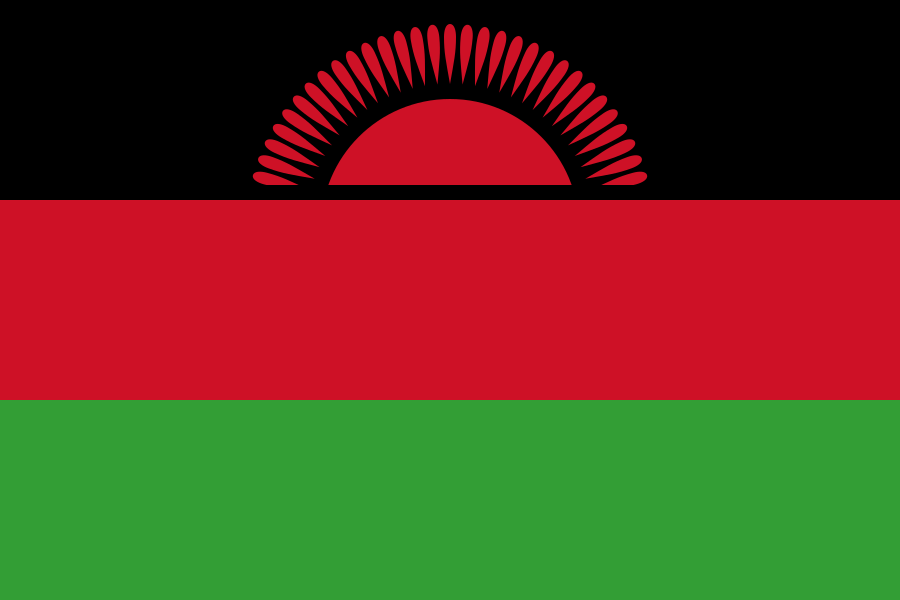
Malawi's flag has three sideways stripes, black, red and green, with a red rising sun on the top black stripe.
Read about this flag →Malawi at a glance
- Capital
- Lilongwe
- Continent
- Africa
- Area
- 118,484 km²
- Population
- 21.7 million
Malawi is a landlocked country in southeastern Africa, bordered by Tanzania, Mozambique and Zambia. Its capital is Lilongwe. A long, narrow country, Malawi is dominated by Lake Malawi, a huge lake in the Great Rift Valley that stretches along most of its eastern side, so lakes and water cover about a fifth of the country. Malawi is nicknamed the Warm Heart of Africa because of the friendliness of its people.
On My Earth Toy you can visit St Peter's Cathedral on Likoma Island, a large stone Anglican cathedral built in the early 20th century on a small island in Lake Malawi, close to the Mozambique shore.
Geography and nature
Lake Malawi is about 580 kilometres long and contains more species of fish than any other lake on Earth, many of them brightly coloured cichlids found nowhere else. Its southern end is protected as Lake Malawi National Park, a UNESCO World Heritage Site. Away from the lake, the land rises to highland plateaus such as Nyika, and in the south the Mulanje Massif reaches 3,002 metres at Sapitwa Peak. Parks such as Liwonde shelter elephants, hippos and crocodiles.
People, languages and culture
English is the official language, and Chichewa is spoken by most Malawians; other languages include Tumbuka, Yao and Lomwe. Most people are Christian, and there is a large Muslim community, especially in the south and along the lake. Gule Wamkulu, a masked dance of the Chewa people, is recognised by UNESCO. The main food is nsima, a thick maize porridge, often eaten with vegetables, beans or chambo, a tasty fish from the lake.
History in a nutshell
Bantu-speaking peoples settled the region long ago, and from about the 15th century the Maravi kingdom ruled around the southern lake; the name Malawi is linked to it. The Scottish explorer David Livingstone reached the lake in 1859, and missionaries followed. Britain made the area a protectorate in 1891, later called Nyasaland. Malawi became independent on 6 July 1964, with Hastings Banda as its first leader, and adopted multiparty democracy in 1994.
Fun facts
- Lake Malawi has more kinds of fish than any other lake in the world.
- Likoma Island lies inside Mozambique's waters of the lake but belongs to Malawi.
- Lake Malawi National Park was the world's first national park created to protect freshwater life.
- Many of the colourful cichlids sold for home aquariums originally come from Lake Malawi.
Famous landmarks in Malawi
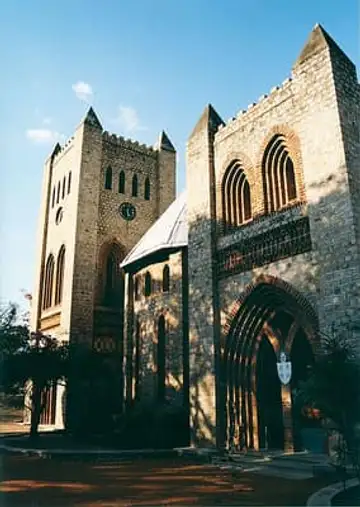
St Peter's Cathedral, Likoma
Malawi · Africa
A huge Anglican cathedral on tiny Likoma Island in Lake Malawi, about the size of Winchester Cathedral and one of the largest churches in Africa.
Questions
What is the capital of Malawi?
The capital of Malawi is Lilongwe.
Which continent is Malawi in?
Malawi is in Africa.
How big is Malawi?
Malawi covers about 118,484 km².
How many people live in Malawi?
About 21.7 million people live in Malawi.
What are the most famous landmarks in Malawi?
On My Earth Toy's free 3D globe, the landmark from Malawi is St Peter's Cathedral, Likoma, with a photo and quick facts.
Sources
Updated: 2026-10-30