
Athabasca oil sands
애서배스카 오일샌드
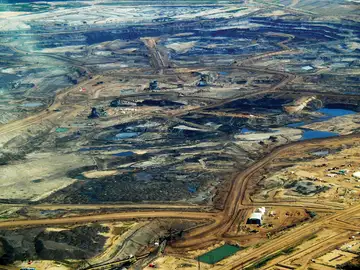
One of the world's largest oil deposits, in north-eastern Alberta, where the oil is bitumen mixed with sand. Sands near the surface are dug from huge open-pit mines by giant trucks and upgraded into synthetic crude.
See it on the 3D globe →At a glance
- Country
- Canada
- Type
- Infrastructure
Quick answers
Where is Athabasca oil sands?
Athabasca oil sands is in Canada.
The Athabasca oil sands, also called tar sands, are huge deposits in northeastern Alberta, Canada, where sand is mixed with bitumen. Bitumen is a heavy, thick, sticky kind of petroleum that does not flow like ordinary oil. These reserves are among the largest unconventional oil sources on Earth.
Together with nearby Peace River and Cold Lake, oil sands lie under about 141,000 square kilometres of boreal forest and muskeg, which is a kind of peat bog. The area is named after the Athabasca River, which cuts through the middle of the deposit. The oil makes Canada a major energy producer, but digging it up raises hard questions about the environment.
How people used it
Long before industry, the Cree and Dene peoples noticed traces of heavy oil along the river banks. They used the bitumen to waterproof their canoes.
The deposits lie inside the area of Treaty 8, an agreement between First Nations and the Crown, and several First Nations communities still live in the region. Their land, rivers and forests are right next to the places where the oil sands are mined, so their voices matter in decisions here.
Getting oil out of sand
Because bitumen is so thick, it has to be dug up or heated underground so it can flow. Companies then process it into usable oil.
Production keeps growing: forecasts for 2024 put Canada's western oil output near a record of about 5.3 million barrels a day, led by Alberta's oil sands. Debates continue about jobs and energy security on one side and emissions and land use on the other.
Fun facts
- Here the oil is mixed into sand as a thick, tar-like bitumen that is dug up or heated out of the ground.
- The oil here is a tar-like bitumen mixed with sand.
- Indigenous peoples used the oil to waterproof canoes long before mining began.
- The deposits lie under boreal forest and peat bogs.
On the globe
The model shows the oil-sands mining area amid northern forest in Alberta, Canada.
Nearby on the globe

Sources
Updated: 2026-10-14