
Royal Botanic Gardens, Kew
큐 왕립 식물원 (큐 가든)
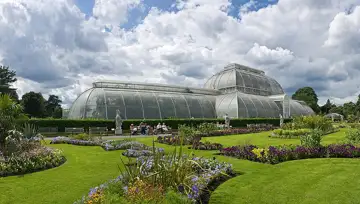
Royal botanic garden in southwest London, founded in 1759, holding one of the largest living plant collections in the world (UNESCO World Heritage Site). Its emblem is the Palm House, an iron-and-glass Victorian glasshouse of the 1840s.
See it on the 3D globe →At a glance
- Country
- United Kingdom
- Type
- Park
Quick answers
Where is Royal Botanic Gardens, Kew?
Royal Botanic Gardens, Kew is in United Kingdom.
Royal Botanic Gardens, Kew, usually called Kew Gardens, is a famous botanic garden and plant-science centre in Richmond upon Thames, south-west London. Its 132-hectare site has 40 historically important buildings, and UNESCO made it a World Heritage Site in 2003.
Kew and its country garden Wakehurst in Sussex hold more than 27,000 kinds of living plants, 8.3 million plant and fungus specimens in the herbarium, and the Millennium Seed Bank. The seed bank stores more than 2.4 billion seeds from nearly 40,000 species. Its collections help scientists learn how to protect plants for the future, and the garden is also a lovely place for a day out.
A garden that studies plants
Kew is more than a beautiful park. It is a research and education institution, employing about 1,100 staff. Scientists and teachers study how plants live, how to protect them and how people use them. Its glass Palm House, built in the 1840s, is one of the garden's best-known buildings, where tropical plants grow in a warm, humid climate. It is also open to the public for walks and learning.
Seeds for the future
At Wakehurst Place, Kew runs the Millennium Seed Bank, one of the world's most important collections of seeds. Its scientists work with partners in more than 95 countries to save plant species. Kew also helped to found Bedgebury National Pinetum, which grows conifers. In 2025 Kew welcomed about 2.25 million visitors. The idea is simple: if a plant is ever lost in the wild, its seeds can help bring it back. Kew's work shows how gardens can protect nature.
Fun facts
- Kew holds one of the largest collections of living plants in the world, and its glass Palm House dates from the 1840s.
- The herbarium holds about 8.3 million plant and fungus specimens.
- The Millennium Seed Bank holds more than 2.4 billion seeds.
- The Kew site has 40 historically important buildings.
On the globe
The toy globe marks Kew Gardens in south-west London. Zoom in on the Thames to find the glass houses.
Nearby on the globe

Sources
Updated: 2026-10-14