
Forbidden City
자금성
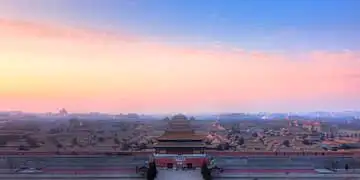
The Forbidden City is a giant palace complex in the middle of Beijing, China. It was built between 1406 and 1420 and was home to 24 emperors of the Ming and Qing dynasties. For more than 500 years, until 1924, it was the political centre of China. The name Zijincheng means Purple Forbidden City, and the purple refers to the North Star, home of the heavenly emperor.
See it on the 3D globe →At a glance
- Country
- China
- Location
- Beijing, China
- Built
- 1420
- Type
- Palace
Quick answers
Where is Forbidden City?
Forbidden City is in Beijing, China.
When was Forbidden City built?
Forbidden City was built in 1420.
The imperial palace of the Ming and Qing emperors for nearly 500 years, the largest wooden palace complex in the world.
It covers about 72 hectares and is the largest group of preserved ancient wooden buildings in the world. Famous stories say it has 9,999 rooms, though experts now count about 8,886. Today it is the Palace Museum, and UNESCO named it a World Heritage Site in 1987. Since 2012 it has welcomed an average of about 14 million visitors a year.
Why 'Forbidden'?
Ordinary people were not allowed to enter. Only the emperor, his family and their servants could live there, and visitors came on official business. The huge size and the careful rules about who could go where were meant to show the emperor's power.
A palace becomes a museum
After the last emperor left in 1924, the palace was opened up, and since 1925 it has been looked after by the Palace Museum. Its collection grew from art and objects owned by the Ming and Qing emperors. Today around 14 million people visit each year, and it was even a film location for The Last Emperor in 1987.
How it was built
Building began in 1406, after the Yongle Emperor moved the capital from Nanjing to Beijing, and took 14 years and more than a million workers. The builders used whole logs of precious nanmu wood from the jungles of south-west China and big marble blocks from quarries near Beijing. The floors of the main halls were laid with special baked paving stones called golden bricks from Suzhou. The complex is a rectangle 961 metres from north to south and 753 metres from east to west, with 980 surviving buildings. A moat and walls surround it, and Premier Zhou Enlai sent soldiers to protect it from damage during the Cultural Revolution.
Fun facts
- It has about 980 surviving buildings.
- Legend says it has 9,999 rooms, but modern counts find about 8,886.
- Visitors reached more than 19 million in 2019.
- The palace was the first major location in China where a Western film crew was allowed to shoot, for The Last Emperor.
- The Chinese name has purple in it because purple stands for the North Star, the home of the heavenly emperor.
- During the Cultural Revolution, Premier Zhou Enlai sent troops to guard it.
On the globe
The model shows the palace halls with their golden roofs and walls. Look for the big central buildings set in a line.
Quiz time
Which is older: Forbidden City or National Centre for the Performing Arts?
Show the answer
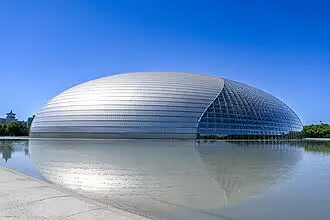
Forbidden City. (1420 vs 2007) National Centre for the Performing Arts →
Nearby on the globe

Sources
Updated: 2026-10-14