
Temple in the Sea
바다 위 사원
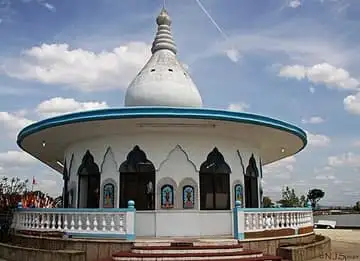
A small white Hindu temple standing out in the Gulf of Paria, built by an indentured labourer who carried stones out to sea by bicycle to make its causeway.
See it on the 3D globe →At a glance
- Country
- Trinidad & Tobago
- Location
- Waterloo, Carapichaima, Trinidad and Tobago
- Built
- 1952 (rebuilt 1995)
- Type
- Religious building
Quick answers
Where is Temple in the Sea?
Temple in the Sea is in Waterloo, Carapichaima, Trinidad and Tobago, Trinidad & Tobago.
The Temple in the Sea is a small white Hindu temple that seems to float in the Gulf of Paria, off Waterloo in Carapichaima, Trinidad and Tobago. Its official name is the Sewdass Sadhu Shiva Mandir, after the man who built it. A narrow stone causeway leads from the shore out to the temple.
Sewdass Sadhu was a labourer who came from India. He carried stones, cement and sand to the sea by bicycle for years to make the path, and he finished the first temple in 1952. The temple you see today was rebuilt and reopened in 1995.
Who was Sewdass Sadhu?
Sewdass Sadhu was born in 1901 in what is now Uttar Pradesh, India, and came to Trinidad at the age of four on a ship. His parents worked as indentured labourers, workers who had signed long contracts to labour on sugar farms for very little.
In the 1930s he built a small shrine for Shiva on land owned by a sugar company. The company ordered him to remove it. He refused, was jailed for 14 days and fined, and the shrine was destroyed.
Building into the sea
After prison, Sadhu decided to build in the sea, since he believed that no colonial company could own the water. From 1947 he rode his bicycle with bags of stones, cement and sand and used them to build a path out into the gulf, then a temple at the end of it. The work was finished in 1952.
Sadhu died in 1970, and the temple wore away in the tides. A group called the Hindu Prachar Kendra began repairs, and the temple was rebuilt and reopened in 1995, on the 150th anniversary of the first arrival of indentured workers from India.
Fun facts
- A labourer, Siewdass Sadhu, built it out in the sea by hand, carrying the stones there on his bicycle.
- Sewdass Sadhu carried building materials to the sea on a bicycle.
- He was jailed for 14 days after refusing to move his first shrine.
- The new temple stands about 100 yards farther out in the sea than the first one.
- It reopened in 1995 on the 150th anniversary of the arrival of Indian workers in Trinidad.
On the globe
The model shows the small white temple standing out in the water at the end of a causeway.
Nearby on the globe


Sources
Updated: 2026-10-14