
Afghanistan: landmarks, animals & facts for kids
1 landmark · 1 animal
Afghanistan on My Earth Toy, the free 3D toy globe for kids: 1 landmark, 1 animal. Here you can see its flag, capital and size, then fly to every place on the globe.
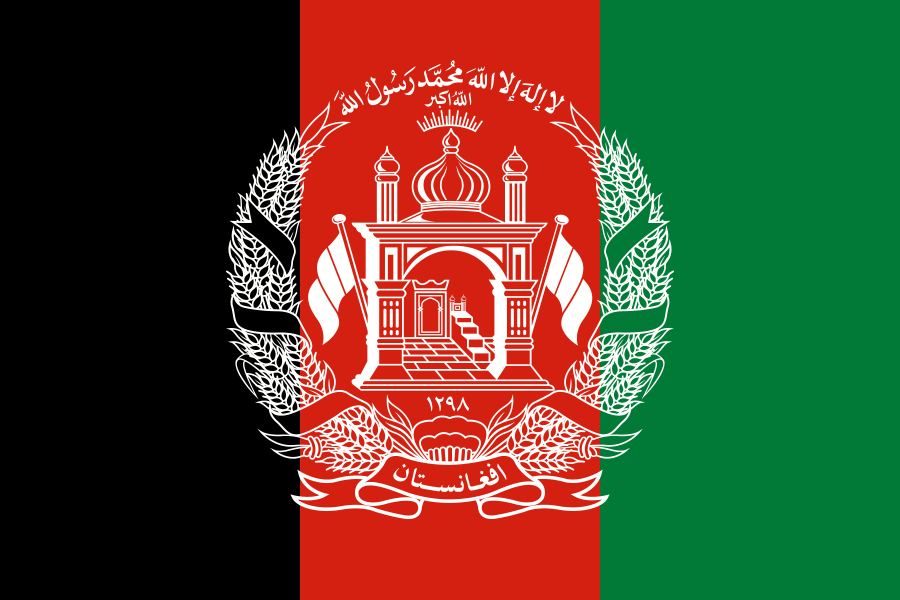
This flag of Afghanistan has three vertical stripes of black, red and green, with a white emblem of a mosque in a wreath of wheat in the middle. Since 2021 Afghanistan's Taliban government has used a different, white flag.
Read about this flag →Afghanistan at a glance
- Capital
- Kabul
- Continent
- Asia
- Area
- 652,230 km²
- Population
- 42.6 million
Afghanistan is a landlocked country in South-Central Asia, wrapped in high mountains and dry plains. Its capital is Kabul, and about 42 million people live there. It is known for the towering Hindu Kush mountains, its long history on the old Silk Road trade routes, and beautiful Islamic buildings covered in blue tiles.
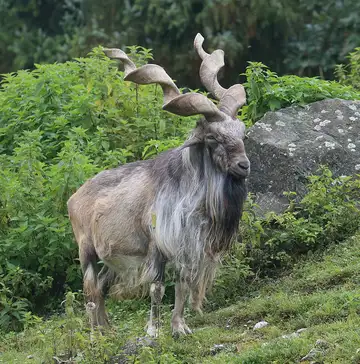
On My Earth Toy you can visit the Blue Mosque of Mazar-i-Sharif, a shrine famous for its turquoise domes and the white doves that gather in its courtyard. You can also spot the markhor, a wild mountain goat with spiral horns that climbs steep, rocky slopes in the region.
Geography and nature
Afghanistan has no coastline. The Hindu Kush range runs across the middle of the country, and some peaks rise above 7,000 metres. The north has river plains, while the south and west are dry deserts. Winters in the mountains are snowy and summers in the lowlands are hot. Band-e Amir, a chain of deep blue lakes held back by natural walls of mineral rock, became the country's first national park. Snow leopards, ibex and markhor live in the remote highlands.
People, languages and culture
Afghanistan is home to many groups, including Pashtuns, Tajiks, Hazaras and Uzbeks. Its two official languages are Pashto and Dari, a form of Persian. Almost everyone is Muslim. Families gather for big meals of rice dishes such as kabuli pulao, cooked with carrots and raisins. Traditional crafts include hand-knotted carpets, and a famous horseback sport called buzkashi has riders compete to carry a goat carcass across a field.
History in a nutshell
Because it sat between Persia, India and Central Asia, Afghanistan was crossed by armies and traders for thousands of years, including Alexander the Great. Buddhist, then Islamic, kingdoms flourished here; giant Buddha statues carved into the cliffs at Bamiyan stood for about 1,500 years until they were destroyed in 2001. The modern state took shape in the 1700s. The country has lived through many wars since the late 1970s, and in 2021 the Taliban took control of the government.
Fun facts
- Afghanistan has no sea coast at all: it is completely surrounded by other countries.
- The lakes of Band-e Amir are so blue because the water is very clear and rich in minerals.
- The giant standing Buddhas of Bamiyan were carved straight into a sandstone cliff, one of them about 55 metres tall.
- Afghan carpets are knotted by hand, and a large one can take months to finish.
Famous landmarks in Afghanistan
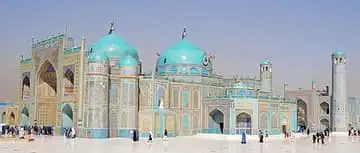
Blue Mosque, Mazar-i-Sharif
Afghanistan · Asia
The Shrine of Hazrat Ali that gave Mazar-i-Sharif (“the noble shrine”) its name: a 15th-century Timurid shrine clad in blue and turquoise tiles under ribbed domes, famous for the white doves on its marble court.
Animals in Afghanistan
Questions
What is the capital of Afghanistan?
The capital of Afghanistan is Kabul.
Which continent is Afghanistan in?
Afghanistan is in Asia.
How big is Afghanistan?
Afghanistan covers about 652,230 km².
How many people live in Afghanistan?
About 42.6 million people live in Afghanistan.
What are the most famous landmarks in Afghanistan?
On My Earth Toy's free 3D globe, the landmark from Afghanistan is Blue Mosque, Mazar-i-Sharif, with a photo and quick facts.
Which animals can you find in Afghanistan on My Earth Toy?
On the globe you can find Markhor in Afghanistan.
Sources
Updated: 2026-10-30