
Côte d’Ivoire: landmarks, animals & facts for kids
1 landmark · 1 animal
Côte d’Ivoire on My Earth Toy, the free 3D toy globe for kids: 1 landmark, 1 animal. Here you can see its flag, capital and size, then fly to every place on the globe.
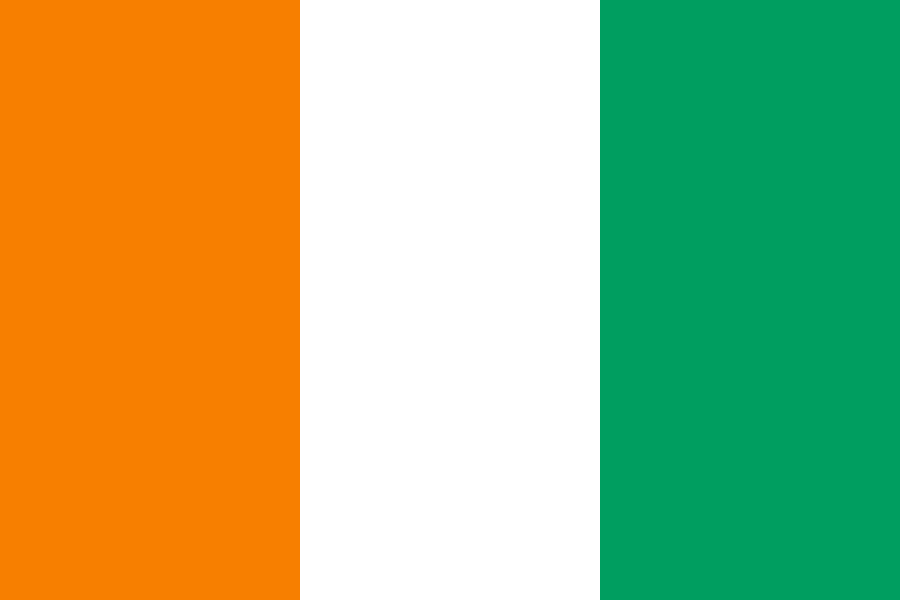
The flag of Ivory Coast (Cote d'Ivoire) has three equal vertical stripes of orange, white and green, with orange next to the pole.
Read about this flag →Côte d’Ivoire at a glance
- Capital
- Yamoussoukro
- Continent
- Africa
- Area
- 322,463 km²
- Population
- 31.9 million
Côte d'Ivoire, also known as Ivory Coast, is a country in West Africa on the Gulf of Guinea. Its official capital is Yamoussoukro, while Abidjan, a big lagoon city, is the largest city and economic centre. About 32 million people live there. Côte d'Ivoire is the world's largest producer of cocoa, the beans used to make chocolate, and it is known for its rainforests, beaches, music and football.
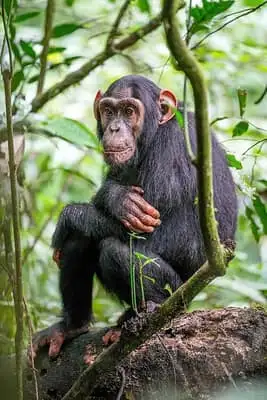
On My Earth Toy you can see the Basilica of Our Lady of Peace in Yamoussoukro, one of the largest churches in the world, with a giant dome inspired by St. Peter's Basilica in Rome. Look for the chimpanzee too, which lives in the country's forests.
Geography and nature
The south has a coastline of sandy beaches and lagoons, and behind it lie tropical rainforests. Farther north the land becomes savanna, and in the west rise the Nimba Mountains. Taï National Park, a UNESCO World Heritage Site, protects one of the last big areas of primary rainforest in West Africa. Its chimpanzees are famous for using stones and wooden clubs as hammers to crack open nuts. Comoé National Park in the north has elephants and hippos.
People, languages and culture
The country has about 60 ethnic groups. French is the official language, and many local languages such as Dioula and Baoulé are spoken. Islam and Christianity are the main religions. Abidjan is a centre of music, and coupé-décalé, a lively dance music, started among Ivorians there and in Paris. Attiéké, made from grated cassava, is often served with grilled fish. Football stars from Côte d'Ivoire play in top clubs around the world.
History in a nutshell
Several kingdoms, including those of the Baoulé and Kong, rose in the region before Europeans arrived. Portuguese and French traders named the coast after the ivory they bought there. France made it a colony in 1893. The country became independent on 7 August 1960, led by its first president, Félix Houphouët-Boigny, who later moved the capital to his home town, Yamoussoukro. The country went through civil conflicts in the 2000s and has since recovered.
Fun facts
- Around 40 percent of the world's cocoa beans come from Côte d'Ivoire.
- The Basilica of Our Lady of Peace was consecrated in 1990.
- The country asks other nations to use its French name, Côte d'Ivoire, rather than translating it.
- Taï's chimpanzees pass their nut-cracking skills from mothers to young.
Famous landmarks in Côte d’Ivoire
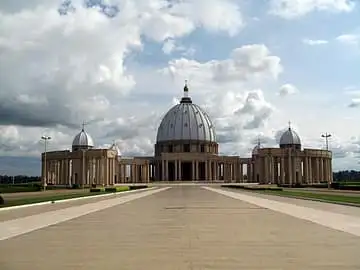
Basilica of Our Lady of Peace of Yamoussoukro
Côte d’Ivoire · Africa
One of the largest churches in the world, built in Yamoussoukro and modelled on St Peter's in Rome, with a giant dome and curved colonnades embracing its plaza.
Animals in Côte d’Ivoire
Questions
What is the capital of Côte d’Ivoire?
The capital of Côte d’Ivoire is Yamoussoukro.
Which continent is Côte d’Ivoire in?
Côte d’Ivoire is in Africa.
How big is Côte d’Ivoire?
Côte d’Ivoire covers about 322,463 km².
How many people live in Côte d’Ivoire?
About 31.9 million people live in Côte d’Ivoire.
What are the most famous landmarks in Côte d’Ivoire?
On My Earth Toy's free 3D globe, the landmark from Côte d’Ivoire is Basilica of Our Lady of Peace of Yamoussoukro, with a photo and quick facts.
Which animals can you find in Côte d’Ivoire on My Earth Toy?
On the globe you can find Chimpanzee in Côte d’Ivoire.
Sources
Updated: 2026-10-30