
Hungary: landmarks, animals & facts for kids
2 landmarks
Hungary on My Earth Toy, the free 3D toy globe for kids: 2 landmarks. Here you can see its flag, capital and size, then fly to every place on the globe.
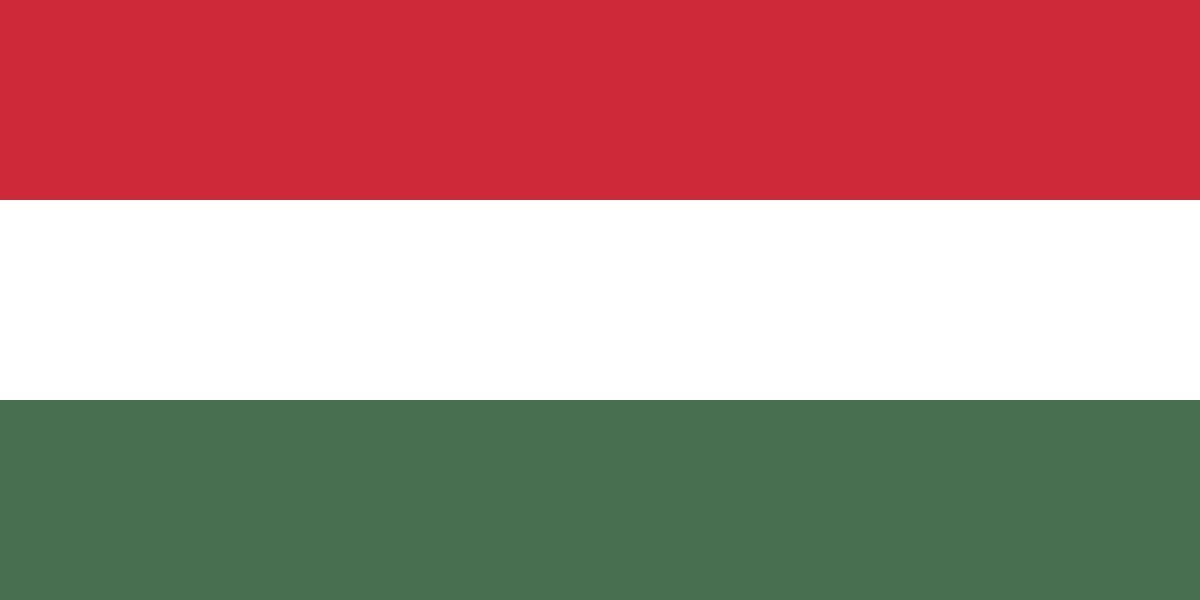
Three equal horizontal stripes of red, white and green, from top to bottom.
Read about this flag →Hungary at a glance
- Capital
- Budapest
- Continent
- Europe
- Area
- 93,030 km²
- Population
- 9.7 million
Hungary is a landlocked country in Central Europe, lying in the wide Carpathian Basin with the Danube River flowing through it. Its capital, Budapest, spreads over both banks of the Danube. Hungary is known for its warm thermal springs and spa baths, paprika-spiced dishes such as goulash, and a language unlike most others in Europe. The Rubik's Cube was invented here.
On My Earth Toy you can visit the Hungarian Parliament Building, the country's largest building, a neo-Gothic palace on the bank of the Danube, and Buda Castle, the old royal palace on Castle Hill, crowned by a green copper dome.
Geography and nature
Most of Hungary is flat or gently rolling. The Great Hungarian Plain covers the east, where Hortobágy National Park protects grassy steppe with grey cattle and traditional horse herders. The Danube and Tisza rivers divide the country into three large parts. Lake Balaton, the largest lake in Central Europe, is a favourite summer holiday spot. The highest point, Kékes, is only 1,014 metres tall. Underground, hot water rises in many places, feeding spas and Lake Hévíz, a warm lake people can swim in.
People, languages and culture
Hungarians call themselves Magyar, and their language belongs to the Uralic family, distantly related to Finnish and Estonian rather than to the languages of their neighbours. Like Koreans, Hungarians write the family name first. Bathing in thermal baths is a popular way to relax, even in winter. Paprika flavours many dishes, and folk embroidery, music and dances are proudly kept alive. Composers Franz Liszt and Béla Bartók are among Hungary's most famous artists.
History in a nutshell
The Magyars settled in the Carpathian Basin at the end of the 9th century, and in the year 1000 Stephen I was crowned the first Christian king of Hungary. Much of the country was later ruled by the Ottoman Empire for about 150 years. Hungary then became part of the Habsburg lands and, from 1867, of Austria-Hungary. After the Second World War it came under communist rule, and in 1956 an uprising was crushed. Hungary held free elections in 1990 and joined the European Union in 2004.
Fun facts
- Ernő Rubik, a Hungarian teacher of design, invented his famous cube puzzle in 1974.
- Budapest's Line 1 metro, opened in 1896, is the oldest underground railway on the European mainland.
- Budapest was formed in 1873 when the towns of Buda, Óbuda and Pest joined together.
- The Hungarian Parliament Building has about 700 rooms.
Famous landmarks in Hungary
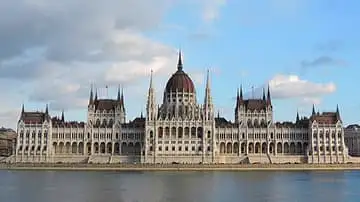
Hungarian Parliament Building
Hungary · Europe
Hungary's largest building, a neo-Gothic parliament on the bank of the Danube.
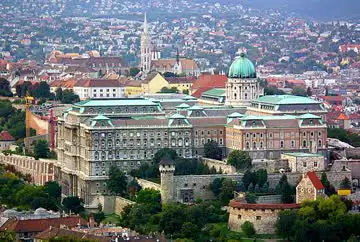
Buda Castle
Hungary · Europe
The Hungarian royal palace on Castle Hill above the Danube, crowned by a green copper dome.
Questions
What is the capital of Hungary?
The capital of Hungary is Budapest.
Which continent is Hungary in?
Hungary is in Europe.
How big is Hungary?
Hungary covers about 93,030 km².
How many people live in Hungary?
About 9.7 million people live in Hungary.
What are the most famous landmarks in Hungary?
Some of the best-known landmarks in Hungary are Hungarian Parliament Building and Buda Castle. My Earth Toy has 2 landmarks from Hungary on its free 3D globe, each with a photo and quick facts.
Sources
Updated: 2026-10-30