
Paraguay: landmarks, animals & facts for kids
1 landmark
Paraguay on My Earth Toy, the free 3D toy globe for kids: 1 landmark. Here you can see its flag, capital and size, then fly to every place on the globe.
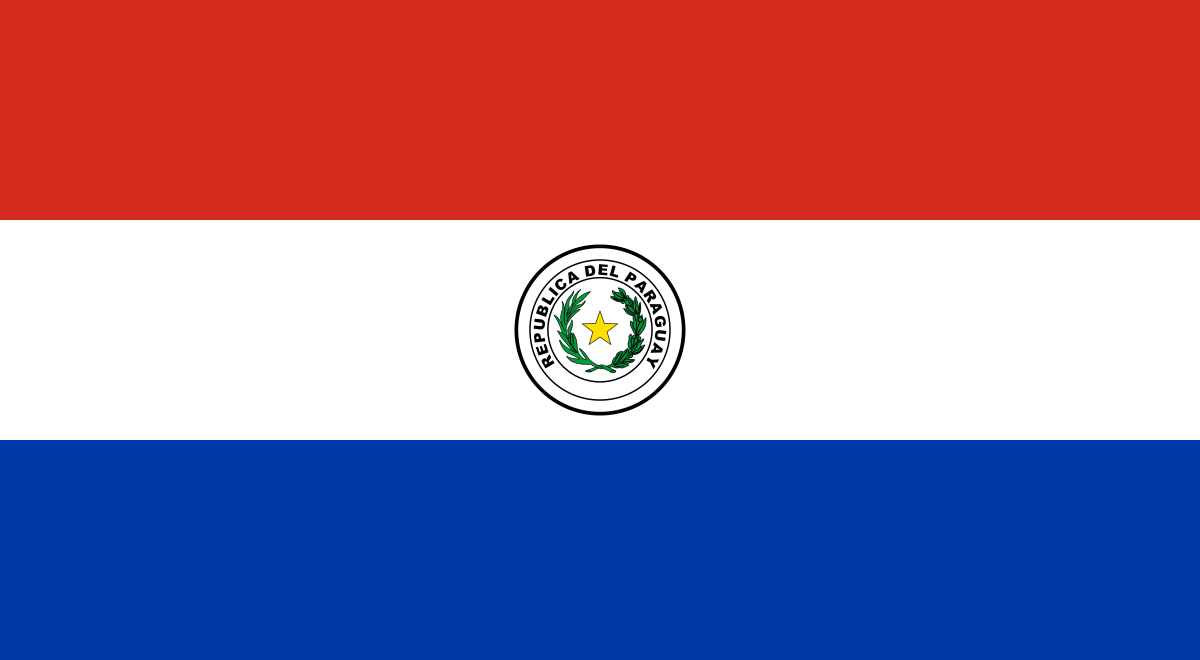
Paraguay's flag has three sideways stripes, red, white and blue, with a round emblem in the middle that is different on the front and the back.
Read about this flag →Paraguay at a glance
- Capital
- Asunción
- Continent
- South America
- Area
- 406,752 km²
- Population
- 6.9 million
Paraguay is a landlocked country in the heart of South America. It has no coastline and is surrounded by Argentina, Brazil and Bolivia. The Paraguay River runs through the middle of the country, and the capital, Asunción, sits on its banks. Asunción, founded in 1537, is one of the oldest cities in South America.
Paraguay is known for the Guaraní language, which most of its people speak, for its lacework and harp music, and for giant rivers that make lots of clean electricity. On the globe you can find the Itaipu Dam, a huge dam on the Paraná River that Paraguay shares with Brazil.
Geography and nature
The Paraguay River splits the country in two. East of the river is a green region of hills, farmland and forests where most people live. West of the river is the Gran Chaco, a huge, hot plain of thorny scrub and dry forest with very few people. Jaguars, giant anteaters, capybaras and colourful birds live in Paraguay's wild places. The Paraná River forms part of the southern and eastern border and powers the giant Itaipu and Yacyretá dams.
People, languages and culture
Paraguay has two official languages, Spanish and Guaraní, an Indigenous language. Most Paraguayans speak Guaraní, which is unusual in the Americas, and many mix both languages in daily life. People love tereré, a cold drink of yerba mate herbs shared from one cup with a metal straw. Sopa paraguaya, despite its name, is not a soup but a soft cornbread. Women make ñandutí, a delicate lace shaped like spiderwebs, and the Paraguayan harp is the national instrument.
History in a nutshell
Guaraní peoples lived here long before the Spanish arrived in the 1500s. Jesuit priests later built mission towns where Guaraní people lived and worked; the ruins of two of them are now a UNESCO World Heritage Site. Paraguay became independent from Spain in 1811. From 1864 to 1870 it fought Brazil, Argentina and Uruguay in the War of the Triple Alliance and lost a large part of its population. It fought Bolivia in the Chaco War in the 1930s. Paraguay has had elected governments since 1989.
Fun facts
- Paraguay's flag has a different emblem on each side: the national seal on the front and the treasury seal on the back.
- The Itaipu Dam produces so much electricity that Paraguay can sell a lot of its share to Brazil.
- The Chacoan peccary, a pig-like animal known from fossils, was found still living in the Paraguayan Chaco in the 1970s.
- Ñandutí means 'spiderweb' in Guaraní.
Famous landmarks in Paraguay
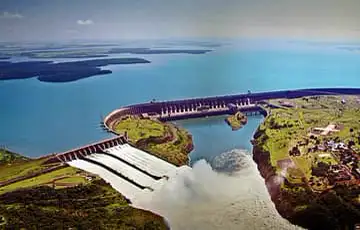
Itaipu Dam
Paraguay · South America
A giant hydroelectric dam on the Paraná River, among the world's top producers of electricity.
Questions
What is the capital of Paraguay?
The capital of Paraguay is Asunción.
Which continent is Paraguay in?
Paraguay is in South America.
How big is Paraguay?
Paraguay covers about 406,752 km².
How many people live in Paraguay?
About 6.9 million people live in Paraguay.
What are the most famous landmarks in Paraguay?
On My Earth Toy's free 3D globe, the landmark from Paraguay is Itaipu Dam, with a photo and quick facts.
Sources
Updated: 2026-10-30