
Famous landmarks in Portugal
3 landmarks · 1 place to discover
Portugal on My Earth Toy, the free 3D toy globe for kids: 3 landmarks, 1 place to discover. Here you can see its flag, capital and size, then fly to every place on the globe.
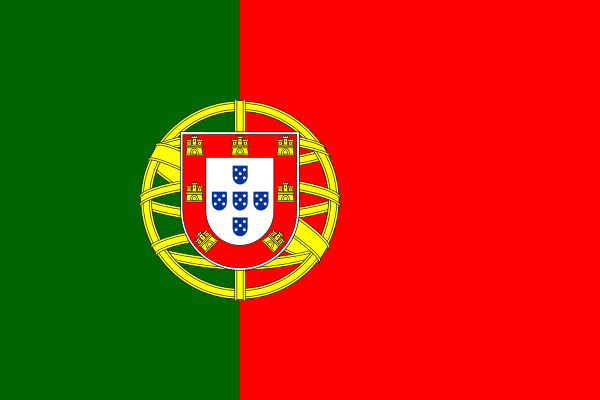
Portugal's flag is green near the pole and red on the rest, with a golden armillary sphere and the Portuguese shield on the line between the colours.
Read about this flag →Portugal at a glance
- Capital
- Lisbon
- Continent
- Europe
- Area
- 92,212 km²
- Population
- 10.4 million
Portugal is a country in south-western Europe, on the western side of the Iberian Peninsula. Its only land neighbour is Spain, and its long coast faces the Atlantic Ocean. It also includes two groups of Atlantic islands, the Azores and Madeira. The capital, Lisbon, is built on hills beside the wide Tagus River.
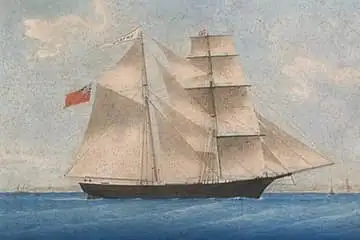
Portugal is known for its explorers, its painted blue-and-white tiles, sunny beaches and custard tarts. On the globe you can find the Belém Tower, which guarded Lisbon's harbour, the colourful Pena Palace in Sintra and the Cristo Rei statue, plus the story of the Mary Celeste, the ghost ship found drifting in the Atlantic.
Geography and nature
Northern Portugal is green and hilly, with vineyards along the Douro River, while the south, the Alentejo and the Algarve, is warmer and drier, with golden cliffs and beaches. Cabo da Roca, near Lisbon, is the westernmost point of mainland Europe. The highest mountain is Mount Pico, a volcano in the Azores. Forests of cork oak cover large areas, and Portugal produces about half of the world's cork. At Nazaré, an underwater canyon helps create some of the biggest surfing waves ever ridden.
People, languages and culture
People speak Portuguese, which is also spoken in Brazil, Angola, Mozambique and other countries, making it one of the most spoken languages in the world. Most Portuguese are Catholic. Fado, a song style full of longing called saudade, is listed by UNESCO as cultural heritage. Buildings are decorated with azulejos, glazed painted tiles. Portuguese love seafood, grilled sardines and bacalhau, dried salted cod, and pastéis de nata, small custard tarts. Football is the favourite sport.
History in a nutshell
Portugal became a kingdom in the 1100s, and its borders have changed little since the late 1200s, making them among the oldest in Europe. In the 1400s and 1500s Portuguese sailors led the Age of Discovery: Vasco da Gama reached India by sea in 1498, and Portugal built a trading empire across Africa, Asia and South America. A huge earthquake destroyed much of Lisbon in 1755. In 1974 the peaceful Carnation Revolution ended a long dictatorship, and Portugal joined the European Community in 1986.
Fun facts
- Portugal and England signed an alliance in 1386 that is still in force, the oldest alliance of its kind in the world.
- The Belém Tower was built in the early 1500s and stands in the Tagus River near where explorers set sail.
- Cristo Rei in Almada was inspired by Christ the Redeemer in Rio de Janeiro.
- The Mary Celeste was found sailing with no one on board in 1872, east of the Azores, and no one knows for sure what happened.
Famous landmarks in Portugal
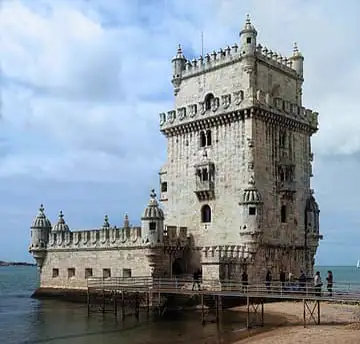
Belém Tower
Portugal · Europe
A Manueline fortified tower guarding the Tagus estuary from the Age of Discovery.
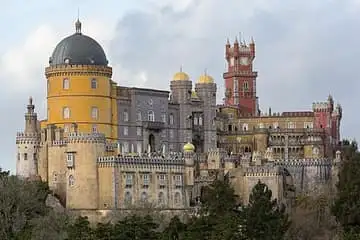
Pena Palace, Sintra
Portugal · Europe
A Romanticist palace on a hilltop above Sintra, with red and yellow walls and Moorish domes; part of a UNESCO World Heritage site.
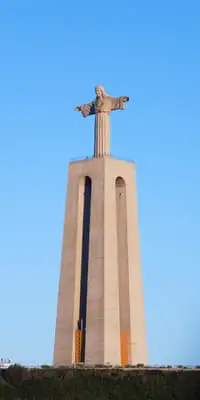
Cristo Rei
Portugal · Europe
A Christ statue with open arms facing Lisbon across the Tagus, inspired by Rio's Christ the Redeemer.
Places to discover in Portugal
Questions
What is the capital of Portugal?
The capital of Portugal is Lisbon.
Which continent is Portugal in?
Portugal is in Europe.
How big is Portugal?
Portugal covers about 92,212 km².
How many people live in Portugal?
About 10.4 million people live in Portugal.
What are the most famous landmarks in Portugal?
Some of the best-known landmarks in Portugal are Belém Tower, Pena Palace, Sintra and Cristo Rei. My Earth Toy has 3 landmarks from Portugal on its free 3D globe, each with a photo and quick facts.
Sources
Updated: 2026-10-30