
Flag of Portugal
Bandeira Verde-Rubra ("Green-Red Flag")
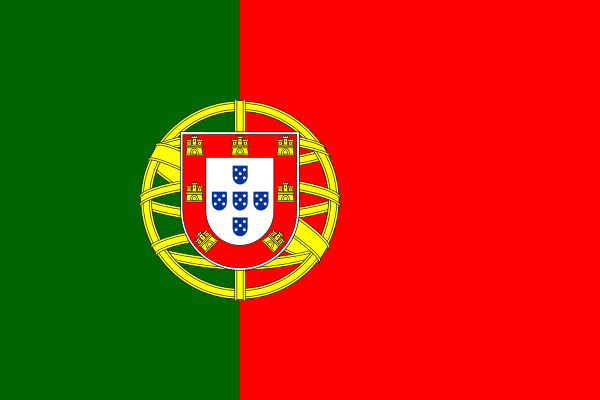
Portugal's flag is green near the pole and red on the rest, with a golden armillary sphere and the Portuguese shield on the line between the colours.
At a glance
- Adopted
- June 19, 1911first presented on 1 December 1910, after the 1910 revolution; the decree was published on 19 June 1911 and the rules followed on 30 June 1911
- Shape (height : width)
- 2:3
- Capital
- Lisbon
- Continent
- Europe
- Colours
- green
- red
- gold
- blue
- white
What it means
- Green and red: the colours of the republican movement; the 1911 commission called red the colour of battle and conquest; a popular explanation says green is hope and red is the blood of those who defended the nation
- Armillary sphere: an old navigation instrument, honouring Portugal's Age of Discovery sea voyages
- Five small blue shields: traditionally linked to the legend of the Battle of Ourique; historians treat the story as a legend
- Seven gold castles: traditionally linked to the conquest of the Algarve, though this link is not well proven
Where it came from
The flag was created after the revolution of 5 October 1910 that ended the monarchy. A commission that included Columbano Bordalo Pinheiro, Joao Chagas and Abel Botelho chose the design. Green and red were the colours of the Republican Party, used since a failed uprising in 1891.
History
Early Portuguese banners showed a blue cross on white, and over the centuries the royal flags became more complex. From 1830 to 1910 the kingdom used a blue-and-white flag, which monarchists still fly today.
The new republican flag was presented on 1 December 1910 and made official in June 1911. The green part takes up two fifths of the length and the red part three fifths.
Fun facts
- The green and red parts are not equal: the red part is bigger.
- Each little blue shield has five white dots. In Portuguese the shields are called quinas, from a word for a group of five.
- The number of castles on the shield was fixed at seven back in 1578.
- When folded the official way, the flag makes a square that frames the shield.
Questions
What does the flag of Portugal look like?
Portugal's flag is green near the pole and red on the rest, with a golden armillary sphere and the Portuguese shield on the line between the colours.
What do the colours and symbols on the flag of Portugal mean?
Green and red: the colours of the republican movement; the 1911 commission called red the colour of battle and conquest; a popular explanation says green is hope and red is the blood of those who defended the nation; Armillary sphere: an old navigation instrument, honouring Portugal's Age of Discovery sea voyages; Five small blue shields: traditionally linked to the legend of the Battle of Ourique; historians treat the story as a legend; Seven gold castles: traditionally linked to the conquest of the Algarve, though this link is not well proven.
When was the flag of Portugal adopted?
The current flag of Portugal was adopted on June 19, 1911. (first presented on 1 December 1910, after the 1910 revolution; the decree was published on 19 June 1911 and the rules followed on 30 June 1911)
What colours are on the flag of Portugal?
The flag of Portugal uses green, red, gold, blue and white.
Famous landmarks in Portugal
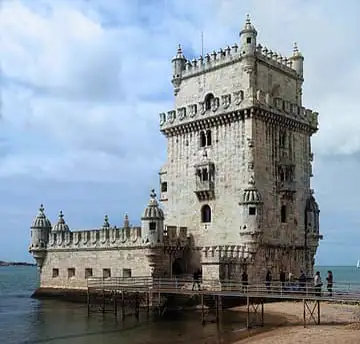
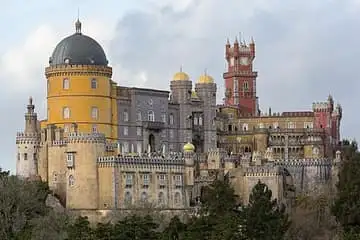
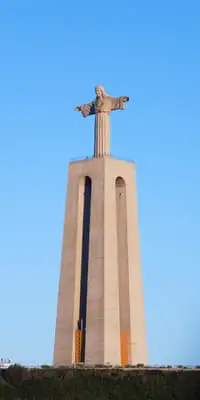
🎯 Play the flag quiz 🌍 Play the globe
Sources
- en.wikipedia.org
- crwflags.com
- Flag picture: flagcdn.com (Wikimedia Commons)