
Romania: landmarks, animals & facts for kids
2 landmarks · 2 animals
Romania on My Earth Toy, the free 3D toy globe for kids: 2 landmarks, 2 animals. Here you can see its flag, capital and size, then fly to every place on the globe.
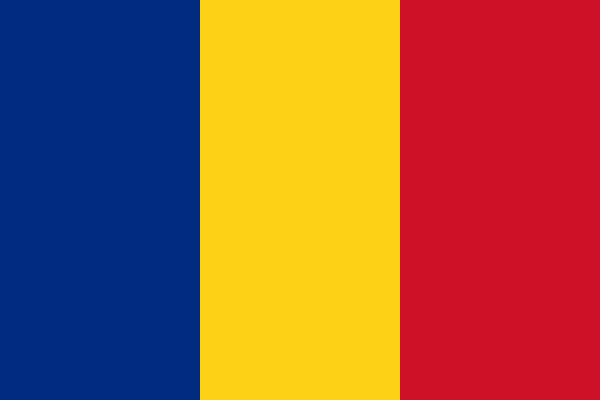
Romania's flag has three upright stripes of equal width: blue, yellow and red.
Read about this flag →Romania at a glance
- Capital
- Bucharest
- Continent
- Europe
- Area
- 238,397 km²
- Population
- 19 million
Romania is a country in south-eastern Europe with a coast on the Black Sea. It borders Ukraine, Moldova, Bulgaria, Serbia and Hungary, and the capital is Bucharest. The great curve of the Carpathian Mountains runs through the middle of the country, wrapping around the region of Transylvania.
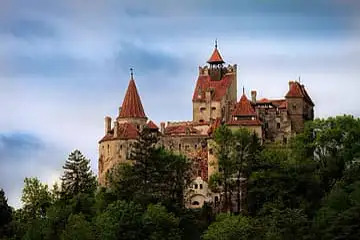
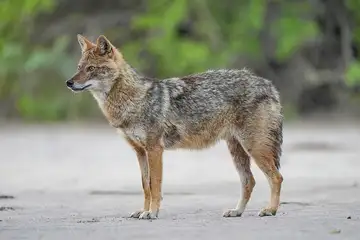
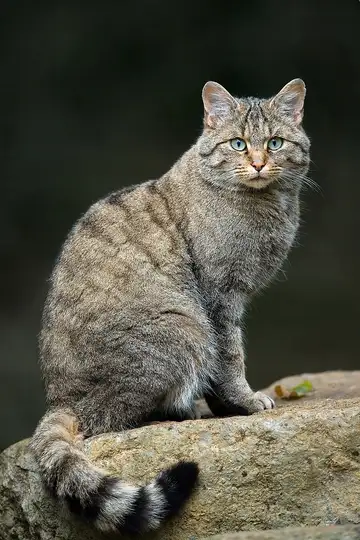
Romania is known for mountain castles, painted monasteries, wild forests full of bears, and the Danube Delta, where the great river meets the sea. On the globe you can find Bran Castle, often called 'Dracula's Castle', and the enormous Palace of the Parliament in Bucharest, along with animals such as the golden jackal and the European wildcat.
Geography and nature
The Carpathian Mountains form an arc across Romania, with Moldoveanu, about 2,544 metres, as the highest peak. Inside the arc lies the Transylvanian plateau; outside it are wide plains where wheat and sunflowers grow. The Danube River forms much of the southern border and ends in the Danube Delta, a maze of channels, reed beds and lakes that is one of Europe's greatest wetlands and home to pelicans. Romania's forests shelter one of the largest populations of brown bears in Europe, as well as wolves and lynx.
People, languages and culture
Romanian comes from Latin, the language of the ancient Romans, so it is related to Italian, Spanish and French. There are also Hungarian and Roma communities. Most people are Orthodox Christians. In the north, the monasteries of Bucovina are painted inside and out with bright scenes, and the villages of Maramureș have tall wooden churches. Popular foods include sarmale, cabbage rolls, and mămăligă, a cornmeal porridge. In spring, people give each other mărțișor, small charms tied with red and white string.
History in a nutshell
In ancient times the Dacians lived here, until the Roman emperor Trajan conquered much of their land in 106 CE. In the Middle Ages the principalities of Wallachia and Moldavia formed; Vlad III, a 15th-century prince of Wallachia, later lent his family name to the vampire Dracula in a famous novel. Wallachia and Moldavia united in 1859, and Transylvania joined in 1918. After the Second World War Romania became communist; the rule of Nicolae Ceaușescu ended in a revolution in 1989. Romania joined the European Union in 2007.
Fun facts
- The Palace of the Parliament in Bucharest is often called the heaviest building in the world.
- At the 1976 Olympics, Romanian gymnast Nadia Comăneci scored the first perfect 10 in Olympic gymnastics history.
- Bram Stoker, who wrote Dracula, never visited Bran Castle, but its spooky look made it famous as Dracula's Castle.
- The Merry Cemetery in Săpânța has brightly painted wooden crosses with funny poems about the people buried there.
Famous landmarks in Romania
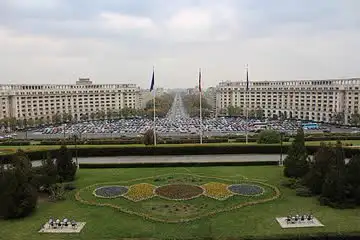
Palace of the Parliament
Romania · Europe
Ceaușescu’s colossal palace, the world’s heaviest building, now home to Romania’s parliament.
Animals in Romania
Questions
What is the capital of Romania?
The capital of Romania is Bucharest.
Which continent is Romania in?
Romania is in Europe.
How big is Romania?
Romania covers about 238,397 km².
How many people live in Romania?
About 19 million people live in Romania.
What are the most famous landmarks in Romania?
Some of the best-known landmarks in Romania are Bran Castle and Palace of the Parliament. My Earth Toy has 2 landmarks from Romania on its free 3D globe, each with a photo and quick facts.
Which animals can you find in Romania on My Earth Toy?
On the globe you can find Golden jackal and European wildcat in Romania.
Sources
Updated: 2026-10-30