
Serbia: landmarks, animals & facts for kids
1 landmark
Serbia on My Earth Toy, the free 3D toy globe for kids: 1 landmark. Here you can see its flag, capital and size, then fly to every place on the globe.
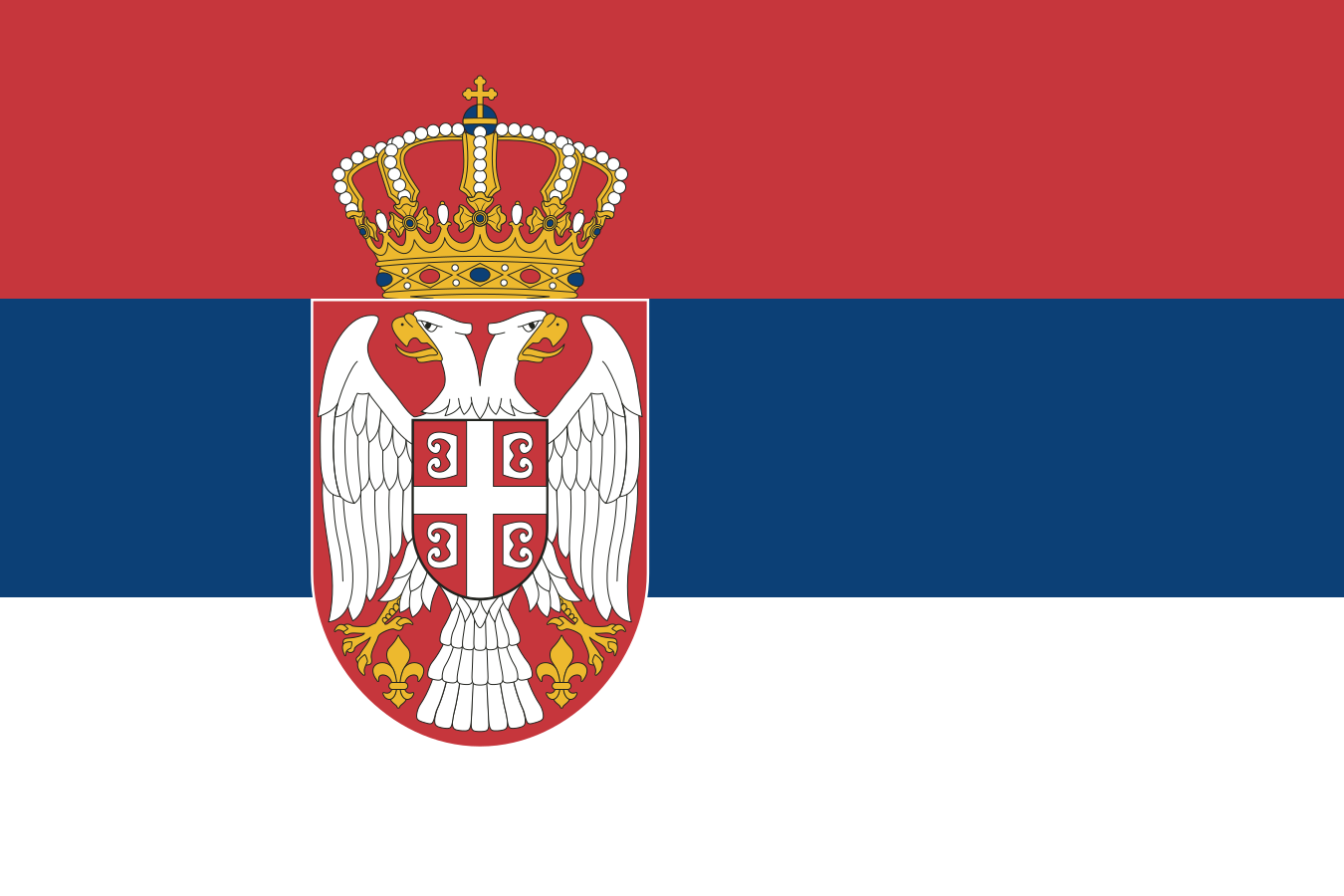
Serbia's flag has three sideways stripes, red, blue and white, with the Serbian coat of arms, a white double-headed eagle on a red shield under a crown, placed toward the pole.
Read about this flag →Serbia at a glance
- Capital
- Belgrade
- Continent
- Europe
- Population
- 6.7 million
Serbia is a landlocked country in south-eastern Europe, in the heart of the Balkan Peninsula. It borders Hungary, Romania, Bulgaria, North Macedonia, Montenegro, Bosnia and Herzegovina and Croatia, as well as Kosovo, whose independence, declared in 2008, Serbia does not recognise. The capital, Belgrade, stands where the Sava River meets the Danube.
Serbia is known for its old fortresses and monasteries, lively music festivals, hearty grilled food and great tennis and basketball players. On the globe you can find the Church of Saint Sava in Belgrade, one of the largest Orthodox churches in the world, with a huge white dome.
Geography and nature
The north of Serbia, called Vojvodina, is part of the flat and fertile Pannonian Plain, where wheat, corn and sunflowers grow. Further south the land becomes hilly and then mountainous. The Danube flows across the country and squeezes through the Iron Gates, a deep gorge on the border with Romania, protected in Đerdap National Park. Serbia has caves, spas and forests where bears, wolves and lynx live, and griffon vultures soar over the winding canyon of the Uvac River.
People, languages and culture
People speak Serbian, which is unusual because it is written in two alphabets, Cyrillic and Latin, and people read both. Most Serbs are Orthodox Christians. Each family celebrates a slava, a feast day for its own patron saint, a custom listed by UNESCO. Grilled meat such as ćevapi and pljeskavica is popular, served with ajvar, a red pepper spread. Brass bands play at weddings and festivals, and the town of Guča holds a famous trumpet festival. Serbia grows a large share of the world's raspberries.
History in a nutshell
Slavic peoples settled here in the 500s and 600s. In the Middle Ages a Serbian kingdom grew strong, and in 1346 Stefan Dušan was crowned emperor. After the Battle of Kosovo in 1389, the Ottoman Empire gradually took over, ruling for centuries. Uprisings in 1804 and 1815 led to self-rule, and Serbia's independence was recognised in 1878. In 1918 it became part of a new state that was later called Yugoslavia. After Yugoslavia broke apart in the 1990s, Serbia became a separate country again in 2006.
Fun facts
- The inventor Nikola Tesla came from a Serbian family, and Belgrade has a museum about him and an airport named after him.
- Belgrade Fortress, high above the meeting of the Sava and the Danube, has been fought over many times in its long history.
- Serbian is one of the few languages that people write in both Cyrillic and Latin letters every day.
- Building the Church of Saint Sava began in 1935, and its colourful interior mosaics were finished much later.
Famous landmarks in Serbia
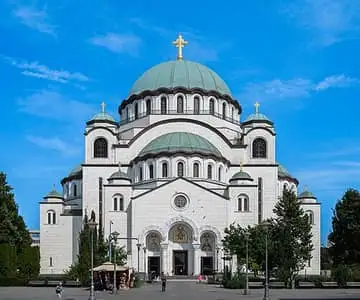
Church of Saint Sava
Serbia · Europe
A white Neo-Byzantine church on Belgrade's Vračar plateau; its green copper dome makes it one of the largest Orthodox churches in the world and a landmark seen across the city.
Questions
What is the capital of Serbia?
The capital of Serbia is Belgrade.
Which continent is Serbia in?
Serbia is in Europe.
How many people live in Serbia?
About 6.7 million people live in Serbia.
What are the most famous landmarks in Serbia?
On My Earth Toy's free 3D globe, the landmark from Serbia is Church of Saint Sava, with a photo and quick facts.
Sources
Updated: 2026-10-30