
Flag of Serbia
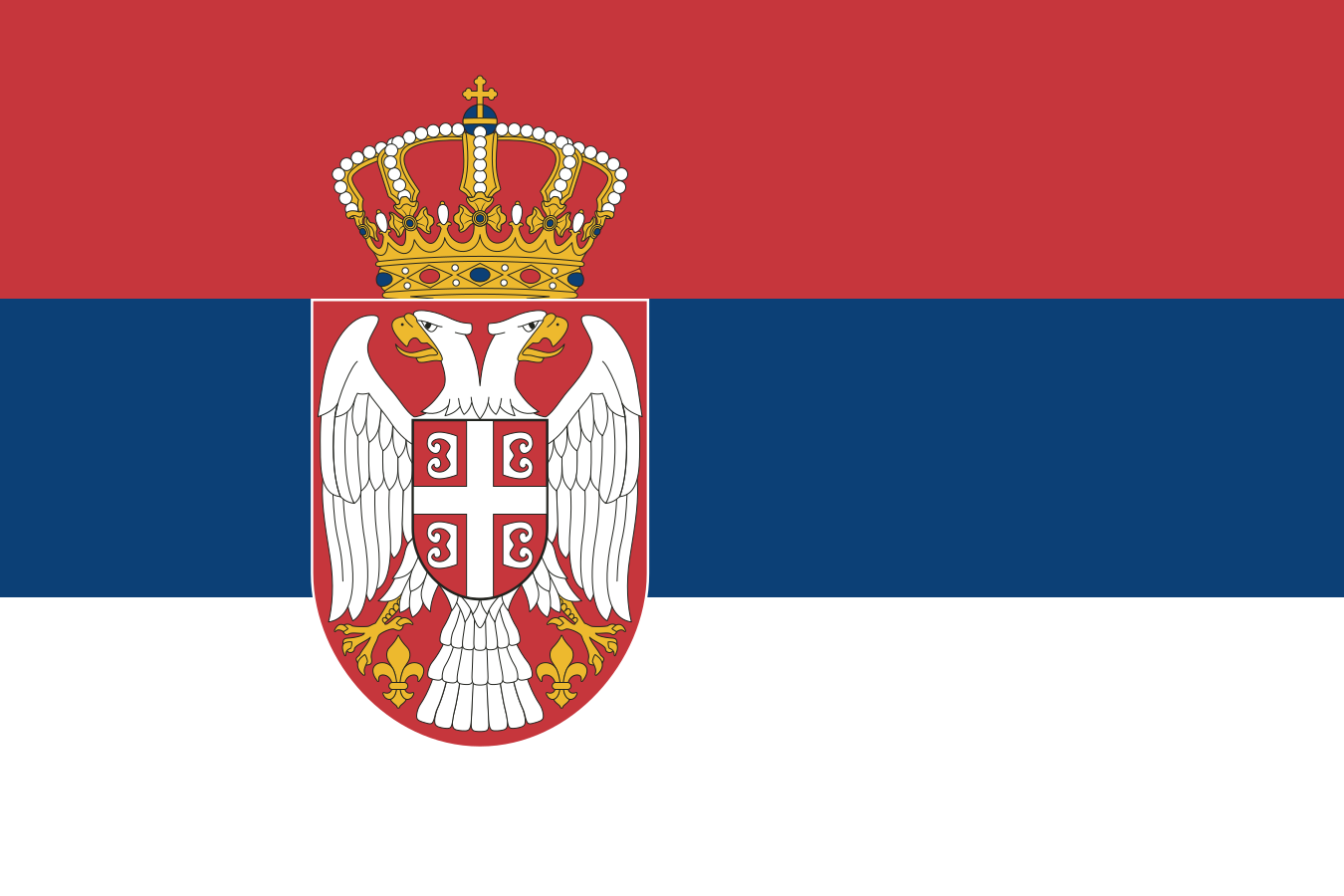
Serbia's flag has three sideways stripes, red, blue and white, with the Serbian coat of arms, a white double-headed eagle on a red shield under a crown, placed toward the pole.
At a glance
- Adopted
- November 11, 2010the red-blue-white tricolour dates from 1835; the current state flag with the coat of arms was first adopted in 2004, and its exact design and colours were set in 2010
- Shape (height : width)
- 2:3
- Capital
- Belgrade
- Continent
- Europe
- Colours
- red
- blue
- white
- gold
What it means
- Red, blue and white: taken from the Russian flag in reverse order; the sources give no official meaning for each colour
- Double-headed eagle: the Serbian eagle, used on Serbian arms and banners since the Middle Ages
- Cross with four firesteels: an old Serbian symbol on the shield on the eagle's chest; it was already on the arms of 1835
Where it came from
The tricolour goes back to 1835, when Serbia was a principality. Prince Milos Obrenovic first proposed Russia's white-blue-red flag. The Russian consul reportedly took this as an insult, so the colours were turned upside down, giving red, blue and white. Milos is said to have asked, "Could we simply turn it upside down?"
History
The kingdom of Serbia used the tricolour with its coat of arms, and medieval Serbian royal banners showed a red double-headed eagle. During the time of socialist Yugoslavia, the Serbian flag had a red star in the middle; the star was removed in 1992.
The current state flag with the coat of arms was adopted in 2004, and a 2009 law and a 2010 government regulation set its exact form and colours. A plain tricolour without the coat of arms is the national civil flag, used for example on civil ships.
Fun facts
- Serbia's flag is the Russian flag turned upside down, plus a coat of arms.
- The coat of arms is set off-centre, toward the pole, not in the middle.
- There are two versions: the state flag with the arms and a plain civil flag.
- Since 2010 the flag rules have given exact colour values for every colour.
Easy to mix up with
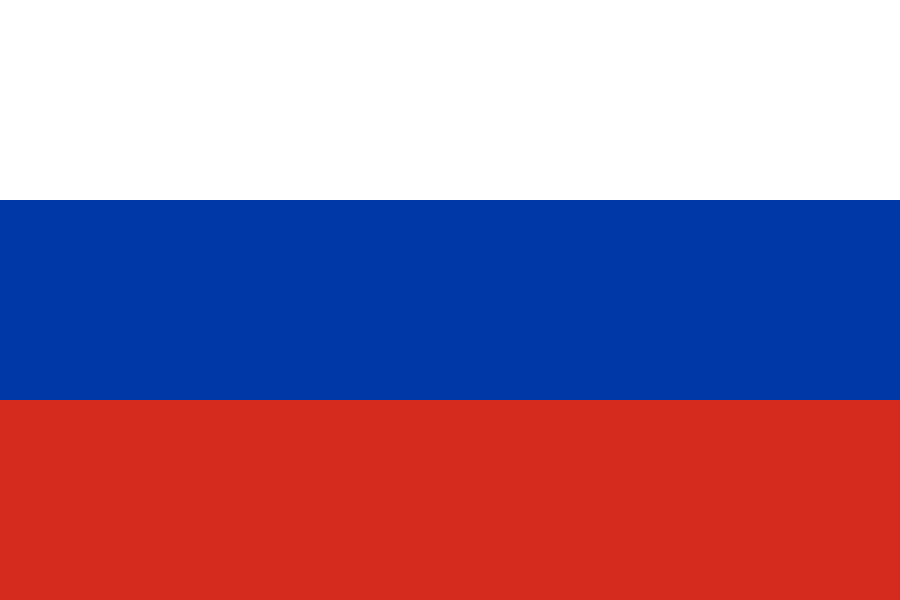 Russia: Russia uses the same colours in the order white, blue, red, with no coat of arms
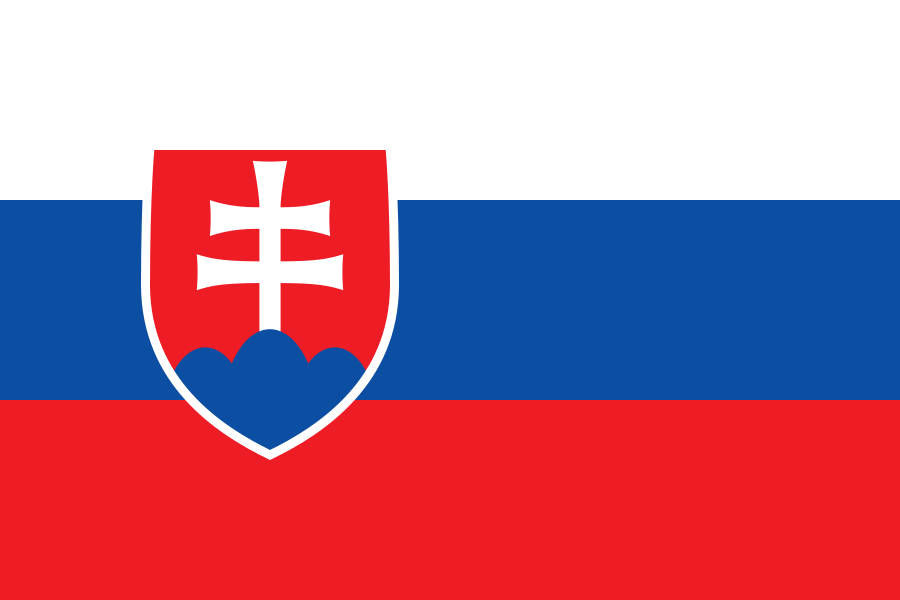 Slovakia: Slovakia is white-blue-red with a red shield and a white double cross
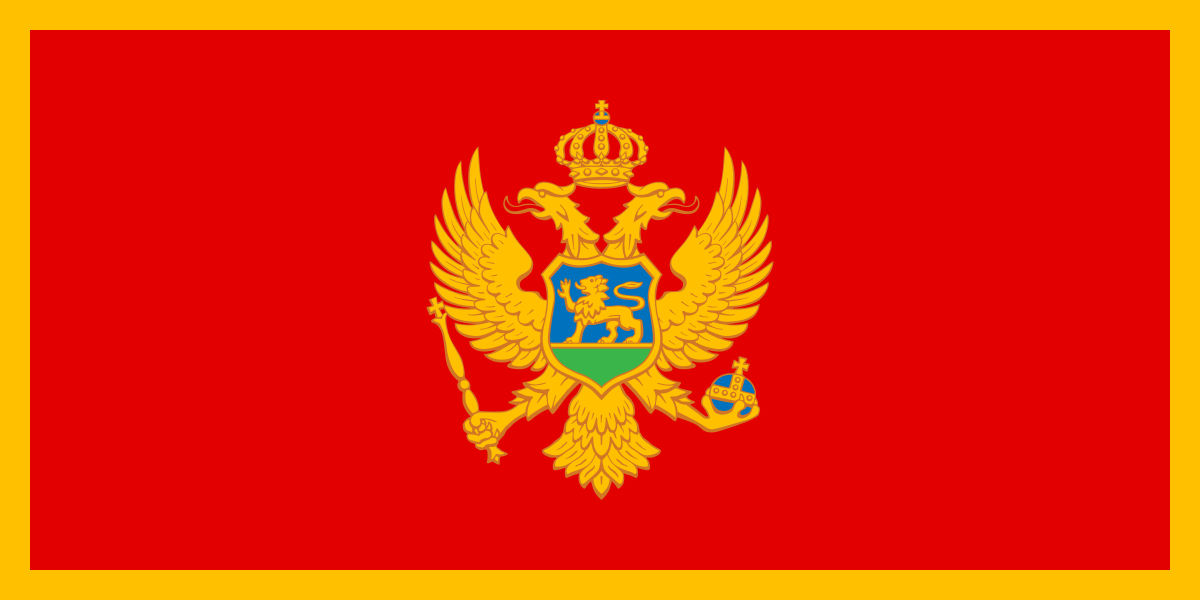 Montenegro: Montenegro also has a gold double-headed eagle, but on a red field with a gold border
Questions
What does the flag of Serbia look like?
Serbia's flag has three sideways stripes, red, blue and white, with the Serbian coat of arms, a white double-headed eagle on a red shield under a crown, placed toward the pole.
What do the colours and symbols on the flag of Serbia mean?
Red, blue and white: taken from the Russian flag in reverse order; the sources give no official meaning for each colour; Double-headed eagle: the Serbian eagle, used on Serbian arms and banners since the Middle Ages; Cross with four firesteels: an old Serbian symbol on the shield on the eagle's chest; it was already on the arms of 1835.
When was the flag of Serbia adopted?
The current flag of Serbia was adopted on November 11, 2010. (the red-blue-white tricolour dates from 1835; the current state flag with the coat of arms was first adopted in 2004, and its exact design and colours were set in 2010)
What colours are on the flag of Serbia?
The flag of Serbia uses red, blue, white and gold.
Which flag is easy to mix up with the flag of Serbia?
It is easy to mix up with the flag of Russia. Russia uses the same colours in the order white, blue, red, with no coat of arms
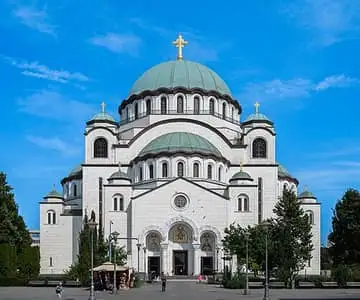
Famous landmarks in Serbia
🎯 Play the flag quiz 🌍 Play the globe
Sources
- en.wikipedia.org
- crwflags.com
- Flag picture: flagcdn.com (Wikimedia Commons)