
Timor-Leste: landmarks, animals & facts for kids
1 landmark
Timor-Leste on My Earth Toy, the free 3D toy globe for kids: 1 landmark. Here you can see its flag, capital and size, then fly to every place on the globe.
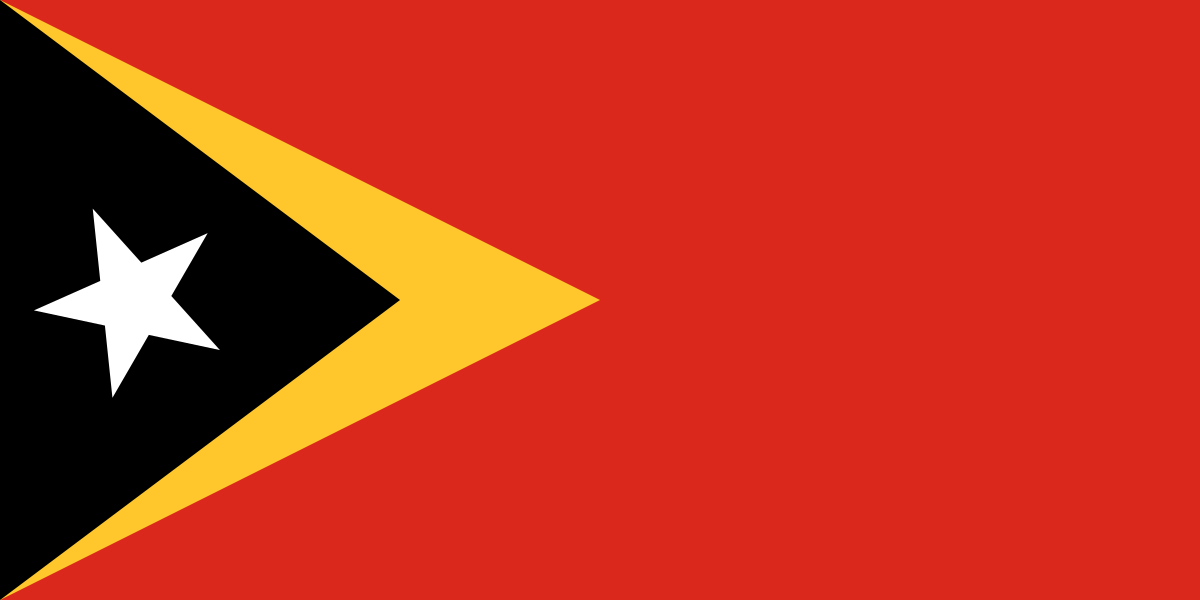
A red flag with two triangles at the left: a yellow one, and on top of it a smaller black one holding a white five-pointed star.
Read about this flag →Timor-Leste at a glance
- Capital
- Dili
- Continent
- Asia
- Area
- 14,874 km²
- Population
- 1.4 million
Timor-Leste, also called East Timor, is a small country in Southeast Asia. It covers the eastern half of the island of Timor, plus the small enclave of Oecusse on the island's north-west coast and nearby islands such as Atauro. Its only land neighbour is Indonesia, and Australia lies across the Timor Sea to the south. The capital is Dili.
Timor-Leste is known for its rugged mountains, coffee, coral reefs full of fish and its hard-won independence in 2002. On the globe you can find the Cristo Rei of Dili, a 27-metre statue of Jesus standing on a globe at the tip of a headland, looking out over the bay.
Geography and nature
Mountains run along the length of Timor, and Mount Ramelau, about 2,986 metres, is the highest peak; many people climb it to watch the sunrise. The north coast is drier, and the south coast is wetter and greener. The waters around Atauro Island are part of the Coral Triangle and have some of the highest numbers of reef fish species ever counted in one place. Saltwater crocodiles live in rivers and coasts, and whales and dolphins pass through the deep strait north of Dili.
People, languages and culture
Tetum and Portuguese are the official languages, and Indonesian and English are also widely used, along with more than a dozen local languages. Nearly everyone is Catholic, making Timor-Leste one of the most Catholic countries in the world. Women weave tais, colourful hand-woven cloth used in ceremonies, a tradition UNESCO has listed for urgent protection. Coffee is the main crop sold abroad. A legend says the island of Timor was formed from a giant crocodile, so crocodiles are respected as ancestors.
History in a nutshell
Timor was settled by people from Asia and the Pacific thousands of years ago. From the 1500s Portuguese traders came for sandalwood, and the eastern half became a Portuguese colony. When Portugal left in 1975, Indonesia took control, and many people died during the years of conflict that followed. In 1999 the people voted for independence in a United Nations-organised referendum. After a period under UN administration, Timor-Leste became independent on 20 May 2002, the first new country of the 21st century.
Fun facts
- 'Timor' comes from a word meaning 'east', so the name East Timor means something like 'east east'.
- The Cristo Rei statue is reached by climbing hundreds of steps up the hillside.
- A natural coffee hybrid called the Timor Hybrid, later used to breed disease-resistant coffee plants, was discovered in Timor-Leste.
- Mount Ramelau has a statue of the Virgin Mary on its summit.
Famous landmarks in Timor-Leste
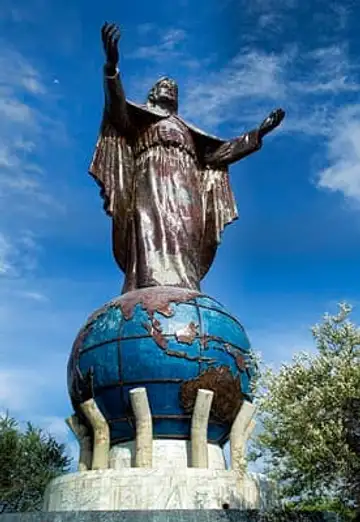
Cristo Rei of Dili
Timor-Leste · Asia
The Cristo Rei of Dili is a 27 m statue of Christ with open arms, standing on a globe atop the Cape Fatucama headland.
Questions
What is the capital of Timor-Leste?
The capital of Timor-Leste is Dili.
Which continent is Timor-Leste in?
Timor-Leste is in Asia.
How big is Timor-Leste?
Timor-Leste covers about 14,874 km².
How many people live in Timor-Leste?
About 1.4 million people live in Timor-Leste.
What are the most famous landmarks in Timor-Leste?
On My Earth Toy's free 3D globe, the landmark from Timor-Leste is Cristo Rei of Dili, with a photo and quick facts.
Sources
Updated: 2026-10-30