
Mokele-mbembe
모켈레음벰베
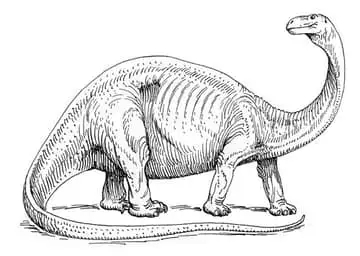
Legend, unconfirmed: a long-necked, dinosaur-like beast said to live in the Likouala swamps and Lake Tele of the Republic of the Congo; its Lingala name means 'one who stops the flow of rivers'. Expeditions since 1980 have found no proof.
See it on the 3D globe →At a glance
- Country
- Congo - Brazzaville
- Kind
- Legendary creatures
Quick answers
Where is Mokele-mbembe?
Mokele-mbembe is in Congo - Brazzaville.
Mokele-mbembe is a legendary water creature said to live in the Congo River basin in central Africa. In several Bantu traditions it is described as a reptile-like creature, a spirit, or something like a long-necked dinosaur. It is a cryptid, which means an animal whose existence has not been proven.
Stories say it lives in swamps and rivers, and it has attracted explorers and cryptozoologists for about a century. After many expeditions, no body, bone or clear photograph has ever been found. This page keeps the legend and the evidence apart so you can see which is which. Cryptozoologists are people who search for animals that are not recognised by science.
The legend
The first report in Western writing is from German captain Ludwig von Stein zu Lausnitz, who surveyed what is now Cameroon in 1913 and heard stories of a huge reptile, which writer Willy Ley described in 1941. In the 1980s the microbiologist Roy Mackal led expeditions, and eyewitnesses described a snake-like head, a long tail, short legs and a reddish-brown body. These are stories, not proof.
What the evidence shows
No expedition has found anything other than eyewitness stories. Most experts think the legend was inspired by a real animal such as the black rhinoceros, which once lived in the region. The expeditions have often been funded by groups that wanted to challenge evolution, and scientists such as the paleontologist Donald Prothero say that wildlife biologists are not looking for it.
Fun facts
- Stories tell of a huge long-necked creature in the swamps of the Congo Basin, but expeditions have never found any proof.
- Most experts think the legend may have been inspired by the black rhinoceros, which once lived in the region.
- No expedition has ever found a bone, a body or a clear photograph.
- The earliest Western report comes from a German captain surveying Cameroon in 1913.
On the globe
Look for the Congo Basin in central Africa, where the swamps and rivers are said to hide the creature.
Nearby on the globe

.jpg)
Sources
Updated: 2026-10-14