
Flag of Liberia
the Lone Star
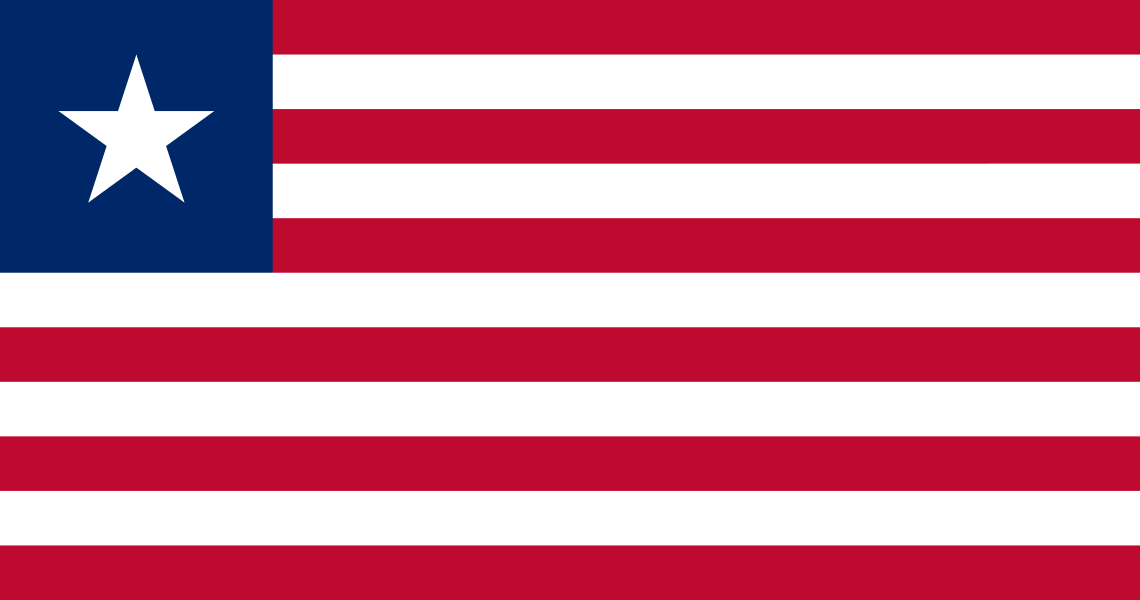
Eleven red and white horizontal stripes with a dark blue square in the top corner holding one white star.
At a glance
- Adopted
- August 24, 1847first unfurled on 24 August 1847, now Flag Day; a 1961 law fixed the exact shape
- Shape (height : width)
- 10:19
- Capital
- Monrovia
- Continent
- Africa
- Colours
- red
- white
- navy blue
What it means
- Eleven stripes: the eleven men who signed Liberia's Declaration of Independence
- Red and white: courage and moral excellence
- White star: Liberia as the first independent republic in Africa
- Blue square: the continent of Africa
Where it came from
Liberia was founded by free Black people and formerly enslaved people from the United States and the Caribbean, so its flag was modelled on the flag of the United States.
The flag was hand-sewn by a committee of seven women led by Susannah Lewis, and it was first unfurled on 24 August 1847, a month after Liberia declared independence.
History
Before independence, the colony used a flag with stripes and a white cross in the upper corner. In 1847 the cross was replaced by a single star.
The 1847 description gave the stripes and the star but not exact sizes. A flag law of April 1961 fixed the 10:19 shape.
Fun facts
- Liberia's flag flies on about 1,700 foreign-owned ships, because many shipowners register their ships there.
- Only Panama has more ships flying its flag in this way.
- Liberians celebrate Flag Day every 24 August.
- The flag has 11 stripes, while the US flag has 13.
- In 1915 President Daniel Howard signed a law making 24 August, Flag Day, a national holiday.
Easy to mix up with
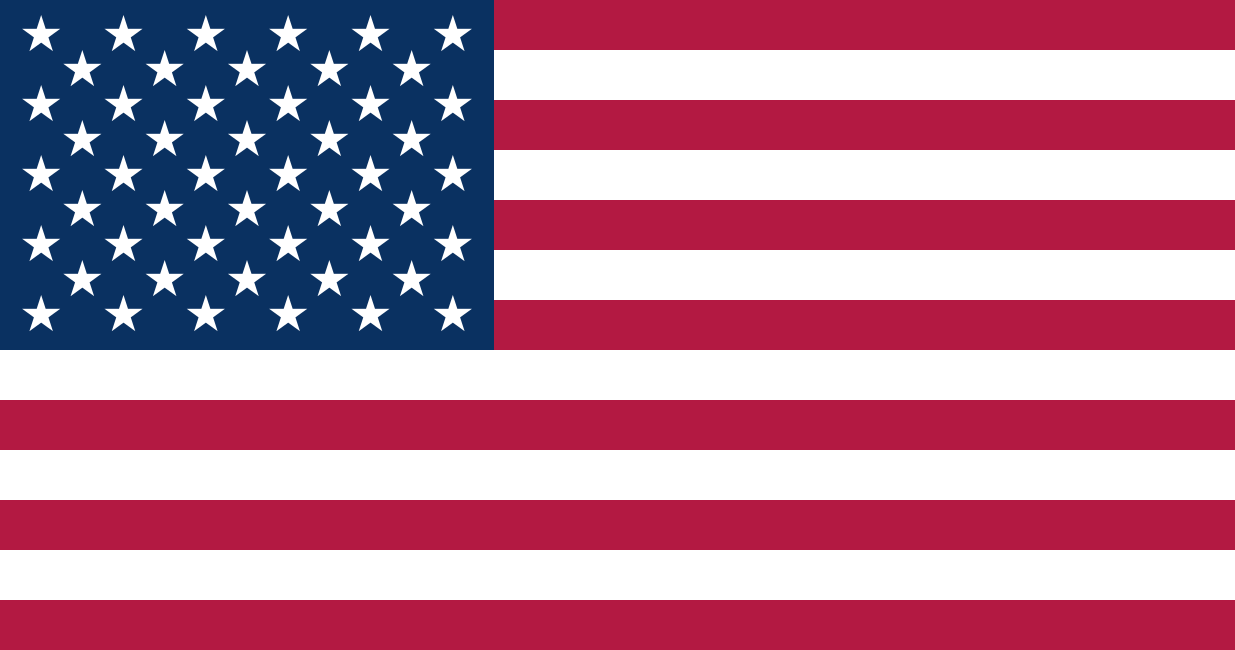 United States: The United States has 13 stripes and 50 small stars
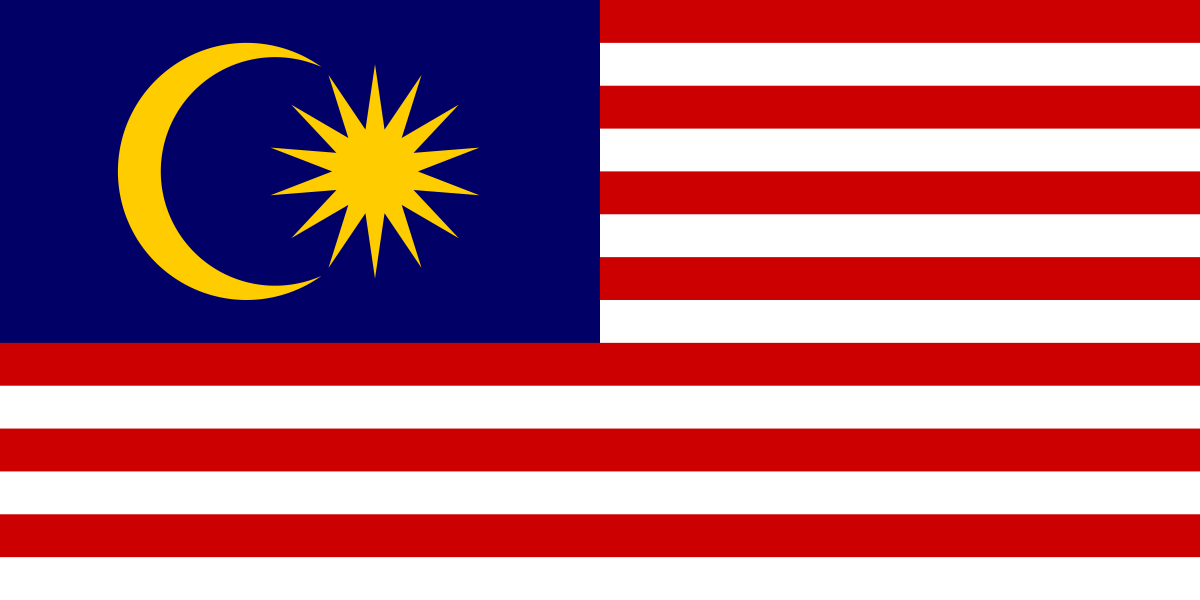 Malaysia: Malaysia has 14 stripes and a yellow crescent and star on its blue corner
Questions
What does the flag of Liberia look like?
Eleven red and white horizontal stripes with a dark blue square in the top corner holding one white star.
What do the colours and symbols on the flag of Liberia mean?
Eleven stripes: the eleven men who signed Liberia's Declaration of Independence; Red and white: courage and moral excellence; White star: Liberia as the first independent republic in Africa; Blue square: the continent of Africa.
When was the flag of Liberia adopted?
The current flag of Liberia was adopted on August 24, 1847. (first unfurled on 24 August 1847, now Flag Day; a 1961 law fixed the exact shape)
What colours are on the flag of Liberia?
The flag of Liberia uses red, white and navy blue.
Which flag is easy to mix up with the flag of Liberia?
It is easy to mix up with the flag of United States. The United States has 13 stripes and 50 small stars
Famous landmarks in Liberia

🎯 Play the flag quiz 🌍 Play the globe
Sources
- en.wikipedia.org
- crwflags.com
- Flag picture: flagcdn.com (Wikimedia Commons)