
Flag of Vanuatu
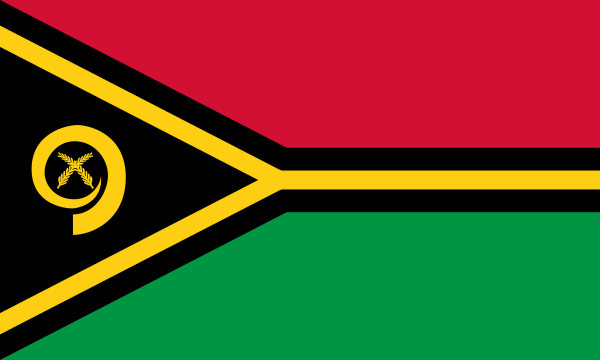
Red on top and green below, with a black triangle at the left and a yellow, black-edged Y shape lying on its side. On the triangle is a gold boar's tusk curled in a circle around two crossed namele leaves.
At a glance
- Adopted
- February 18, 1980
- Capital
- Port Vila
- Continent
- Oceania
- Colours
- red
- green
- black
- yellow (gold)
What it means
- Green: the richness of the islands
- Red: blood: the blood of sacrificed pigs, the strength of tradition and the blood that unites people
- Black: the Melanesian ni-Vanuatu people
- Yellow Y shape: the shape of the island chain in the Pacific Ocean; yellow also stands for the light of Christianity
- Boar's tusk: prosperity and wealth; in Vanuatu, pigs with curled tusks are a sign of high status
- Two namele leaves: peace; their 39 leaflets stand for the 39 members of the first parliament
Where it came from
The colours come from the flag of the Vanua'aku Pati, the party that led the country to independence. A parliamentary committee chose the final design from entries by local artists a few months before independence. The winner is credited as Kalontas Malon (also spelled Mahlon) from Emau Island.
History
Before independence, the islands were called the New Hebrides and were ruled jointly by Britain and France, so the British and French flags were flown. The new flag was adopted on 18 February 1980, and Vanuatu became independent on 30 July 1980.
Fun facts
- Islanders wear curled boar's tusks as pendants; the upper tusks are removed so the lower ones grow into a full circle.
- The leaves on the flag have exactly 39 leaflets, one for each member of the first parliament.
- Experts argue whether the namele plant is a fern, a palm or a cycad.
- Books disagree on the flag's exact shape: 11:18, 3:5 and 19:36 have all been given.
Easy to mix up with
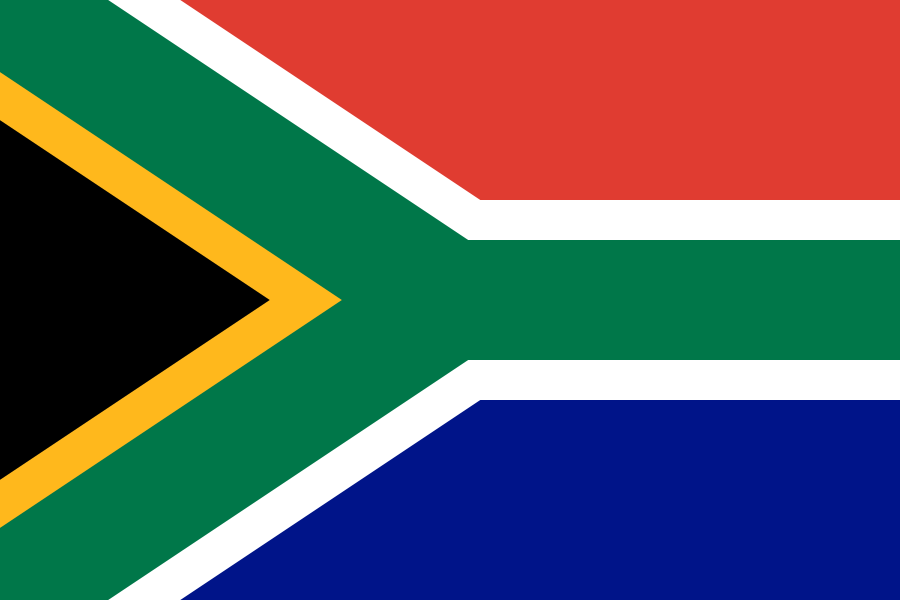 South Africa: South Africa also has a sideways Y shape and a black triangle, but its stripes are red and blue with a green Y
Questions
What does the flag of Vanuatu look like?
Red on top and green below, with a black triangle at the left and a yellow, black-edged Y shape lying on its side. On the triangle is a gold boar's tusk curled in a circle around two crossed namele leaves.
What do the colours and symbols on the flag of Vanuatu mean?
Green: the richness of the islands; Red: blood: the blood of sacrificed pigs, the strength of tradition and the blood that unites people; Black: the Melanesian ni-Vanuatu people; Yellow Y shape: the shape of the island chain in the Pacific Ocean; yellow also stands for the light of Christianity; Boar's tusk: prosperity and wealth; in Vanuatu, pigs with curled tusks are a sign of high status; Two namele leaves: peace; their 39 leaflets stand for the 39 members of the first parliament.
When was the flag of Vanuatu adopted?
The current flag of Vanuatu was adopted on February 18, 1980.
What colours are on the flag of Vanuatu?
The flag of Vanuatu uses red, green, black and yellow (gold).
Which flag is easy to mix up with the flag of Vanuatu?
It is easy to mix up with the flag of South Africa. South Africa also has a sideways Y shape and a black triangle, but its stripes are red and blue with a green Y
Famous landmarks in Vanuatu

🎯 Play the flag quiz 🌍 Play the globe
Sources
- en.wikipedia.org
- crwflags.com
- Flag picture: flagcdn.com (Wikimedia Commons)