
Plitvice Lakes
플리트비체 호수 국립공원
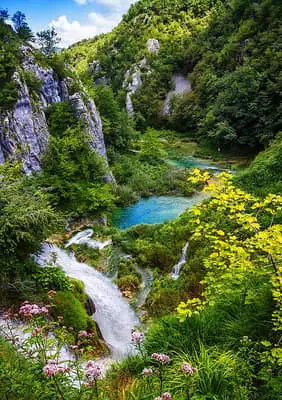
Plitvice Lakes National Park is one of the oldest and largest national parks in Croatia. It lies in the hills of central Croatia, near the border with Bosnia and Herzegovina, and covers about 297 square kilometres. Its star attraction is a chain of sixteen lakes that you can see from the surface, stepping down one after another and joined by waterfalls.
See it on the 3D globe →At a glance
- Country
- Croatia
- Location
- Lika, Croatia
Quick answers
Where is Plitvice Lakes?
Plitvice Lakes is in Lika, Croatia.
Sixteen terraced lakes linked by waterfalls, famous for their shifting emerald and blue hues.
UNESCO added the park to its World Heritage list in 1979 because of these tufa lakes, caves and waterfalls. The water is famous for its colours, which range from azure to green, grey or blue and keep changing through the day.
How did the lakes form?
The land here is karst, a landscape made of limestone that water slowly changes. Over many centuries, flowing water has built natural dams called travertine barriers, which slow the stream and hold the water back so that a lake can fill up behind them. These dams are still growing taller all the time.
The two biggest lakes, Prošćansko and Kozjak, make up about 80 percent of the water area. They are also the deepest, at about 37 and 47 metres. From the first lake to the last, the water drops about 133 metres.
Why do the colours change?
The lakes do not stay one colour. The shade depends on how many minerals or tiny living things are in the water, and on the angle of the sunlight. A lake can look turquoise in the morning and greener or greyer later on.
To protect this delicate place, visitors walk on wooden footbridges and paths. Swimming, fishing and picking things up are not allowed in the park.
Fun facts
- Its lakes are separated by natural dams of travertine.
- The lake dams are still growing taller, because the water keeps building new travertine.
- The name Plitvice is linked to Croatian words meaning shallow, because nature formed shallow basins that filled with water.
- The park became a national park in 1949 and a UNESCO World Heritage Site in 1979.
On the globe
The globe model shows the terraced lakes linked by waterfalls; look for the cascade of blue-green pools stepping downhill.
Nearby on the globe
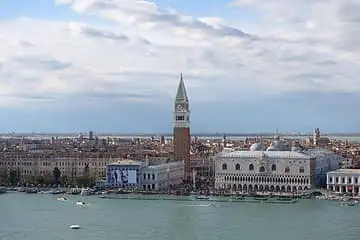
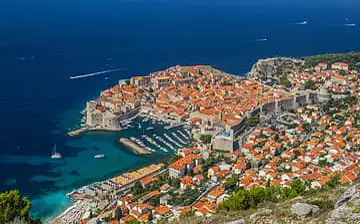
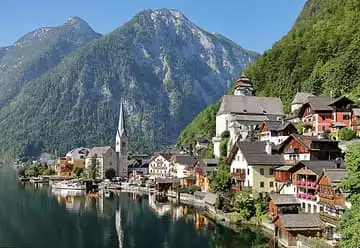

Sources
Updated: 2026-10-14