
University of Tokyo
도쿄 대학교
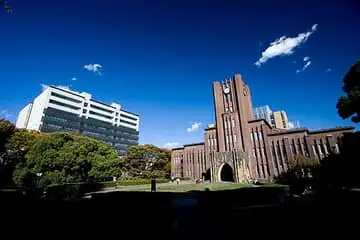
Founded in 1877 as Japan's first modern national university, it is the country's top school, alma mater of many prime ministers and Nobel laureates. The model shows Yasuda Auditorium (1925), the red-brick clock tower that is the symbol of the Hongo campus.
See it on the 3D globe →At a glance
- Country
- Japan
- Location
- Hongo, Bunkyō, Tokyo, Japan
Quick answers
Where is University of Tokyo?
University of Tokyo is in Hongo, Bunkyō, Tokyo, Japan.
The University of Tokyo, often called Todai in Japan, was founded on 12 April 1877 as the country's first modern national university. It was formed by joining several older schools from the Edo period, including a school for Western learning and a medical school. Its main campus is at Hongō in Bunkyō, central Tokyo, with other campuses at Komaba and Kashiwa.
Todai is widely seen as Japan's top university. By 2025, 17 Japanese prime ministers and 22 Nobel Prize winners had studied or worked there. The symbol of the Hongō campus is Yasuda Auditorium, a red-brick hall with a tall clock tower, finished in 1925. About 28,000 students study at the university today, roughly half of them undergraduates and half graduate students.
History
The school's name changed several times. In 1886 it became the Imperial University, and in 1897 it was renamed Tokyo Imperial University after a second imperial university opened in Kyoto. After the Second World War, in 1947, it dropped the word "Imperial" and became the University of Tokyo again. The Hongō campus stands on land that was once the Tokyo home of the powerful Maeda family. Their old red gate, the Akamon, built in 1827, is still there and is another famous symbol of the university.
Yasuda Auditorium
Yasuda Auditorium was paid for by the businessman Yasuda Zenjirō and completed in 1925. It was designed by Professor Uchida Yoshikazu and Kishida Hideto of the university's architecture department, and its tower may have been inspired by the gate towers of Cambridge University. Its reddish-brown brick style became typical of campus buildings put up after the Great Kantō Earthquake of 1923. During the student protests of 1968 to 1969, students occupied the building until police cleared it in January 1969. Afterwards it stayed closed for a long time, and the Yasuda family's companies helped pay for its repair.
Fun facts
- The University of Tokyo's famous red gate, the Akamon, is older than the university itself: it was built in 1827.
- The Hongō campus was once the Tokyo residence of the Maeda family, a powerful samurai clan.
- By 2025, 17 Japanese prime ministers had studied or worked at the university.
- Yasuda Auditorium's clock tower was finished in 1925, just two years after a huge earthquake hit Tokyo.
On the globe
The model shows Yasuda Auditorium, the red-brick clock-tower hall that is the symbol of the Hongō campus. Look for its tall central tower rising above the brick building.
Nearby on the globe

Sources
- Read more on Wikipedia
- University of Tokyo — Wikipedia
- Yasuda Auditorium — Wikipedia
- Yasuda Auditorium (Hongo campus history) — The University of Tokyo
Updated: 2026-10-13