
Famous landmarks in Cuba
3 landmarks · 1 animal
Cuba on My Earth Toy, the free 3D toy globe for kids: 3 landmarks, 1 animal. Here you can see its flag, capital and size, then fly to every place on the globe.
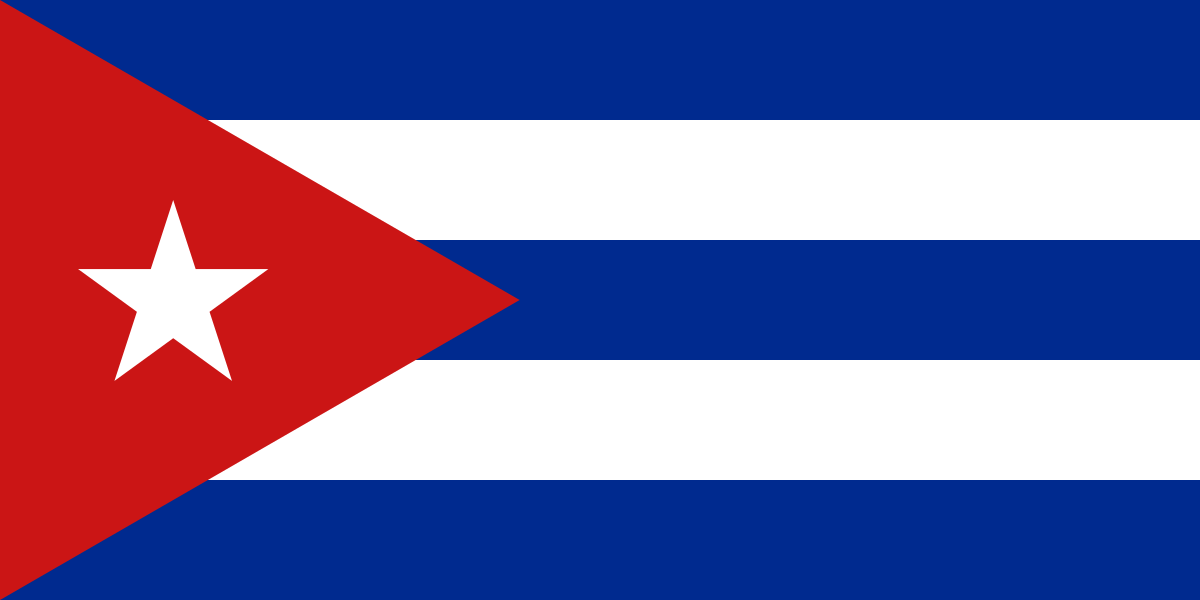
Cuba's flag has five horizontal stripes, three blue and two white, with a red triangle at the flagpole side holding a white five-pointed star.
Read about this flag →Cuba at a glance
- Capital
- Havana
- Continent
- North America
- Area
- 109,884 km²
- Population
- 11 million
Cuba is an island country in the Caribbean Sea, about 150 kilometres south of Florida. It is the largest island in the Caribbean, along with many smaller islands around it. Its capital is Havana, and about 10 to 11 million people live there. Cuba is known for its colourful old cities, classic 1950s cars, lively music and dance, tobacco fields, sandy beaches and rare wildlife.
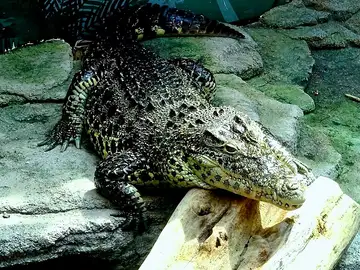
On My Earth Toy you can visit three landmarks in Havana: El Capitolio, a domed capitol building; Morro Castle, the old fortress guarding the harbour entrance; and Castillo de la Real Fuerza, one of the oldest stone forts in the Americas. Look for the Cuban crocodile too, which lives only in Cuba's swamps.
Geography and nature
Cuba is long and narrow, more than 1,200 kilometres from end to end. Much of it is flat or gently rolling farmland, with mountain ranges such as the Sierra Maestra in the southeast. In the west, the Viñales Valley has rounded limestone hills called mogotes rising from tobacco fields. The Zapata Swamp is home to the Cuban crocodile. Cuba also has the bee hummingbird, the smallest bird in the world.
People, languages and culture
Spanish is the official language. Cubans have Spanish, African and other roots, and this mix created famous music and dance styles such as son, rumba and the cha-cha-chá, which grew into salsa. Baseball is the most popular sport. Rice and black beans, plantains and roast pork are common foods. In Havana, many old American cars from the 1950s are still lovingly repaired and driven.
History in a nutshell
The Taíno and other Indigenous peoples lived here when Christopher Columbus arrived in 1492. Spain ruled Cuba for about four centuries, growing sugar on plantations worked by enslaved Africans. After wars of independence and the Spanish–American War of 1898, Cuba became an independent republic in 1902. In 1959 a revolution led by Fidel Castro took power, and Cuba became a communist state with close ties to the Soviet Union.
Fun facts
- The bee hummingbird is only about 5 to 6 centimetres long, about the size of a bee.
- Old Havana and its fortifications are a UNESCO World Heritage Site.
- The Cuban crocodile is an agile jumper and can leap out of the water.
- Cuba's shape on the map is often compared to a crocodile.
Famous landmarks in Cuba
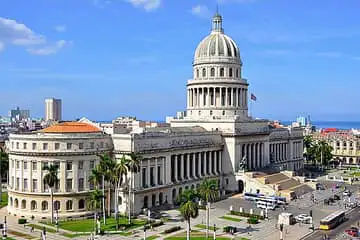
El Capitolio
Cuba · North America
A domed former parliament building in central Havana, reminiscent of the U.S.
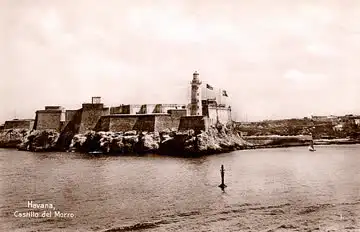
Morro Castle (Havana)
Cuba · North America
A fortress on the rocky headland guarding the entrance to Havana harbour, with an 1846 lighthouse still sweeping the sea.
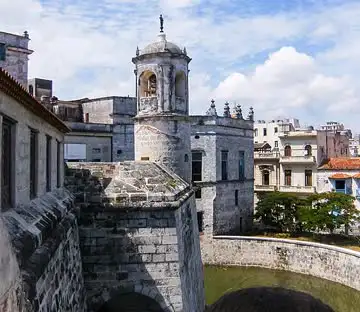
Castillo de la Real Fuerza
Cuba · North America
One of the oldest stone forts in the Americas, ringed by a moat; the Giraldilla weathervane on its tower is a symbol of Havana.
Animals in Cuba
Questions
What is the capital of Cuba?
The capital of Cuba is Havana.
Which continent is Cuba in?
Cuba is in North America.
How big is Cuba?
Cuba covers about 109,884 km².
How many people live in Cuba?
About 11 million people live in Cuba.
What are the most famous landmarks in Cuba?
Some of the best-known landmarks in Cuba are El Capitolio, Morro Castle (Havana) and Castillo de la Real Fuerza. My Earth Toy has 3 landmarks from Cuba on its free 3D globe, each with a photo and quick facts.
Which animals can you find in Cuba on My Earth Toy?
On the globe you can find Cuban crocodile in Cuba.
Sources
Updated: 2026-10-30