
El Salvador: landmarks, animals & facts for kids
1 landmark · 1 animal
El Salvador on My Earth Toy, the free 3D toy globe for kids: 1 landmark, 1 animal. Here you can see its flag, capital and size, then fly to every place on the globe.
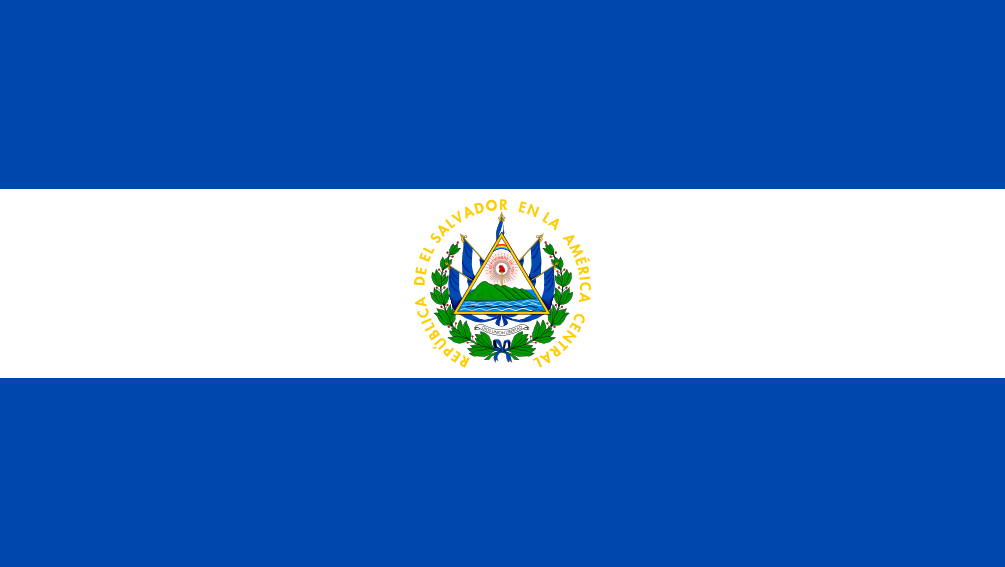
Three horizontal stripes of blue, white and blue, with El Salvador's coat of arms in the middle of the white stripe. The arms show a triangle with five volcanoes, a red cap and a rainbow, inside a laurel wreath.
Read about this flag →El Salvador at a glance
- Capital
- San Salvador
- Continent
- North America
- Area
- 21,041 km²
- Population
- 6.3 million
El Salvador is the smallest country on the mainland of Central America, and the only one with no Caribbean coastline: it faces the Pacific Ocean, between Guatemala and Honduras. Its capital is San Salvador, and about 6.3 million people live there, making it one of the most densely populated countries in the Americas. El Salvador is called the 'Land of Volcanoes' and is known for its surf beaches, coffee, Maya ruins and pupusas.
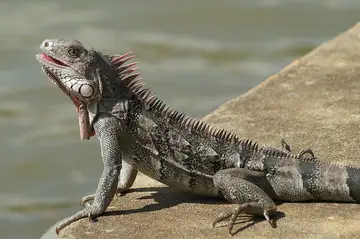
On My Earth Toy you can see Joya de Cerén, a farming village buried by volcanic ash around 1,400 years ago. Look out for the green iguana too, a big lizard that basks in trees and swims well.
Geography and nature
Two lines of mountains cross El Salvador, and more than 20 volcanoes rise among them, some still active. The highest is the Santa Ana volcano, with a turquoise crater lake. Lake Coatepeque fills an old volcanic crater. The Pacific coast has black-sand beaches with big waves, popular with surfers. Much of the original forest has been cleared for farms, but parks such as El Imposible still shelter wildlife.
People, languages and culture
Spanish is the official language, and a few people still speak Nawat, an Indigenous language. Most Salvadorans are mestizo, of mixed Indigenous and European ancestry, and most are Christian. The national dish is the pupusa, a thick corn tortilla stuffed with cheese, beans or pork, served with pickled cabbage. Football is the most popular sport. Since 2001 the country has used the US dollar.
History in a nutshell
Maya and later Pipil peoples lived here; the Pipil called the land Cuzcatlán. Spain conquered the region in the 1520s. El Salvador became independent from Spain in 1821 with the rest of Central America and became a separate country later in the 1800s. Coffee became its main export. From 1980 to 1992 the country went through a civil war, which ended with peace agreements.
Fun facts
- Joya de Cerén is nicknamed the 'Pompeii of the Americas' because ash preserved houses, tools and even food.
- El Salvador celebrates National Pupusa Day each November.
- The country's name means 'The Saviour' in Spanish.
- El Salvador is about the same size as the US state of New Jersey.
Famous landmarks in El Salvador
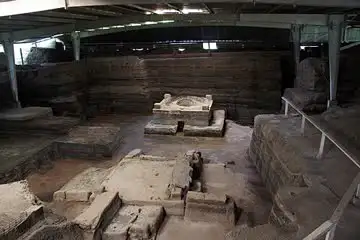
Joya de Cerén
El Salvador · North America
A Maya farming village preserved under volcanic ash, nicknamed the 'Pompeii of the Americas'.
Animals in El Salvador
Questions
What is the capital of El Salvador?
The capital of El Salvador is San Salvador.
Which continent is El Salvador in?
El Salvador is in North America.
How big is El Salvador?
El Salvador covers about 21,041 km².
How many people live in El Salvador?
About 6.3 million people live in El Salvador.
What are the most famous landmarks in El Salvador?
On My Earth Toy's free 3D globe, the landmark from El Salvador is Joya de Cerén, with a photo and quick facts.
Which animals can you find in El Salvador on My Earth Toy?
On the globe you can find Green iguana in El Salvador.
Sources
Updated: 2026-10-30