
Estonia: landmarks, animals & facts for kids
1 landmark
Estonia on My Earth Toy, the free 3D toy globe for kids: 1 landmark. Here you can see its flag, capital and size, then fly to every place on the globe.
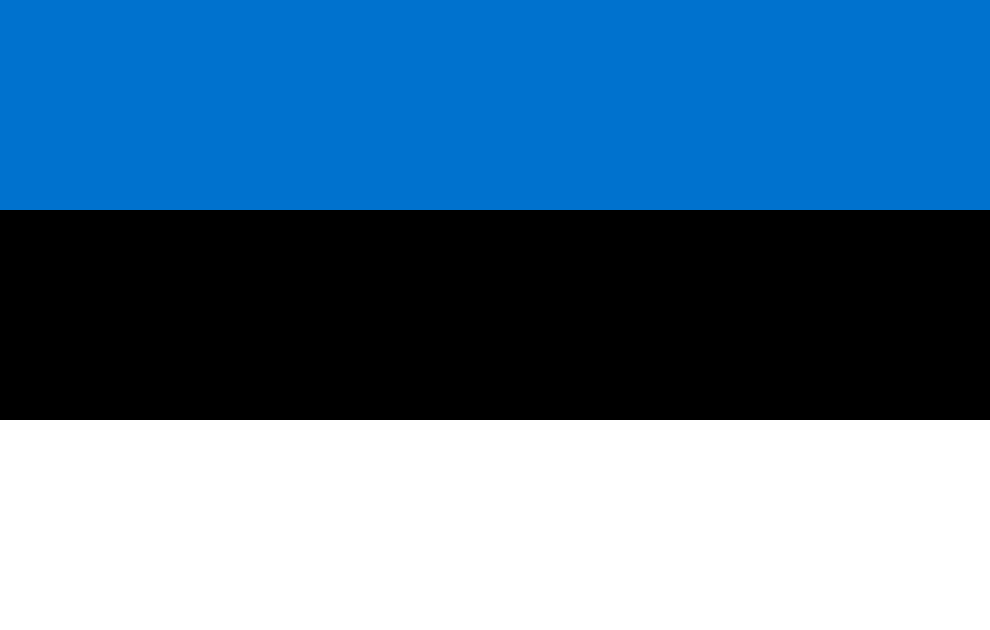
Estonia's flag has three equal horizontal stripes: blue on top, black in the middle and white at the bottom.
Read about this flag →Estonia at a glance
- Capital
- Tallinn
- Continent
- Europe
- Area
- 45,339 km²
- Population
- 1.4 million
Estonia is a small country in northern Europe, on the eastern shore of the Baltic Sea, the northernmost of the three Baltic states. It is bordered by Latvia and Russia, and Finland lies just across the Gulf of Finland. Its capital is Tallinn, and about 1.4 million people live there. Estonia is known for its medieval old town, forests and islands, a great tradition of choir singing and for being one of the most digital countries in the world.
On My Earth Toy you can visit Tallinn Old Town, with its city walls, red-roofed towers and church spires. It is one of the best-preserved medieval trading towns in northern Europe and a UNESCO World Heritage Site.
Geography and nature
Estonia is low and flat; its highest point, Suur Munamägi, is only about 318 metres tall. Around half of the country is forest, and there are many bogs and wetlands, where boardwalks let visitors walk across the moss. The coast is dotted with more than 2,000 islands, the largest being Saaremaa and Hiiumaa. On Saaremaa, the Kaali crater was made by a meteorite thousands of years ago. Brown bears, wolves, lynx and beavers live in the forests.
People, languages and culture
Estonian is the official language. It is a Finnic language, related to Finnish and distantly to Hungarian, and different from most European languages. A large Russian-speaking minority also lives in Estonia. Many Estonians are not religious. The Song Festival, held every five years, brings tens of thousands of singers onto one stage. Estonians enjoy saunas, berry and mushroom picking, and dark rye bread at almost every meal.
History in a nutshell
In the 1200s German and Danish crusaders conquered the area, and towns like Tallinn joined the Hanseatic trading league. Later Sweden and then Russia ruled. Estonia declared independence in 1918, but in 1940 it was occupied by the Soviet Union. In the late 1980s Estonians sang patriotic songs together in huge peaceful gatherings, known as the Singing Revolution, and independence was restored in 1991. Estonia joined the EU and NATO in 2004.
Fun facts
- In 2005 Estonia became the first country to let all its voters vote online in nationwide elections.
- The software for the calling app Skype was developed by Estonian engineers.
- Kiiking, a sport where you swing all the way around a bar on a giant swing, was invented in Estonia.
- Estonian has 14 grammatical cases, so a word can take many different endings.
Famous landmarks in Estonia
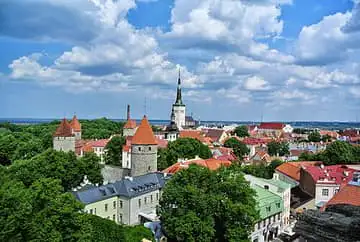
Tallinn Old Town
Estonia · Europe
A superbly preserved medieval Hanseatic old town of walls, towers and cobbled lanes.
Questions
What is the capital of Estonia?
The capital of Estonia is Tallinn.
Which continent is Estonia in?
Estonia is in Europe.
How big is Estonia?
Estonia covers about 45,339 km².
How many people live in Estonia?
About 1.4 million people live in Estonia.
What are the most famous landmarks in Estonia?
On My Earth Toy's free 3D globe, the landmark from Estonia is Tallinn Old Town, with a photo and quick facts.
Sources
Updated: 2026-10-30