
Flag of Estonia
sinimustvalge ("blue-black-white")

Estonia's flag has three equal horizontal stripes: blue on top, black in the middle and white at the bottom.
At a glance
- Adopted
- August 7, 1990first adopted as the national flag on 21 November 1918; banned under Soviet rule and restored in 1990
- Shape (height : width)
- 7:11
- Capital
- Tallinn
- Continent
- Europe
- Colours
- blue
- black
- white
What it means
- Blue: there is no official meaning; it is popularly said to be the sky, sea and lakes, and faith and loyalty
- Black: popularly the dark soil of the homeland, the hard past, and the black jackets of Estonian farmers
- White: popularly hope, hard work and purity, and the snow, birch bark and bright summer nights
Where it came from
The flag began as the flag of the Estonian Students' Society at the University of Tartu, which chose blue, black and white in 1881. Its first flag was sewn in 1884 and blessed at Otepaa that June. No single designer is known.
The students' colours became so popular that Estonians took them as the colours of the whole nation.
History
When Estonia became independent, the government adopted the tricolour on 21 November 1918, and it was raised on the Pikk Hermann tower in Tallinn on 12 December 1918. A law of 1922 confirmed it.
After the Soviet Union took over in 1940, the flag was banned and replaced by Soviet flags; showing it could be punished. In 1988 it could be shown in public again, in 1989 it went back up on Pikk Hermann, and on 7 August 1990 it was declared the national flag again, a year before full independence.
Fun facts
- The very first blue-black-white flag from 1884 is kept at the Estonian National Museum.
- On the Pikk Hermann tower the flag is raised at sunrise, but never before 7 in the morning.
- There is a well-known song called "Eesti lipp" ("The Estonian flag") from 1922.
- When the flag hangs vertically, the blue stripe must be on the left as you look at it.
Easy to mix up with
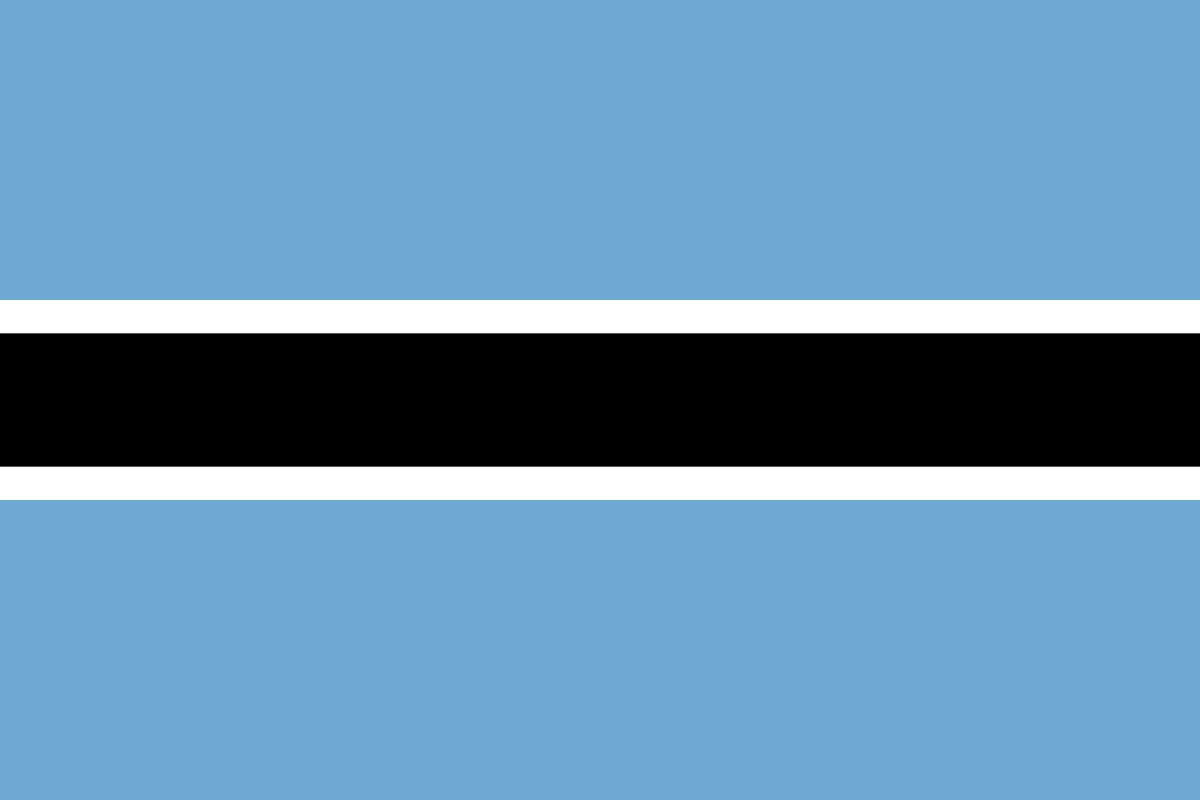 Botswana: Botswana is also blue, black and white, but its black stripe is thin, edged in white, on a light blue field
Questions
What does the flag of Estonia look like?
Estonia's flag has three equal horizontal stripes: blue on top, black in the middle and white at the bottom.
What do the colours and symbols on the flag of Estonia mean?
Blue: there is no official meaning; it is popularly said to be the sky, sea and lakes, and faith and loyalty; Black: popularly the dark soil of the homeland, the hard past, and the black jackets of Estonian farmers; White: popularly hope, hard work and purity, and the snow, birch bark and bright summer nights.
When was the flag of Estonia adopted?
The current flag of Estonia was adopted on August 7, 1990. (first adopted as the national flag on 21 November 1918; banned under Soviet rule and restored in 1990)
What colours are on the flag of Estonia?
The flag of Estonia uses blue, black and white.
Which flag is easy to mix up with the flag of Estonia?
It is easy to mix up with the flag of Botswana. Botswana is also blue, black and white, but its black stripe is thin, edged in white, on a light blue field
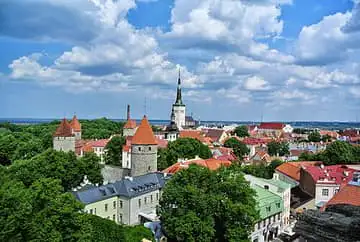
Famous landmarks in Estonia
🎯 Play the flag quiz 🌍 Play the globe
Sources
- en.wikipedia.org
- crwflags.com
- Flag picture: flagcdn.com (Wikimedia Commons)