
Fiji: landmarks, animals & facts for kids
1 landmark · 1 animal · 1 place to discover
Fiji on My Earth Toy, the free 3D toy globe for kids: 1 landmark, 1 animal, 1 place to discover. Here you can see its flag, capital and size, then fly to every place on the globe.
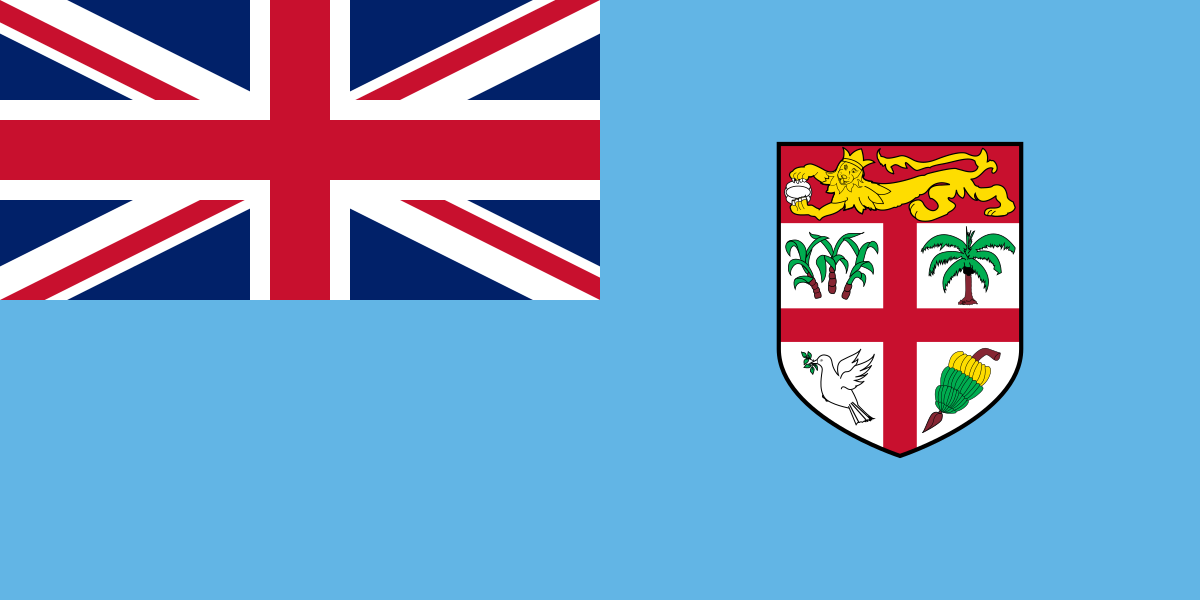
Fiji's flag is light blue with the British Union Jack in the top corner by the flagpole and the shield from Fiji's coat of arms on the other side.
Read about this flag →Fiji at a glance
- Capital
- Suva
- Continent
- Oceania
- Area
- 18,274 km²
- Population
- 0.9 million
Fiji is an island country in the South Pacific Ocean, in the region called Melanesia, about 2,000 kilometres north of New Zealand. It is made up of more than 330 islands, about 110 of them lived on, and most people live on the two largest, Viti Levu and Vanua Levu. Its capital is Suva, and about 900,000 people live in Fiji. It is known for coral reefs, palm-fringed beaches, friendly 'Bula!' greetings and rugby.
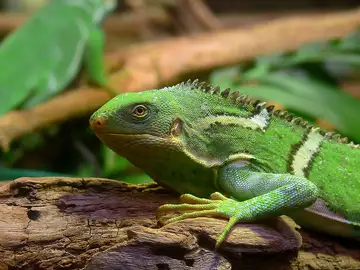
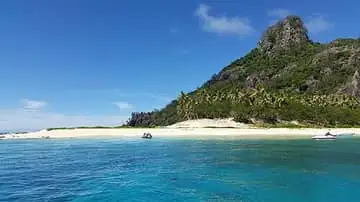
On My Earth Toy you can see the Sri Siva Subramaniya Temple in Nadi, one of the largest Hindu temples in the Southern Hemisphere, with brightly painted towers. Look for the Fiji crested iguana, a rare green lizard, and for Monuriki, the little island where the film Cast Away was shot.
Geography and nature
The larger islands are volcanic, with rugged, forested mountains in the middle and sugar cane fields and beaches along the coasts. Many smaller islands are low coral islands surrounded by lagoons. Fiji's reefs, such as the Great Astrolabe Reef, are full of soft corals and colourful fish. The climate is tropical, with a wet season when cyclones can strike. The Fiji crested iguana lives only on a few islands and is critically endangered.
People, languages and culture
English, Fijian (iTaukei) and Fiji Hindi are official languages. Most people are Indigenous Fijians or Indo-Fijians, many of whose ancestors came from India to work on sugar plantations between 1879 and 1916. Christianity, Hinduism and Islam are all practised. Kava, a drink made from a pepper plant's root, is shared in ceremonies to welcome guests. Food is often cooked in a lovo, an earth oven heated with hot stones. Rugby is the national passion.
History in a nutshell
People first settled the islands about 3,000 years ago, and Fijian chiefdoms developed over many centuries. European traders and missionaries arrived in the 1800s. In 1874 Fijian chiefs ceded the islands to Britain, and Fiji became a British colony. It gained independence on 10 October 1970. Since then Fiji has gone through several changes of government, and it remains one of the leading nations of the Pacific Islands.
Fun facts
- The 180° line of longitude runs across the Fijian island of Taveuni.
- Fiji's men's rugby sevens team won the country's first-ever Olympic gold medal in 2016.
- The Fiji crested iguana was only described by scientists in 1981.
- Fijians often greet visitors with a cheerful 'Bula!', which means 'life'.
Famous landmarks in Fiji
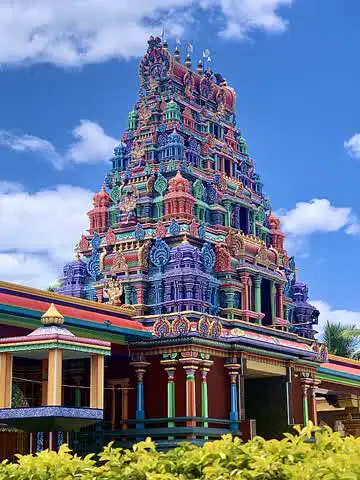
Sri Siva Subramaniya Temple
Fiji · Oceania
One of the largest Hindu temples in the Southern Hemisphere, built in Dravidian style by craftsmen from India and completed in 1994; its vividly painted gopuram towers honour Lord Murugan.
Animals in Fiji
Places to discover in Fiji
Questions
What is the capital of Fiji?
The capital of Fiji is Suva.
Which continent is Fiji in?
Fiji is in Oceania.
How big is Fiji?
Fiji covers about 18,274 km².
How many people live in Fiji?
About 0.9 million people live in Fiji.
What are the most famous landmarks in Fiji?
On My Earth Toy's free 3D globe, the landmark from Fiji is Sri Siva Subramaniya Temple, with a photo and quick facts.
Which animals can you find in Fiji on My Earth Toy?
On the globe you can find Fiji crested iguana in Fiji.
Sources
Updated: 2026-10-30