
Greenland: landmarks, animals & facts for kids
2 landmarks · 2 animals
Greenland on My Earth Toy, the free 3D toy globe for kids: 2 landmarks, 2 animals. Here you can see its flag, capital and size, then fly to every place on the globe.
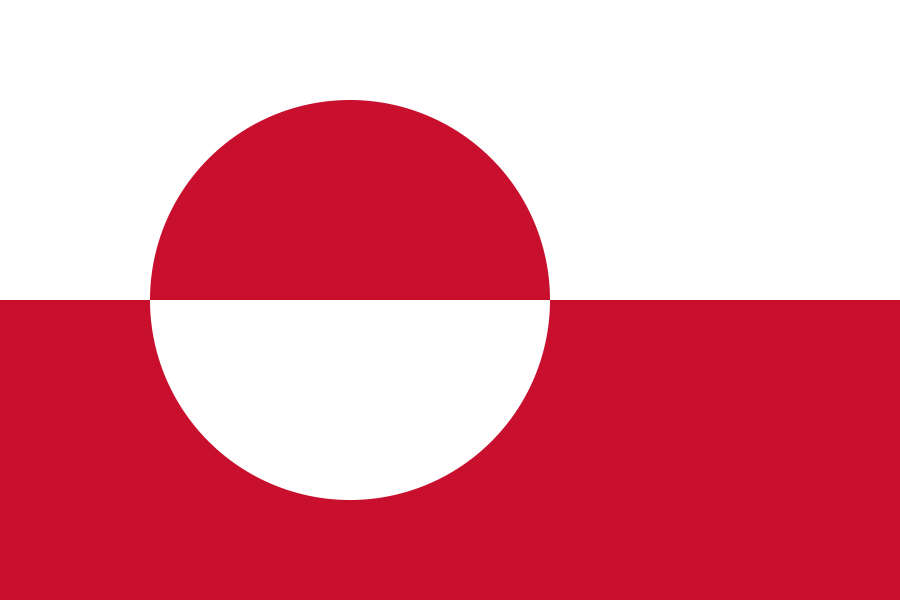
Greenland's flag is white on top and red below, with a circle set toward the flagpole that is red on top and white below.
Read about this flag →Greenland at a glance
- Capital
- Nuuk
- Continent
- North America
- Area
- 2,166,086 km²
- Population
- 56,000 people
Greenland is the largest island in the world, lying in the far north of North America between the Arctic Ocean and the North Atlantic, northeast of Canada. It is not an independent country: it is a self-governing part of the Kingdom of Denmark, with its own government in the capital, Nuuk. About four-fifths of the island is buried under a giant ice sheet, so its small population lives in towns and villages along the coast.
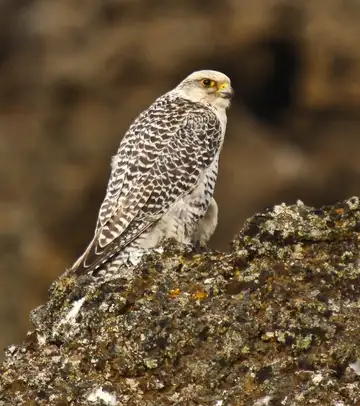
On My Earth Toy you can visit Nuuk, with its colourful houses and the pointed Sermitsiaq mountain across the fjord, and the Ilulissat Icefjord, where a fast-moving glacier pushes huge icebergs into Disko Bay. Look out for muskoxen and the gyrfalcon, the largest falcon in the world.
Geography and nature
The Greenland ice sheet is the second largest body of ice on Earth after Antarctica's, and in places it is about 3 kilometres thick. Only the rocky edges are free of ice, cut by deep fjords. The highest point is Gunnbjørn Fjeld, 3,694 metres tall. In the north, the Sun stays up all night in summer and does not rise at all in mid-winter. There are no roads between towns, so people travel by boat, plane, helicopter, snowmobile or dog sled.
People, languages and culture
Most Greenlanders are Inuit, and the official language is Greenlandic (Kalaallisut); Danish is also widely used. In Greenlandic the island is called Kalaallit Nunaat, meaning land of the Greenlanders. Fishing, especially for shrimp and halibut, is the most important industry, and hunting for seals and whales is still part of life in some places. The kayak was invented by Arctic peoples, and Greenland still holds kayak championships. Most people are Lutheran Christians.
History in a nutshell
Inuit and earlier Arctic peoples came from North America in several waves, starting more than 4,000 years ago. Norse settlers led by Erik the Red arrived from Iceland in the late 10th century, but their farms had disappeared by the 1400s. Danish-Norwegian colonisation began in 1721. Greenland became part of Denmark in 1953, gained home rule in 1979, and won wider self-government in 2009, while Denmark still handles areas such as defence and foreign affairs.
Fun facts
- If all of Greenland's ice melted, sea levels around the world would rise by about 7 metres.
- According to Icelandic sagas, Erik the Red chose the name Greenland to attract settlers to the icy island.
- Greenland is about fifty times larger than Denmark, the country it is linked to.
- The Ilulissat Icefjord is a UNESCO World Heritage Site, and one of its glaciers is among the fastest-moving in the world.
Famous landmarks in Greenland
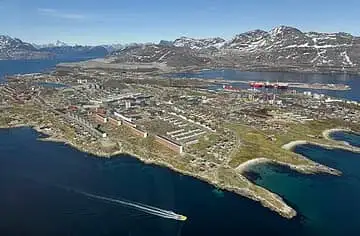
Nuuk
Greenland · North America
Greenland's capital, where colourful houses and the towering Sermitsiaq peak ring the fjord.
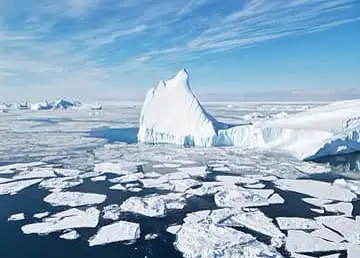
Ilulissat Icefjord
Greenland · North America
A fjord where one of the world's fastest glaciers pours colossal icebergs into Disko Bay.
Animals in Greenland
Questions
What is the capital of Greenland?
The capital of Greenland is Nuuk.
Which continent is Greenland in?
Greenland is in North America.
How big is Greenland?
Greenland covers about 2,166,086 km².
How many people live in Greenland?
About 56,000 people people live in Greenland.
What are the most famous landmarks in Greenland?
Some of the best-known landmarks in Greenland are Nuuk and Ilulissat Icefjord. My Earth Toy has 2 landmarks from Greenland on its free 3D globe, each with a photo and quick facts.
Which animals can you find in Greenland on My Earth Toy?
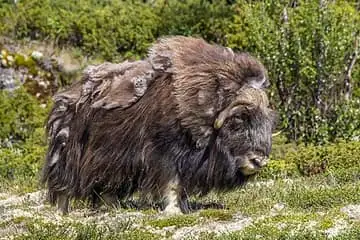
On the globe you can find Muskox and Gyrfalcon in Greenland.
Sources
Updated: 2026-10-30