
Jamaica: landmarks, animals & facts for kids
2 landmarks
Jamaica on My Earth Toy, the free 3D toy globe for kids: 2 landmarks. Here you can see its flag, capital and size, then fly to every place on the globe.
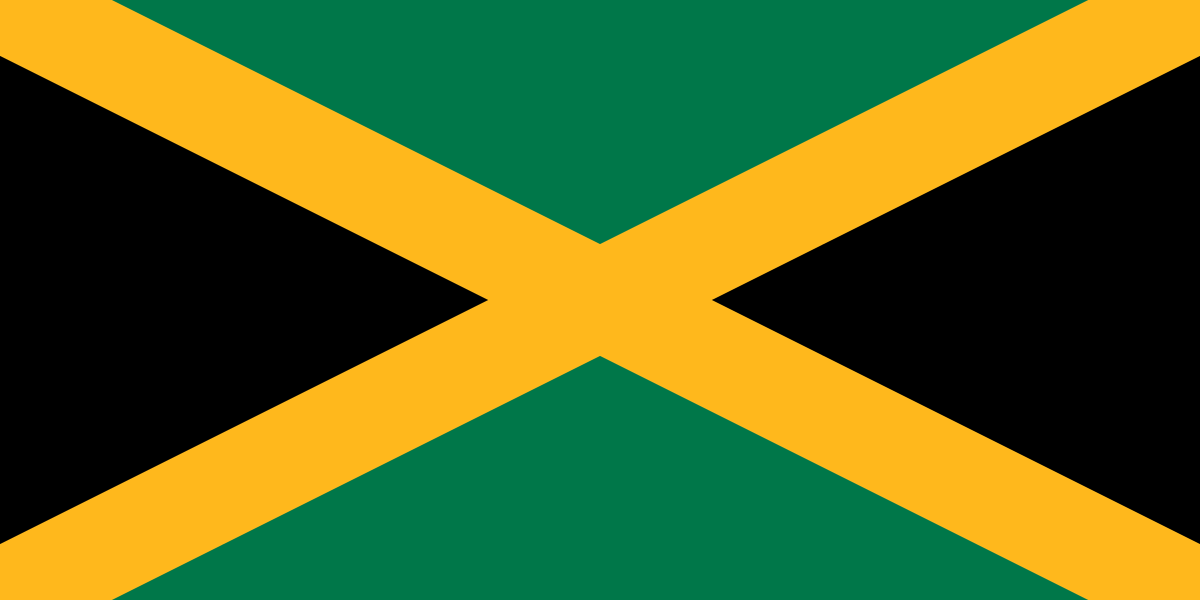
A gold diagonal cross (saltire) divides the flag into four triangles: green at the top and bottom, black at the left and right.
Read about this flag →Jamaica at a glance
- Capital
- Kingston
- Continent
- North America
- Area
- 10,991 km²
- Population
- 2.8 million
Jamaica is an island country in the Caribbean Sea, south of Cuba and west of Hispaniola. It is the third-largest island in the Caribbean, and its capital is Kingston. The name comes from the Taíno word Xaymaca, often translated as land of wood and water. Jamaica is famous around the world for reggae music, record-breaking sprinters, Blue Mountain coffee and spicy jerk cooking.
On My Earth Toy you can visit Dunn's River Falls near Ocho Rios, a terraced waterfall that tumbles over stone steps right down to the beach, where visitors climb up the falls hand in hand. You can also see Rose Hall Great House, a grand 18th-century plantation mansion near Montego Bay.
Geography and nature
Jamaica is a mountainous island. The Blue Mountains in the east rise to Blue Mountain Peak, 2,256 metres tall, where cool mist helps grow famous coffee. Much of the island is limestone, which has formed caves, sinkholes and the rugged Cockpit Country. Rivers and waterfalls run down to beaches and coral reefs. The national bird is the doctor bird, a hummingbird with long streaming tail feathers. Jamaica's warm tropical climate brings a hurricane season from June to November.
People, languages and culture
English is the official language, but most Jamaicans also speak Jamaican Patois, a creole full of African and English words. The national motto is Out of Many, One People, because Jamaicans have African, European, Indian, Chinese and other roots. Most people are Christian, and the Rastafari movement began in Jamaica in the 1930s. Ska, reggae and dancehall all came from Jamaica, and Bob Marley made reggae famous worldwide. The national dish is ackee and saltfish.
History in a nutshell
The Taíno people lived on the island when Christopher Columbus arrived in 1494. Spain colonised it, and in 1655 England captured Jamaica. It became one of Britain's most important sugar colonies, worked by enslaved Africans. Some people escaped to the mountains and formed free communities known as the Maroons. Slavery was abolished in the 1830s, and Jamaica became independent on 6 August 1962 while remaining part of the Commonwealth.
Fun facts
- Jamaican sprinter Usain Bolt set the world record in the 100 metres, 9.58 seconds, in 2009.
- Reggae music is listed by UNESCO as part of the world's cultural heritage.
- Jamaica sent a bobsled team to the 1988 Winter Olympics, even though it never snows there.
- Ackee, part of the national dish, is a fruit that must be picked ripe because unripe ackee is poisonous.
Famous landmarks in Jamaica
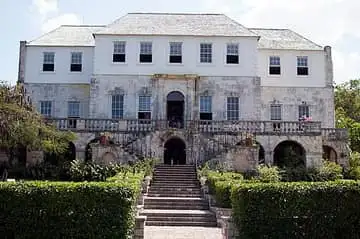
Rose Hall Great House
Jamaica · North America
A 1770s Georgian plantation mansion above Montego Bay, Jamaica's most famous great house and home of the legend of Annie Palmer, the 'White Witch of Rose Hall'.
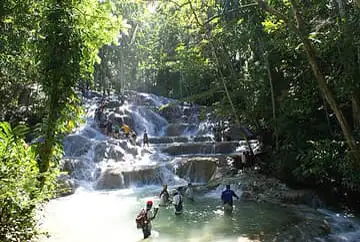
Dunn's River Falls
Jamaica · North America
Terraced limestone falls that flow straight into the Caribbean, which visitors can climb.
Questions
What is the capital of Jamaica?
The capital of Jamaica is Kingston.
Which continent is Jamaica in?
Jamaica is in North America.
How big is Jamaica?
Jamaica covers about 10,991 km².
How many people live in Jamaica?
About 2.8 million people live in Jamaica.
What are the most famous landmarks in Jamaica?
Some of the best-known landmarks in Jamaica are Rose Hall Great House and Dunn's River Falls. My Earth Toy has 2 landmarks from Jamaica on its free 3D globe, each with a photo and quick facts.
Sources
Updated: 2026-10-30