
Kuwait: landmarks, animals & facts for kids
1 landmark · 1 place to discover
Kuwait on My Earth Toy, the free 3D toy globe for kids: 1 landmark, 1 place to discover. Here you can see its flag, capital and size, then fly to every place on the globe.
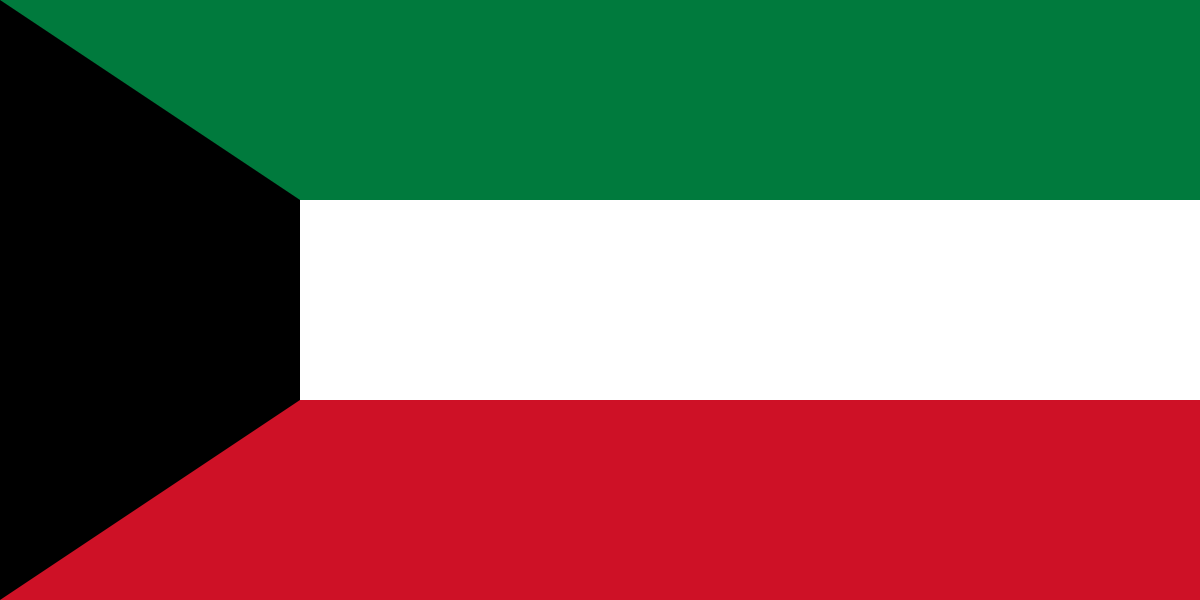
Green, white and red horizontal stripes, with a black trapezoid (a shape with two slanted sides) at the flagpole.
Read about this flag →Kuwait at a glance
- Capital
- Kuwait City
- Continent
- Asia
- Area
- 17,818 km²
- Population
- 4.9 million
Kuwait is a small country in West Asia at the northern tip of the Persian Gulf, between Iraq and Saudi Arabia. Its capital is Kuwait City, which sits on the shore of Kuwait Bay. Most of the country is flat, sandy desert, but under the ground lie some of the largest oil reserves in the world, which have made Kuwait wealthy. Before oil, Kuwaitis were known as sailors, traders and pearl divers.
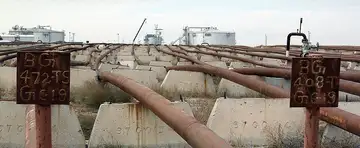
On My Earth Toy you can see the Kuwait Towers, three slender towers on the seafront decorated with blue and green discs, which have become the symbol of the country. You can also discover the Burgan oil field, one of the biggest oil fields on Earth.
Geography and nature
Kuwait is almost entirely desert, and its highest point is only about 300 metres above sea level. It has no rivers or lakes, so most drinking water comes from desalination plants that take the salt out of seawater. Summers are extremely hot, with temperatures often over 45°C, while winters are short and mild. Kuwait also has several islands; the largest, Bubiyan, is low and marshy, and Failaka has ancient ruins. Migrating birds rest along the coast.
People, languages and culture
Arabic is the official language, and English is widely spoken. Islam is the official religion, and there is also a Christian community. Many of the people living in Kuwait come from other countries to work. Kuwaitis keep the custom of the diwaniya, a gathering where men meet to talk, drink tea and share news. Machboos, spiced rice with meat or fish, is a favourite dish. Traditional wooden sailing boats called dhows remind people of the country's seafaring past.
History in a nutshell
Ancient Greeks settled on Failaka Island more than 2,000 years ago. Modern Kuwait began in the early 18th century, when families from central Arabia settled on the bay, and the Al Sabah family has ruled since the mid-1700s. In 1899 Kuwait came under British protection. Oil was discovered in 1938 and changed the country completely. Kuwait became independent on 19 June 1961. In 1990 it was invaded by Iraq and was freed in 1991 during the Gulf War.
Fun facts
- The Kuwaiti dinar is the highest-valued currency unit in the world.
- Kuwait has no permanent rivers at all.
- One of the hottest temperatures ever reliably measured in Asia, 54°C, was recorded at Mitribah in northern Kuwait.
- Before oil, pearl diving was one of Kuwait's most important jobs.
Famous landmarks in Kuwait
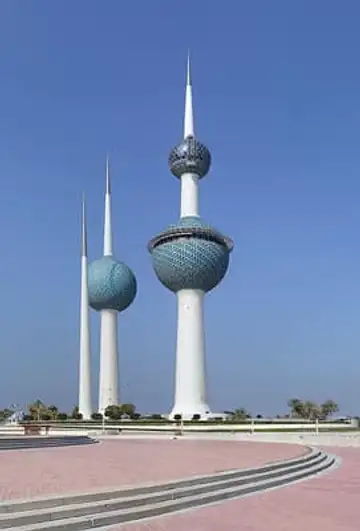
Kuwait Towers
Kuwait · Asia
Three slender towers on the Kuwait City waterfront whose spheres, clad in thousands of blue enamelled discs, hold water tanks and a revolving viewing deck; the symbol of Kuwait.
Places to discover in Kuwait
Questions
What is the capital of Kuwait?
The capital of Kuwait is Kuwait City.
Which continent is Kuwait in?
Kuwait is in Asia.
How big is Kuwait?
Kuwait covers about 17,818 km².
How many people live in Kuwait?
About 4.9 million people live in Kuwait.
What are the most famous landmarks in Kuwait?
On My Earth Toy's free 3D globe, the landmark from Kuwait is Kuwait Towers, with a photo and quick facts.
Sources
Updated: 2026-10-30