
Lebanon: landmarks, animals & facts for kids
1 landmark
Lebanon on My Earth Toy, the free 3D toy globe for kids: 1 landmark. Here you can see its flag, capital and size, then fly to every place on the globe.
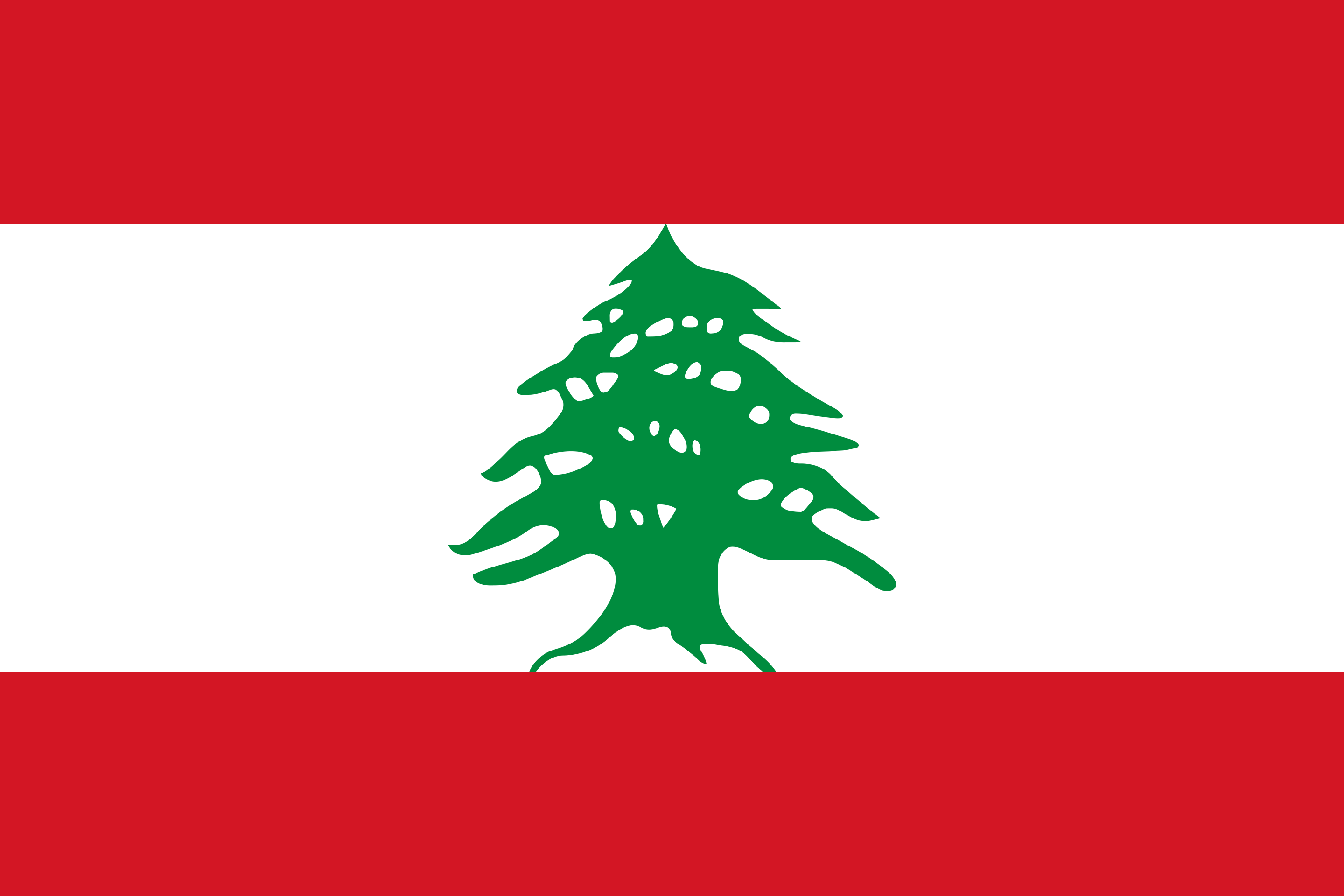
A red stripe at the top and bottom and a white stripe twice as wide in the middle, with a green cedar tree in the centre.
Read about this flag →Lebanon at a glance
- Capital
- Beirut
- Continent
- Asia
- Area
- 10,452 km²
- Population
- 5.8 million
Lebanon is a small country in West Asia on the eastern shore of the Mediterranean Sea, bordered by Syria and Israel. Its capital is Beirut, a busy port city. Lebanon is the smallest country on the Asian mainland, yet it has snowy mountains, a sunny coast and some of the oldest cities in the world. It is known for its cedar trees, its delicious food, its many religious communities and its ancient Phoenician heritage.
On My Earth Toy you can visit Baalbek, a Roman temple complex in the Beqaa Valley with some of the largest and best-preserved Roman temples anywhere, built from enormous stone blocks.
Geography and nature
Lebanon has four strips of land running north to south: a narrow coastal plain, the high Mount Lebanon range, the fertile Beqaa Valley, and the Anti-Lebanon Mountains along the Syrian border. The highest peak, Qornet es Saouda, is 3,088 metres tall, and in winter the mountains are covered in snow. The Lebanon cedar once covered the mountains; today small groves survive, such as the Cedars of God. The Jeita Grotto is a spectacular cave system with an underground river.
People, languages and culture
Arabic is the official language, and French and English are widely used too. Lebanon officially recognises 18 religious communities, including Sunni and Shia Muslims, Maronite and other Christians, and Druze. Lebanese food is enjoyed around the world: mezze spreads of hummus, tabbouleh, kibbeh and flatbread are shared at long family meals. Many Lebanese families have relatives living abroad, and there are large Lebanese communities in South America, Africa, Australia and North America.
History in a nutshell
Thousands of years ago, the Phoenicians built harbour cities here, including Byblos, Tyre and Sidon, and sailed across the Mediterranean to trade. Their alphabet became the ancestor of the Greek and Latin alphabets. The Romans later built the temples of Baalbek. The region then passed through Byzantine, Arab, Crusader, Mamluk and Ottoman rule. After the First World War it was governed by France, and Lebanon became independent on 22 November 1943. A long civil war lasted from 1975 to 1990.
Fun facts
- The cedar tree on Lebanon's flag has been a symbol of the land since ancient times.
- Byblos is one of the oldest cities in the world that people have lived in continuously.
- One stone block left in a quarry at Baalbek weighs about 1,000 tonnes.
- The alphabet you are reading grew out of the alphabet used by the Phoenicians of ancient Lebanon.
Famous landmarks in Lebanon
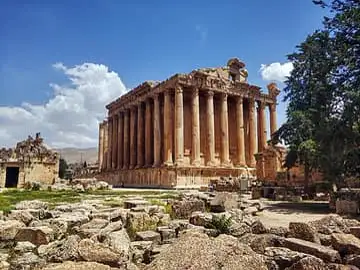
Baalbek
Lebanon · Asia
Monumental Roman temple ruins, including one of the best-preserved Roman temples, to Bacchus.
Questions
What is the capital of Lebanon?
The capital of Lebanon is Beirut.
Which continent is Lebanon in?
Lebanon is in Asia.
How big is Lebanon?
Lebanon covers about 10,452 km².
How many people live in Lebanon?
About 5.8 million people live in Lebanon.
What are the most famous landmarks in Lebanon?
On My Earth Toy's free 3D globe, the landmark from Lebanon is Baalbek, with a photo and quick facts.
Sources
Updated: 2026-10-30