
Flag of Lebanon
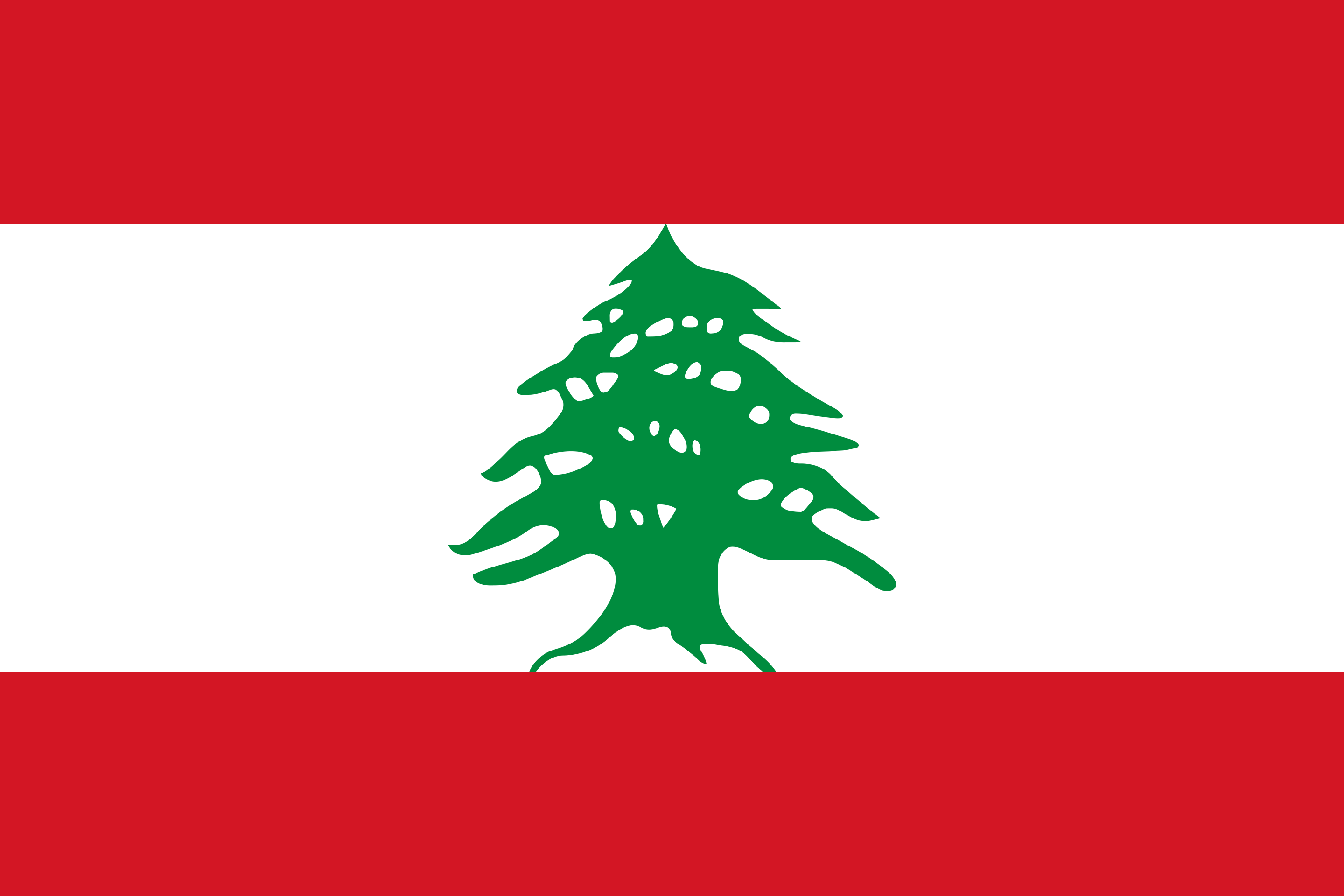
A red stripe at the top and bottom and a white stripe twice as wide in the middle, with a green cedar tree in the centre.
At a glance
- Adopted
- December 7, 1943written into the constitution on 7 December 1943, just before independence; since 1990 the cedar must be all green
- Shape (height : width)
- 2:3
- Capital
- Beirut
- Continent
- Asia
- Colours
- red
- white
- green
What it means
- Cedar: Lebanon, the "Land of the Cedars"; strength, hope and immortality; the cedar is mentioned many times in the Bible
- Red: commonly the blood of those who died in the struggle for independence
- White: peace, purity and the snow on Lebanon's mountains
- Another idea: some accounts link red and white to two old rival groups, the Qaysi and Yamani, joined together
Where it came from
The cedar of Lebanon has stood for the country for a long time: Maronite Christians have used it as their sign since the 1700s, and by 1848 they flew a white flag with a green cedar. During the French Mandate, Lebanon used the French tricolour with a cedar on the white stripe.
The current design was agreed by members of parliament in November 1943. Accounts differ on who designed it: Henri Pharaon said he proposed it, basing the red and white stripes on Austria's flag, but Pierre Gemayel also claimed it.
History
Shukri El Khoury proposed a white flag with a cedar in 1913. The French tricolour with a cedar became official in 1926.
In 1943, as Lebanon moved toward independence, parliament replaced it with the red-white-red flag. It was first raised at Bechamoun on 21 November 1943. Before 1990 the cedar was often drawn with a brown trunk; now it must be all green.
Fun facts
- Lebanon celebrates National Flag Day on 21 November.
- By the constitution, the cedar must touch both red stripes, top and bottom.
- A brown-trunked cedar, once common, is not the official design.
Easy to mix up with
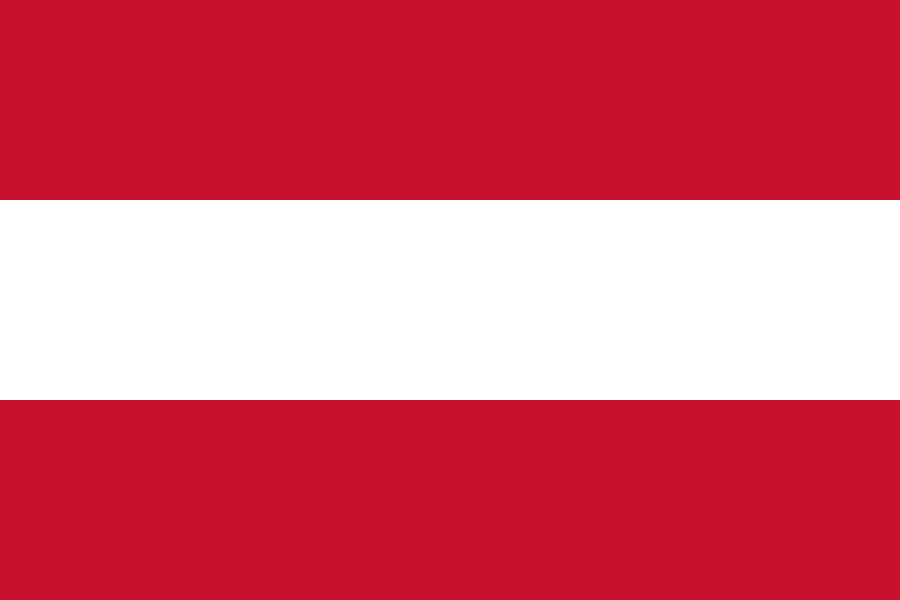 Austria
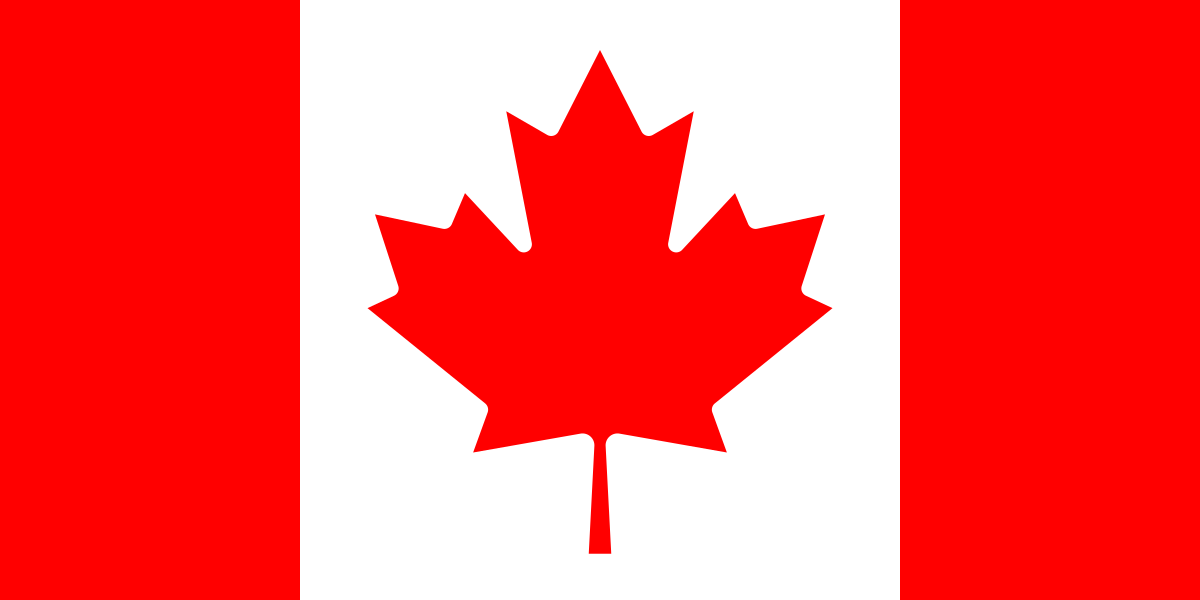 Canada
Questions
What does the flag of Lebanon look like?
A red stripe at the top and bottom and a white stripe twice as wide in the middle, with a green cedar tree in the centre.
What do the colours and symbols on the flag of Lebanon mean?
Cedar: Lebanon, the "Land of the Cedars"; strength, hope and immortality; the cedar is mentioned many times in the Bible; Red: commonly the blood of those who died in the struggle for independence; White: peace, purity and the snow on Lebanon's mountains; Another idea: some accounts link red and white to two old rival groups, the Qaysi and Yamani, joined together.
When was the flag of Lebanon adopted?
The current flag of Lebanon was adopted on December 7, 1943. (written into the constitution on 7 December 1943, just before independence; since 1990 the cedar must be all green)
What colours are on the flag of Lebanon?
The flag of Lebanon uses red, white and green.
Which flag is easy to mix up with the flag of Lebanon?
It is easy to mix up with the flag of Austria. Austria has the same red-white-red stripes but they are equal and there is no tree
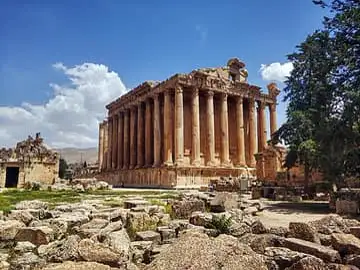
Famous landmarks in Lebanon
🎯 Play the flag quiz 🌍 Play the globe
Sources
- en.wikipedia.org
- crwflags.com
- Flag picture: flagcdn.com (Wikimedia Commons)