
The Netherlands: landmarks, animals & facts for kids
1 landmark · 3 places to discover
The Netherlands on My Earth Toy, the free 3D toy globe for kids: 1 landmark, 3 places to discover. Here you can see its flag, capital and size, then fly to every place on the globe.
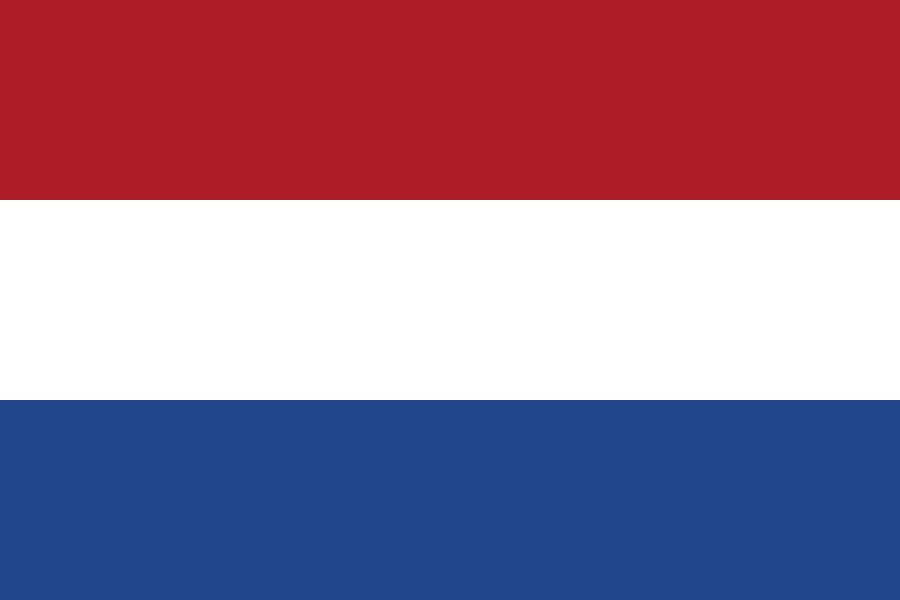
The flag of the Netherlands has three sideways stripes: red on top, white in the middle and blue at the bottom.
Read about this flag →the Netherlands at a glance
- Capital
- Amsterdam
- Continent
- Europe
- Area
- 41,850 km²
- Population
- 18.2 million
The Netherlands is a country in northwestern Europe on the North Sea, bordered by Germany and Belgium. Its capital is Amsterdam, while the government meets in The Hague. The country is very flat and low: about a quarter of it lies below sea level, protected by dikes, dunes and pumps. The Netherlands is famous for windmills, tulip fields, canals, cheese and bicycles. Three small Caribbean islands, Bonaire, Sint Eustatius and Saba, are also part of the country.
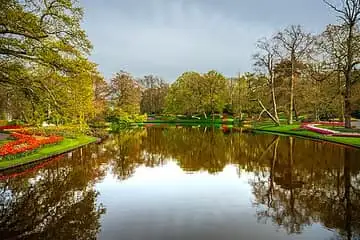
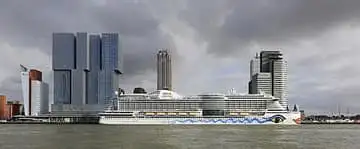
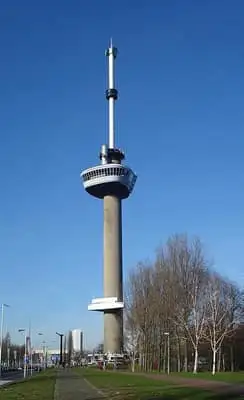
On My Earth Toy you can see the windmills of the Zaanse Schans, a village of old wooden windmills and green houses near Amsterdam. You can also discover the Keukenhof flower gardens, the Port of Rotterdam and the Euromast tower.
Geography and nature
The Netherlands sits where three big rivers, the Rhine, the Meuse and the Scheldt, reach the sea. For centuries the Dutch have built dikes and drained lakes and marshes to create farmland called polders, once using windmills to pump the water out. After a terrible flood in 1953, they built the Delta Works, a huge system of dams and storm barriers. The European part is almost completely flat; its highest point, the Vaalserberg, is just 322 metres, while Mount Scenery on Saba reaches 862 metres.
People, languages and culture
Dutch is the official language, and Frisian is also official in the province of Friesland; most Dutch people speak excellent English too. Cycling is part of daily life, with special bike paths everywhere. On King's Day, the whole country dresses in orange and holds street markets. Famous Dutch painters include Rembrandt, Johannes Vermeer and Vincent van Gogh. Cheeses such as Gouda and Edam, and syrup-filled stroopwafels, are popular treats.
History in a nutshell
In Roman times, the Rhine formed part of the empire's northern frontier here. In 1568 the Dutch provinces rebelled against Spanish rule, declared independence in 1581 and were formally recognised in 1648. The 17th century became the Dutch Golden Age, when Dutch ships traded around the world and art and science flourished. The Kingdom of the Netherlands was created in 1815. Germany occupied the country during the Second World War, and afterwards it helped found what became the European Union.
Fun facts
- Flevoland, a whole province, was built on land drained from the sea in the 20th century.
- There are more bicycles in the Netherlands than people.
- On average, Dutch people are among the tallest in the world.
- Tulips were brought to the Netherlands from the Ottoman Empire, and in 1637 tulip bulbs briefly sold for amazing prices during tulip mania.
Famous landmarks in the Netherlands
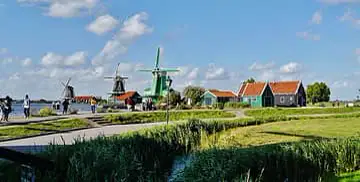
Zaanse Schans windmills
Netherlands · Europe
A riverside village of preserved historic windmills and green wooden houses showing Dutch industrial heritage.
Places to discover in the Netherlands
Questions
What is the capital of the Netherlands?
The capital of the Netherlands is Amsterdam.
Which continent is the Netherlands in?
The Netherlands is in Europe.
How big is the Netherlands?
The Netherlands covers about 41,850 km².
How many people live in the Netherlands?
About 18.2 million people live in the Netherlands.
What are the most famous landmarks in the Netherlands?
On My Earth Toy's free 3D globe, the landmark from the Netherlands is Zaanse Schans windmills, with a photo and quick facts.
Sources
Updated: 2026-10-30