
Suriname: landmarks, animals & facts for kids
1 landmark · 1 animal
Suriname on My Earth Toy, the free 3D toy globe for kids: 1 landmark, 1 animal. Here you can see its flag, capital and size, then fly to every place on the globe.
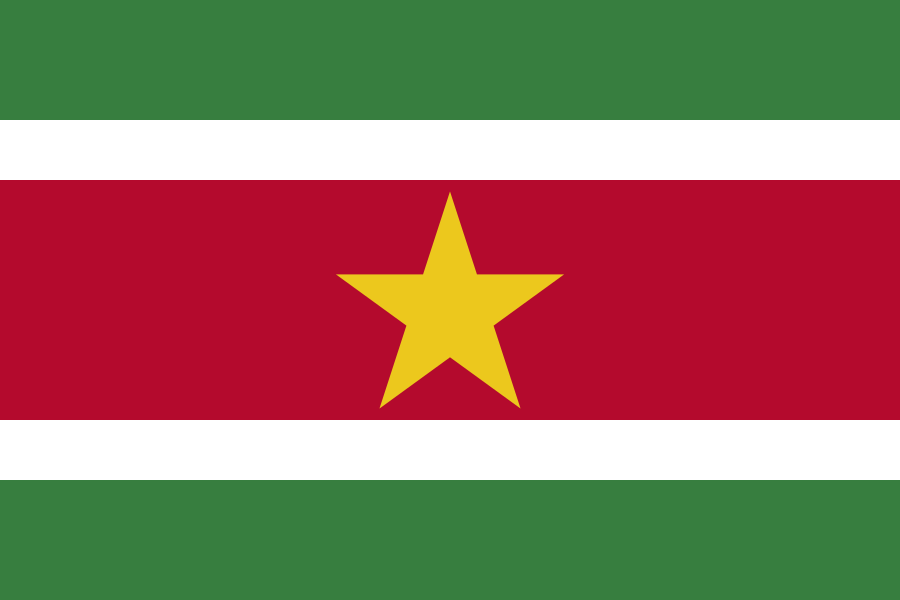
Five horizontal stripes of green, white, red, white and green, with a wide red stripe in the middle holding a yellow five-pointed star.
Read about this flag →Suriname at a glance
- Capital
- Paramaribo
- Continent
- South America
- Area
- 163,820 km²
- Population
- 0.6 million
Suriname is a small country on the north-eastern coast of South America, facing the Atlantic Ocean. It borders Guyana, French Guiana and Brazil. It is the smallest independent country in South America, and its capital, Paramaribo, is a riverside city with old wooden buildings from colonial times.
Suriname is known for rainforest that covers most of the country, a mix of cultures from around the world, and Dutch as its official language. On the globe you can find the Cathedral Basilica of St Peter and Paul in Paramaribo, a large wooden church, and the bright blue poison dart frog of Suriname's southern forests.
Geography and nature
Over 90 per cent of Suriname is covered in tropical rainforest, one of the highest shares of forest in the world. The narrow coastal plain has swamps, mangroves and farmland, while the interior has hills, savannas and granite domes. Many rivers flow north to the Atlantic, and the Brokopondo Reservoir is one of the largest artificial lakes in the world. The Central Suriname Nature Reserve is a UNESCO World Heritage Site, with jaguars, giant otters, monkeys and colourful birds. Leatherback turtles nest on its beaches.
People, languages and culture
Suriname is one of the most diverse countries on Earth. People have roots in India, Africa, Indonesia's Java, China, Europe and the Americas, and Indigenous and Maroon communities live in the interior. Dutch is the official language, and Sranan Tongo is spoken by almost everyone as a common language. Hinduism, Christianity and Islam are all widely practised; in Paramaribo a mosque and a synagogue stand side by side. Favourite foods include roti, pom, an oven dish, and Javanese-style fried noodles.
History in a nutshell
Indigenous peoples lived here long before Europeans came. The English set up a colony in 1650, but in 1667 the Dutch took it over and, in a peace treaty, England kept New Amsterdam, now New York, instead. Plantations of sugar and coffee were worked by enslaved Africans, some of whom escaped into the forest and formed free Maroon communities. Slavery was abolished in 1863, and workers then came from India, Java and China. Suriname became independent on 25 November 1975.
Fun facts
- Suriname is the only country in South America where Dutch is the official language.
- The inner city of Paramaribo, with its wooden houses, is a UNESCO World Heritage Site.
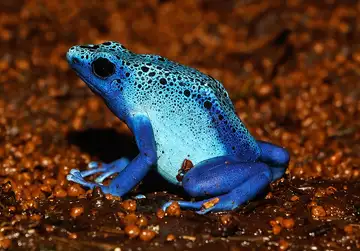
- The blue poison dart frog's bright colour is a warning to predators that its skin is toxic.
- Paramaribo's St Peter and Paul cathedral is one of the largest wooden buildings in South America.
Famous landmarks in Suriname
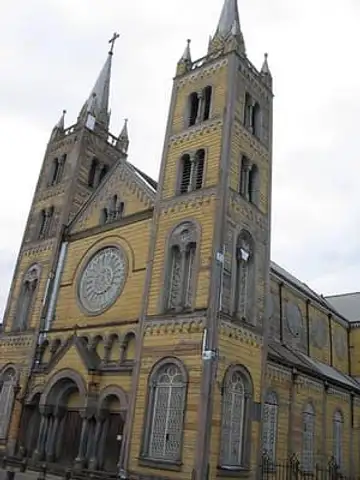
Cathedral Basilica of St. Peter and Paul, Paramaribo
Suriname · South America
Built entirely of wood from threshold to spire, this cathedral is counted among the largest wooden buildings in the Western Hemisphere.
Animals in Suriname
Questions
What is the capital of Suriname?
The capital of Suriname is Paramaribo.
Which continent is Suriname in?
Suriname is in South America.
How big is Suriname?
Suriname covers about 163,820 km².
How many people live in Suriname?
About 0.6 million people live in Suriname.
What are the most famous landmarks in Suriname?
On My Earth Toy's free 3D globe, the landmark from Suriname is Cathedral Basilica of St. Peter and Paul, Paramaribo, with a photo and quick facts.
Which animals can you find in Suriname on My Earth Toy?
On the globe you can find Blue poison dart frog in Suriname.
Sources
Updated: 2026-10-30