
Trinidad & Tobago: landmarks, animals & facts for kids
1 landmark
Trinidad & Tobago on My Earth Toy, the free 3D toy globe for kids: 1 landmark. Here you can see its flag, capital and size, then fly to every place on the globe.
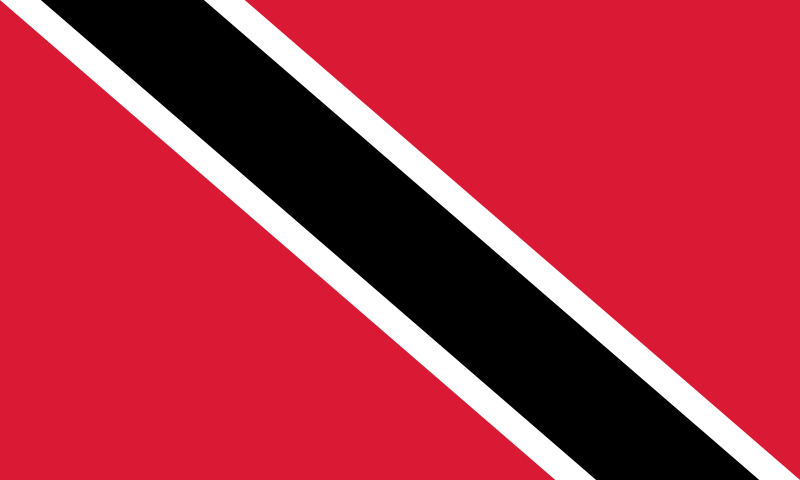
A red flag crossed by a wide black diagonal band with thin white edges, running from the top left corner to the bottom right.
Read about this flag →Trinidad & Tobago at a glance
- Capital
- Port of Spain
- Area
- 5,128 km²
- Population
- 1.5 million
Trinidad and Tobago is a country of two main islands in the southern Caribbean, just off the coast of Venezuela in South America. Trinidad, the larger island, is only about 11 kilometres from the mainland at its closest point. The capital is Port of Spain, on Trinidad's west coast.
Trinidad and Tobago is famous for its Carnival, calypso and soca music, and as the birthplace of the steelpan. On the globe you can find the Temple in the Sea, a white Hindu temple built on a platform in the Gulf of Paria and reached by a causeway, a symbol of the islands' Indian heritage.
Geography and nature
Trinidad was once joined to South America, so its plants and animals are similar to those on the mainland. The Northern Range of forested mountains runs along its north coast, and El Cerro del Aripo, about 940 metres, is the highest point. In the south lies Pitch Lake, the world's largest natural deposit of asphalt. Flocks of scarlet ibis roost in the Caroni Swamp at sunset. Tobago is smaller and quieter, with coral reefs, and leatherback turtles nest on beaches on both islands.
People, languages and culture
Most people have African or Indian ancestry, and many have mixed roots that also include Chinese, European and Middle Eastern families. English is the official language, and people speak a lively local creole. Christianity, Hinduism and Islam are all practised, and Diwali and Eid are public holidays. Carnival, before Lent, fills the streets with costumes and music. Street food is famous, especially doubles, chickpea curry in fried bread, as well as roti, callaloo and bake and shark.
History in a nutshell
Indigenous peoples lived on the islands long before Christopher Columbus reached Trinidad in 1498. Trinidad was a Spanish colony until Britain took it in 1797, while Tobago changed hands between European powers dozens of times. Enslaved Africans worked on sugar and cocoa plantations, and after slavery ended, many workers came from India. The two islands were joined as one colony in 1889, became independent on 31 August 1962 and became a republic in 1976. Oil and natural gas later made the country one of the wealthier in the Caribbean.
Fun facts
- The steelpan, made from oil drums, was invented in Trinidad in the 20th century and is the national instrument.
- Pitch Lake holds millions of tonnes of natural asphalt, and its surface is firm enough to walk on in places.
- The first Temple in the Sea was built by Sewdass Sadhu, an indentured labourer, who carried stones into the sea to make its foundation.
- The limbo dance is traditionally said to come from Trinidad.
Famous landmarks in Trinidad & Tobago
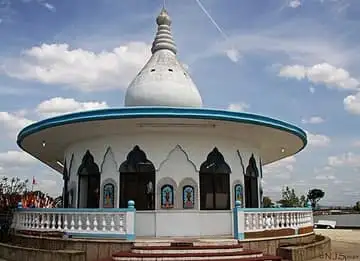
Temple in the Sea
Trinidad & Tobago · Other
A small white Hindu temple standing out in the Gulf of Paria, built by an indentured labourer who carried stones out to sea by bicycle to make its causeway.
Questions
What is the capital of Trinidad & Tobago?
The capital of Trinidad & Tobago is Port of Spain.
How big is Trinidad & Tobago?
Trinidad & Tobago covers about 5,128 km².
How many people live in Trinidad & Tobago?
About 1.5 million people live in Trinidad & Tobago.
What are the most famous landmarks in Trinidad & Tobago?
On My Earth Toy's free 3D globe, the landmark from Trinidad & Tobago is Temple in the Sea, with a photo and quick facts.
Sources
Updated: 2026-10-30