
Bigfoot (Sasquatch)
빅풋 (새스콰치)
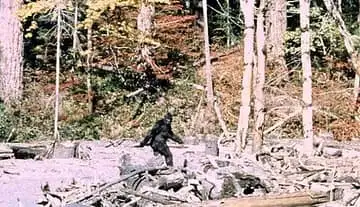
Legend, unconfirmed: 'Sasquatch', a huge hairy ape-man said to roam the forests of the Pacific Northwest. Skamania County, Washington, even passed a 1969 ordinance against killing one, yet no body or bone has ever been found.
See it on the 3D globe →At a glance
- Country
- United States
- Kind
- Legendary creatures
Quick answers
Where is Bigfoot (Sasquatch)?
Bigfoot (Sasquatch) is in United States.
Bigfoot, also called Sasquatch, is a large, hairy, ape-like creature said to live in the forests of North America, especially in the Pacific Northwest. It appears in both American and Canadian folklore and has been a pop-culture icon since the mid-1900s, with its own fan community.
Believers have offered sightings, photographs, recordings, hair samples and plaster casts of huge footprints. Scientists have looked at this evidence and found a mix of folklore, misidentification and hoaxes, and they do not consider Bigfoot a real living animal. The globe marks it as a mystery spot in the forests of the Pacific Northwest. Stories tend to describe a creature about 1.8 to 2.7 metres tall, with dark hair, broad shoulders, long arms and no visible neck.
Where the names come from
'Sasquatch' was coined in 1929 by J. W. Burns, a teacher who lived with the Sts'ailes Nation in British Columbia and published a collection of stories about local 'hairy giants'. The word is thought to come from sasq'ets, meaning 'hairy man' in the Halq'emeylem language.
'Bigfoot' dates from 1958, when bulldozer driver Jerry Crew found 16-inch footprints in the mud in Six Rivers National Forest, California. Coworkers began calling the culprit Bigfoot, and a newspaper reporter spread the name.
Old stories and wild men
Many Native cultures across North America tell of hair-covered beings in the forest, especially in the Pacific Northwest, and these tales are far older than modern Bigfoot reports. Different peoples have different names and details.
Folklorists also point to the 'wild man of the woods' from European folk tales, which settlers brought with them. Similar hairy giants appear around the world, such as the yeti in Asia and the yowie in Australia.
The legend versus the evidence
Many sightings fit a bear standing up on its hind legs. Glowing eyes seen at night can come from owls or raccoons, which have eyeshine, while great apes and humans do not.
In 2002, the family of Ray Wallace, Jerry Crew's coworker, revealed carved wooden feet and said he had made the 1958 tracks. Earlier pranksters in Washington State had also made footprints with carved wooden feet. Wallace's feet showed how easy it is to fake tracks.
Fun facts
- The name 'Bigfoot' caught on in 1958 after giant footprints were reported in California, but no body or bones have ever been found.
- The word Sasquatch was published in 1929, about 30 years before the name Bigfoot appeared.
- Claimed footprints are up to 24 inches long, but some casts include claw marks, which points to known animals such as bears.
- Ray Wallace's family revealed his carved wooden feet in 2002, after he died.
- A police report in The Dalles, Oregon, in 1971 described an 'overgrown ape' that one man said looked more human than animal.
On the globe
The model shows a tall, hairy, two-legged figure standing in the forest of the Pacific Northwest.
Nearby on the globe







Sources
Updated: 2026-10-14