
Loch Ness Monster
네스호의 괴물 (네시)
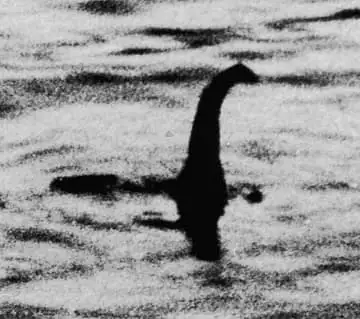
Legend, unconfirmed: 'Nessie', a long-necked creature said to live in Loch Ness, Scotland. Sightings have been reported since 1933, but the famous 1934 'surgeon's photograph' was exposed as a hoax in 1994.
See it on the 3D globe →At a glance
- Country
- United Kingdom
- Kind
- Legendary creatures
Quick answers
Where is Loch Ness Monster?
Loch Ness Monster is in United Kingdom.
The Loch Ness Monster, nicknamed Nessie, is a creature from Scottish folklore said to live in Loch Ness, a long, deep lake in the Scottish Highlands. People usually describe it as a large animal with humps and a long neck, a bit like a plesiosaur, a sea reptile that lived in the age of the dinosaurs. It is a legend, not a confirmed animal: no body, bones or clear evidence has ever been found.
Loch Ness itself is real and impressive. It is about 37 km long and up to about 230 metres deep, and it holds more water than all the lakes in England and Wales put together. That huge, deep body of water is one reason the story has lasted so long: it is very hard to see what is down there.
The legend
The oldest story often linked to Nessie comes from a 7th-century book about Saint Columba, which tells of a "water beast" in the River Ness, not the loch itself. The modern legend began in 1933, when a new road along the shore was opened and a local woman, Aldie Mackay, reported seeing something in the water. Her story appeared in a newspaper, more sightings followed, and soon the whole world was talking about Nessie. In 1934 a photo said to be taken by a London surgeon seemed to show a long neck rising from the water.
The legend vs the facts
That famous "surgeon's photograph" turned out to be a hoax. In 1994 it was revealed that the "monster" was a toy submarine with a small model head and neck attached, and that the surgeon had been used as a trustworthy-looking front man. Since then, scientists have searched the loch many times. Operation Deepscan in 1987 swept it with sonar from a line of boats, and a BBC sonar survey in 2003 found no large animal. A 2023 search with modern equipment also found nothing conclusive.
What scientists found
In 2018 a team led by geneticist Neil Gemmell collected about 250 water samples from the loch and studied environmental DNA, the tiny traces of genetic material that living things leave behind. They found no DNA from reptiles like plesiosaurs, and none from sharks, catfish or sturgeon. They did find a lot of eel DNA almost everywhere they sampled. DNA cannot show how big the eels are, so the team said large eels are a possible explanation for some sightings. Other likely causes include boat wakes, waves, floating logs and birds or otters.
Fun facts
- Legend says a monster lives in Loch Ness, but the famous 1934 'surgeon's photograph' was later revealed as a hoax made with a toy submarine.
- Loch Ness holds more fresh water than all the lakes in England and Wales combined.
- The most famous Nessie photo was really a toy submarine with a model neck.
- A 2018 DNA survey of the loch found no reptile DNA, but plenty of eel DNA.
- The modern Nessie craze began in 1933, the year a new road was built along the loch.
On the globe
The model shows Nessie, the long-necked creature of legend said to live in Loch Ness, Scotland. Remember: it is a legend that has never been confirmed.
Nearby on the globe



Sources
- Read more on Wikipedia
- Loch Ness Monster — Wikipedia
- Loch Ness — Wikipedia
- The Loch Ness Monster and the Surgeon's Photo — The Museum of Hoaxes
- New study suggests mythical Loch Ness monster may be a giant eel — NBC News
Updated: 2026-10-13