
Cape Coast Castle
케이프코스트성
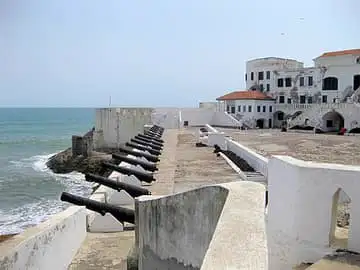
Cape Coast Castle is a large fort on the shore of the Atlantic Ocean in the town of Cape Coast, Ghana, in West Africa. It is one of about forty forts and castles that European traders built along this stretch of coast, which they called the Gold Coast. They first came for gold, but over time the main trade became people: Africans who were captured, held here and then shipped across the ocean to be enslaved, mostly in the Caribbean and the Americas.
See it on the 3D globe →At a glance
- Country
- Ghana
- Location
- Cape Coast, Ghana
- Built
- 1653
- Type
- Fort
Quick answers
Where is Cape Coast Castle?
Cape Coast Castle is in Cape Coast, Ghana.
When was Cape Coast Castle built?
Cape Coast Castle was built in 1653.
A coastal fort that served as a hub of the Atlantic slave trade, now a sobering memorial and museum.
Today the castle is a museum and a memorial. It helps people remember the many Africans taken in the Atlantic slave trade, and many visitors whose ancestors were enslaved come here to honour them. In 1979 the castle and other old forts along Ghana's coast were added to UNESCO's World Heritage List. Learning about this place can be sad, but it is an important part of world history.
History
The Portuguese set up a trading post here in 1555 and named the spot Cabo Corso, meaning short cape, which later became Cape Coast. In 1653 the Swedish Africa Company built a wooden fort called Carolusborg, after the Swedish king. Over the next years the Danes, the Dutch and local rulers fought and bargained over it, until the English captured it in 1664. They made it much stronger, and it became the headquarters of England's, and later Britain's, trade on the Gold Coast.
The dungeons and the Door of No Return
Beneath the open courtyard, the English cut large dungeons out of the rock, probably by 1682. Up to about a thousand captured men and women could be locked in these dark, crowded rooms while they waited for ships. The final exit to the sea is known as the Door of No Return, because the people who passed through it never saw their homeland again. The castle was also a market where Europeans swapped goods such as clothing, blankets, spices and sugar for gold, ivory and captives.
Visiting today
When Ghana became independent in 1957, the Ghana Museums and Monuments Board took care of the castle. It was restored in the early 1990s with help from international groups, including the Smithsonian Institution in the United States. Guides lead visitors through the dungeons and the museum, which explains how the slave trade worked. In July 2009, US President Barack Obama and his family toured the castle, walked through the Door of No Return and unveiled a plaque marking their visit.
Fun facts
- US President Barack Obama visited it in 2009.
- The name Cape Coast comes from the Portuguese Cabo Corso, which means short cape.
- The first fort on this spot was a wooden one built by the Swedish Africa Company in 1653.
- The castle changed hands between several European countries before the English took it in 1664.
- In 2009 President Obama's family walked through the castle's Door of No Return.
On the globe
The model shows the old coastal fort in Cape Coast, Ghana, a place that is now a memorial and museum. Zoom in to see how the castle sits right at the edge of the ocean.
Quiz time
Which is older: Cape Coast Castle or Independence Monument, Lomé?
Show the answer
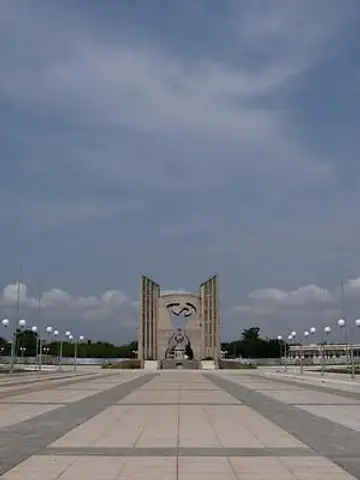
Cape Coast Castle. (1653 vs 1960) Independence Monument, Lomé →
Nearby on the globe


Sources
- Read more on Wikipedia
- Cape Coast Castle — Wikipedia
- Elmina Castle — Wikipedia (UNESCO listing year of Ghana's forts and castles)
- Where History Began — Fox News (Obama family visit, 11 July 2009)
Updated: 2026-10-13