
El Nido, Palawan
엘니도
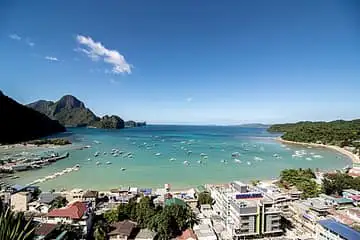
El Nido is a town and municipality on the northern tip of Palawan, an island in the Philippines. Its name is Spanish for "The Nest". It is a protected area known for white-sand beaches, coral reefs, and tall limestone cliffs, and it is the gateway to the Bacuit archipelago, a group of islands in Bacuit Bay.
See it on the 3D globe →At a glance
- Country
- Philippines
- Location
- Palawan, Philippines
Quick answers
Where is El Nido, Palawan?
El Nido, Palawan is in Palawan, Philippines.
An island getaway of sheer limestone cliffs, hidden lagoons and white-sand beaches.
The town covers about 465 square kilometres and includes 45 islands and islets, each with its own rock shapes. The highest peak is on Cadlao Island, rising to about 640 metres. In 2024 the census counted 51,367 people living in El Nido. Many visitors come for boat trips to hidden lagoons and quiet beaches.
Why is it called El Nido?
The town's old name was Bacuit. One folktale says Spanish visitors asked what the place was called, and local people, who did not understand them, answered "Bakit?" which means "why?" in Tagalog. In 1954 a law changed the name to El Nido. It was named after the edible nests of swiftlets, small birds that build nests in cracks in the limestone cliffs. These nests are used in a gourmet soup.
Who lived here long ago?
People have lived around Bacuit Bay since at least 2800 BC, and in Dewil Valley possibly as early as 14,000 years ago. Fossils and burial sites from the Late Neolithic Age have been found in many caves, including Ille Cave. When the Spanish arrived in the 1500s, they found two Tagbanua groups. Later, migrants from the Cuyo Islands and Chinese families settled here. El Nido became its own municipality in 1916.
Fun facts
- Its name means "The Nest", after swiftlet nests found in the limestone cliffs.
- El Nido has 45 islands and islets within its borders.
- People have lived around the bay for at least 4,800 years.
On the globe
The model shows an island getaway of sheer limestone cliffs, hidden lagoons, and white-sand beaches.
Nearby on the globe



Sources
Updated: 2026-10-14