
Pompeii
폼페이
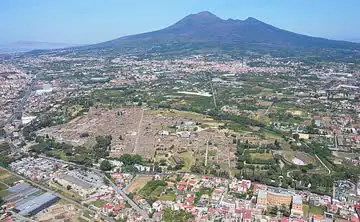
Pompeii was a Roman town near Naples, in southern Italy. In AD 79 the volcano Mount Vesuvius erupted and buried it under 4 to 6 metres of ash and pumice. Because the ash sealed everything, Pompeii is like a snapshot of ancient Roman life frozen in a single moment.
See it on the 3D globe →At a glance
- Country
- Italy
- Location
- Campania, Italy
- Built
- 79
- Type
- Ancient site
Quick answers
Where is Pompeii?
Pompeii is in Campania, Italy.
When was Pompeii built?
Pompeii was built in 79.
A Roman town frozen in time when Mount Vesuvius buried it in ash in AD 79.
It was a rich town of roughly 11,000 to 11,500 people, covering 64 to 67 hectares, with shops, bakeries, public buildings and houses with painted walls. Excavations are still revealing new discoveries today, and about 2.5 million people visit each year. UNESCO calls it the only archaeological site in the world that gives a complete picture of an ancient Roman city.
Ash that saved the town
The eruption killed many people, but the ash also kept buildings, wall paintings and everyday objects safe. Wooden items and human bodies decayed inside the ash and left hollow spaces. In 1863 the archaeologist Giuseppe Fiorelli realised what they were and invented a way to fill them with plaster, making moulds of people in their final moments. Today clear resin is used instead of plaster. Scribbled graffiti on walls also shows how ordinary people really spoke Latin.
A busy Roman town
Pompeii began with villages founded by the Oscans in the 8th century BC and was later ruled by Greeks, Etruscans and Samnites before Rome took control in the 80s BC. It sat on the Bay of Naples, a popular place for wealthy Romans to build villas. It had an amphitheatre built in 70 BC, theatres, baths, at least 31 bakeries and nearly 100 thermopolia, snack-bars that sold hot food and drinks. A big earthquake in AD 62 had already damaged the town.
Digging it up
The town stayed hidden until it was found again in the late 16th century. Major digging began in the mid-18th century, but early efforts were messy and often damaged things. By 1960 most of Pompeii had been uncovered, and since then new digging is limited and planned. In December 2020 archaeologists found a snack-bar with painted food scenes and pots still holding remains of a meal, including duck, goat, fish and snails. In 2021 a ceremonial bronze carriage was found at a villa north of the town.
Fun facts
- Excavations began in 1748, almost 1,700 years after Vesuvius buried the town.
- Nearby Herculaneum and Stabiae were buried by the same eruption.
- Graffiti on its walls preserves everyday Latin as ordinary people really spoke it.
- Pompeii had at least 31 bakeries.
On the globe
The model shows the ruined Roman town with Mount Vesuvius in the background. Look for the streets and columns.
Quiz time
Which is older: Pompeii or Royal Palace of Caserta?
Show the answer
Pompeii. (79 vs 1845) Royal Palace of Caserta →
Nearby on the globe
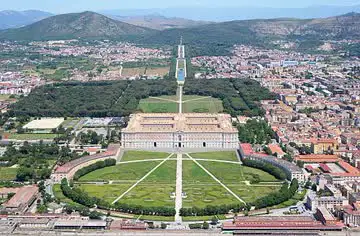
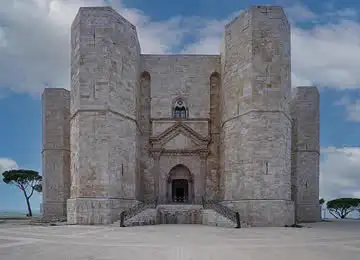
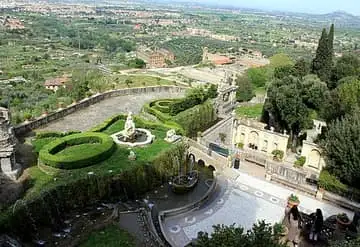
.jpg)
Sources
Updated: 2026-10-14