
Villa d'Este
빌라 데스테
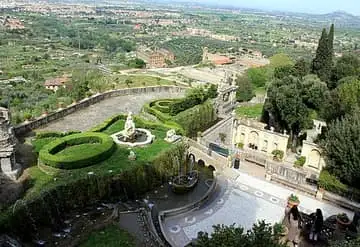
16th-century Renaissance garden at Tivoli near Rome (UNESCO). Its many fountains – the Avenue of the Hundred Fountains, the water-powered Fountain of the Organ – run by gravity alone, without pumps.
See it on the 3D globe →At a glance
- Country
- Italy
- Type
- Park
Quick answers
Where is Villa d'Este?
Villa d'Este is in Italy.
Villa d'Este is a 16th-century villa in Tivoli, near Rome, Italy. It is famous for its huge garden with terraces and fountains, one of the best examples of an Italian Renaissance garden. UNESCO listed it as a World Heritage Site in 2001.
Cardinal Ippolito II d'Este, who loved art and collecting antiques, had it built. Its design inspired garden makers across Europe, and today the villa is an Italian state museum that visitors can walk through. The garden is a lasting example of how people in the Renaissance loved water, art and clever engineering together. It is open to visitors today and is one of the most popular places to see near Rome.
How was the garden built?
Building began in 1560. Workers dug away a great deal of earth to shape new terraces on a steep slope more than 45 metres from top to bottom, and nearby houses and roads were removed to make room. The river Aniene was diverted to supply water for the pools, jets and cascades. The garden was divided into regular squares about 30 metres wide, and the designer was Pirro Ligorio.
What can visitors see?
The garden is packed with fountains, ornamental basins, grottos and shady paths. Water flows through channels and pipes from the river and dozens of fountains play with it. The villa's rooms are covered with painted decorations made by teams of artists in the 1560s and 1570s. The cardinal never became pope, but he kept entertaining poets and artists here until his death in 1572.
Fun facts
- Its Fountain of the Organ uses flowing water to play music through hidden pipes.
- The steep garden drops more than 45 metres from top to bottom.
- About 200 metres of underground pipes carried water from an artificial mountain to the rest of the garden.
- Bernini designed two fountains for the villa in 1660 and 1661.
On the globe
The model shows the terraced garden with its fountains on the hillside.
Nearby on the globe

Sources
Updated: 2026-10-14