
Shiretoko Peninsula
시레토코 반도
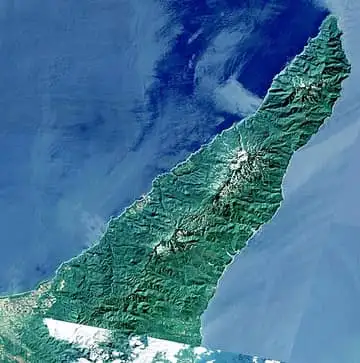
The Shiretoko Peninsula is a wild peninsula at the far northeast of Hokkaido, Japan, sticking out into the Sea of Okhotsk. It is about 70 km long. The name comes from the Ainu words sir etok, which mean "the end of the Earth" or "where the Earth sticks out".
See it on the 3D globe →At a glance
- Country
- Japan
- Location
- Shiretoko, Hokkaido, Japan
- Type
- Park
Quick answers
Where is Shiretoko Peninsula?
Shiretoko Peninsula is in Shiretoko, Hokkaido, Japan.
A wild peninsula in northeast Hokkaido, a UNESCO natural World Heritage Site known for brown bears and drift ice.
It was added to the UNESCO World Heritage List in 2005 because it is the southernmost place in the Northern Hemisphere where sea ice usually forms. Brown bears, deer and many other animals live in its forests and along its coasts. More than 120,000 hectares of the peninsula are within its borders.
Ice and fire
In winter the Soya Current carries sea ice from the Sea of Okhotsk and piles it against the west coast of the peninsula. This is the lowest latitude, around 43 degrees north, where sea ice regularly forms on Earth.
Shiretoko also sits on a chain of volcanoes, including Mount Rausu, the highest peak. The volcanoes feed hot springs (onsen), and one waterfall is a natural hot spring.
Wildlife and protection
The peninsula has forests of conifers and broad-leaved trees, with Siberian dwarf pines high above 1,000 m. Wild animals include brown bears, foxes and Ezo deer.
The area was made a national park in 1964. It is one of the few places in Hokkaido with so much wild nature left. Ocean currents bring fog in summer and sea ice in winter, so the weather is short on summers and long on winters.
Fun facts
- It is one of the lowest-latitude places in the Northern Hemisphere where sea ice forms.
- Its name in Ainu means "the end of the Earth".
- Sea ice forms here farther south than almost anywhere else on Earth.
- One of its waterfalls is a natural hot spring.
On the globe
The model shows a wild peninsula with volcanic mountains, brown bears and drift ice.
Nearby on the globe

Sources
Updated: 2026-10-14