
Chinchilla
친칠라
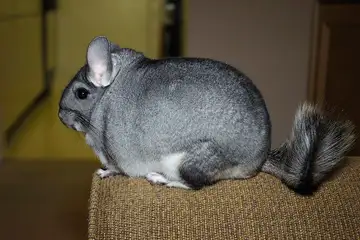
A small rodent from the rocky Andes of northern Chile. Dozens of hairs grow from each follicle, making its fur extremely dense; heavy hunting for the fur trade has left wild populations critically endangered.
See it on the 3D globe →At a glance
- Class
- Mammals
- Lives in
- Northern Chilean Andes
- Diet
- Plant eater (herbivore)
- Lifespan
- up to about 20 years
- Conservation status
- Endangered (IUCN EN)
- Habitat
- mountains
Quick answers
Where does the Chinchilla live?
It lives in mountains. On the globe you can find it near Northern Chilean Andes.
What does the Chinchilla eat?
Its diet: plant eater (herbivore).
How long does the Chinchilla live?
It can live up to about 20 years.
Is the Chinchilla endangered?
It is listed as Endangered (IUCN EN).
Chinchillas are small, round, fluffy rodents of the Andes Mountains in South America. They live in rocky crevices and burrows at high elevations, up to about 4,270 metres. Historically they lived in Bolivia, Peru, Argentina and Chile, but wild colonies are known today only in Chile.
The chinchilla has the densest fur of any living land mammal, about 20,000 hairs per square centimetre, with around 50 hairs growing from every follicle. That fur nearly caused the animal to disappear, because it was hunted heavily for coats. The IUCN lists the species as Endangered. Chinchillas are also kept as pets, but those come from farmed stock.
Life in the Andes
Wild chinchillas live in groups called herds of 14 up to 100 animals. They are agile jumpers and can leap up to 1.8 metres, and they eat leaves, fruit, seeds and a few small insects. They are most active at dusk and dawn. Birds of prey, skunks, wild cats, snakes and canines hunt them. When caught, a chinchilla may spray urine or let a patch of fur drop off.
The fur trade and pets
The name comes from the Chincha people of the Andes, who once wore chinchilla fur. By the end of the 19th century the animals had become rare, and by 1914 one scientist already thought they were heading for extinction. Today most chinchillas used for fur are farmed, and the pet chinchillas kept at home come from the species Chinchilla lanigera.
Fun facts
- Its fur is so dense that it keeps clean by rolling in dust instead of getting wet.
- Around 50 hairs grow from each follicle.
- It cleans itself by rolling in dust instead of getting wet.
- It can jump up to 1.8 metres.
- The Chincha people of the Andes gave it its name.
On the globe
The model is in the Andes of northern Chile. Look for the round, soft body and big ears on rocky ground.
More like this

Sources
Updated: 2026-10-14