
Lion
사자
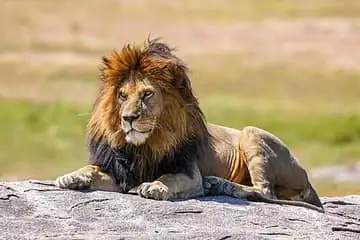
The only truly social big cat, living in prides, with the male's mane as its emblem. A big male can weigh about 190 kg, and his roar can be heard from roughly 8 km away.
See it on the 3D globe →At a glance
- Class
- Mammals
- Lives in
- Serengeti, Tanzania
- Diet
- Meat eater (carnivore)
- Weight
- about 160 kg
- Length
- about 2.6 m
- Top speed
- about 80 km/h
- Lifespan
- up to about 25 years
- Conservation status
- Vulnerable (IUCN VU)
- Habitat
- savannas, grasslands
Quick answers
Where does the Lion live?
It lives in savannas, grasslands. On the globe you can find it near Serengeti, Tanzania.
How big is the Lion?
It grows to about 2.6 m and 160 kg.
What does the Lion eat?
Its diet: meat eater (carnivore).
How fast is the Lion?
It can reach about 80 km/h.
How long does the Lion live?
It can live up to about 25 years.
Is the Lion endangered?
It is listed as Vulnerable (IUCN VU).
The lion is a big cat that lives in Africa south of the Sahara, with one last small group in western India. It is the only cat that truly lives in a family group, called a pride. A pride is made of related females, their cubs and one or a few adult males. Grown-up males are easy to spot because of the thick mane of hair around the head and shoulders.
Lions are top predators: they hunt zebras, wildebeest, buffalo and other large grazing animals, which helps keep grassland herds in balance. People have admired lions for thousands of years as symbols of strength and courage. Today, though, lions have vanished from most of the places they once lived, and they are listed as Vulnerable, meaning they could become endangered if their problems are not solved.
Where does the lion live?
Long ago, lions roamed across Africa and into southeastern Europe and India. Now they live in scattered areas of sub-Saharan Africa, plus the Asiatic lions of Gir National Park in Gujarat, India. Lions like open grasslands, savannas (grassy plains with scattered trees), scrub and open woodland, where it is easier to stalk prey. They avoid thick rainforest and deep desert. The Serengeti in Tanzania, where the lion sits on our globe, is one of the most famous places to see them.
Pride life and hunting
A pride can have from two to about 40 lions. The lionesses are all related and do most of the hunting, often working as a team to surround fast animals such as antelopes and zebras. They also raise their cubs together, sharing the work of looking after the young. The males guard the pride's territory by roaring, scent-marking and chasing away intruders. Young males leave home when they grow up and later try to take over a pride of their own. Lions are more successful when they hunt at night, especially on dark, moonless nights.
Is the lion endangered?
The IUCN Red List has listed the lion as Vulnerable since 1996, because lion numbers in Africa dropped by about 43 percent from the early 1990s. National Geographic reports that fewer than 25,000 lions may be left in Africa. The biggest problems come from conflict with people: farmers sometimes kill lions that attack cattle, poachers sell lion parts, and the wild animals lions eat are being hunted too. Protected areas and programs that help farmers live alongside lions are helping in some places.
Fun facts
- A lion's roar can be heard about 8 kilometres (5 miles) away.
- Lions are the only cats that live in groups; almost every other cat lives alone.
- Lionesses, not the males with big manes, do most of the hunting for the pride.
- Lion cubs are born in a hidden den, usually in litters of one to four.
- Pride members split up during the day and keep in touch by roaring to each other.
On the globe
The model shows a male lion with his mane in the Serengeti of Tanzania. Look for his big mane, the clearest sign of a grown-up male.
Quiz time
Which is heavier: Lion or Plains zebra?
Show the answer
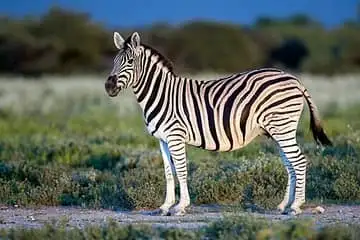
Plains zebra. (160 kg vs 280 kg) Plains zebra →
More like this

Sources
Updated: 2026-10-13