
Okapi
오카피
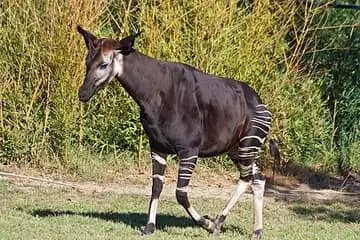
A forest animal with zebra-striped legs that is actually the giraffe's closest relative. Science only learned of it in 1901. Its tongue is so long it can lick its own ears clean.
See it on the 3D globe →At a glance
- Class
- Mammals
- Lives in
- Okapi Wildlife Reserve, DR Congo
- Diet
- Plant eater (herbivore)
- Weight
- about 280 kg
- Conservation status
- Endangered (IUCN EN)
- Habitat
- rainforests
Quick answers
Where does the Okapi live?
It lives in rainforests. On the globe you can find it near Okapi Wildlife Reserve, DR Congo.
How big is the Okapi?
It grows to about 280 kg.
What does the Okapi eat?
Its diet: plant eater (herbivore).
Is the Okapi endangered?
It is listed as Endangered (IUCN EN).
The okapi (Okapia johnstoni) looks like a mix of a zebra and a deer, but its closest living relative is the giraffe. It has a chocolate-brown body and white stripes on its legs. It stands about 1.5 metres tall at the shoulder and weighs roughly 200 to 350 kilograms.
Okapis live only in the rainforests of the north-east of the Democratic Republic of the Congo. They are shy and mostly live alone, so people outside Africa did not know about them until the early 1900s. Today the okapi is endangered because forests are being cut down, and because people hunt it. Its long, flexible ears and chocolate coat make it unmistakable once you see one.
Giraffe cousin in the rainforest
Together with the giraffe, the okapi is one of only two living members of the giraffe family. Males have short horn-like bumps called ossicones on their heads; females do not. Okapis eat leaves, buds, grasses, ferns, fruit and even fungi. Their tongue is long and flexible, which helps them pull leaves from branches. They live in forests between about 500 and 1,500 metres above sea level.
Family life and protection
Mothers have just one calf after a pregnancy of around 440 to 450 days. The baby is kept hidden and nurses only now and then, and it starts eating solid food at about three months. The main dangers are logging, farming, illegal mining and hunting for meat and skin. The Okapi Conservation Project began in 1987 to help protect these animals and their forest home.
Fun facts
- Despite its zebra-like striped legs, the okapi's closest living relative is the giraffe.
- Europeans first heard of this 'African unicorn' from travellers' stories before science described it.
- A picture of an okapi-like animal may appear on an ancient carving at Persepolis, more than 2,400 years old.
- Calves hide for weeks and are nursed only a little, which keeps them safe from predators.
On the globe
The model shows an okapi in the Okapi Wildlife Reserve in the Congo. Look for the striped legs and dark brown body.
Quiz time
Which is heavier: Okapi or Bonobo?
Show the answer
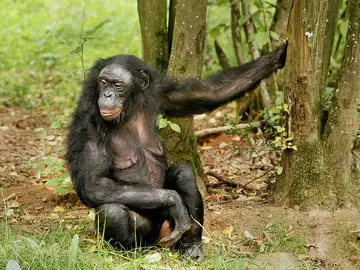
Okapi. (280 kg vs 39 kg) Bonobo →
More like this
._Okapi.jpg)
Sources
Updated: 2026-10-14