
Gabon: landmarks, animals & facts for kids
1 landmark · 2 animals
Gabon on My Earth Toy, the free 3D toy globe for kids: 1 landmark, 2 animals. Here you can see its flag, capital and size, then fly to every place on the globe.
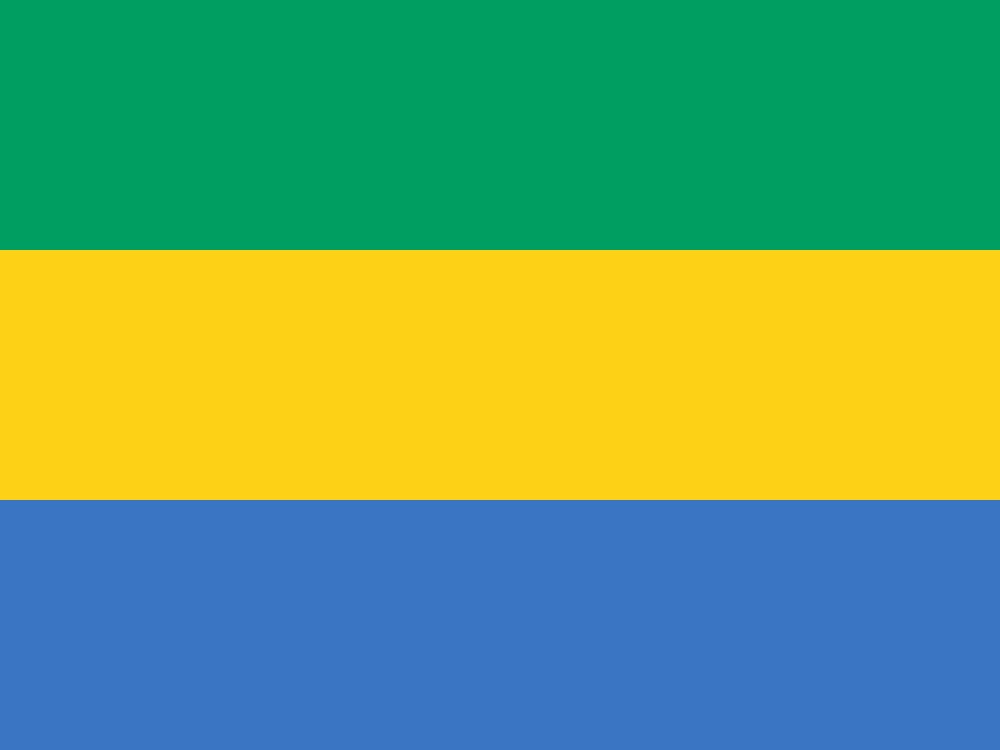
Gabon's flag has three equal horizontal stripes: green on top, yellow in the middle and blue at the bottom.
Read about this flag →Gabon at a glance
- Capital
- Libreville
- Continent
- Africa
- Area
- 267,668 km²
- Population
- 2.5 million
Gabon is a country on the Atlantic coast of Central Africa, lying right on the Equator. It is bordered by Equatorial Guinea, Cameroon and the Republic of the Congo. Its capital is Libreville, and about 2.5 million people live there. Gabon is one of the greenest countries on Earth: rainforest covers most of the land, and it is known for forest elephants, gorillas, wild beaches and a network of national parks.
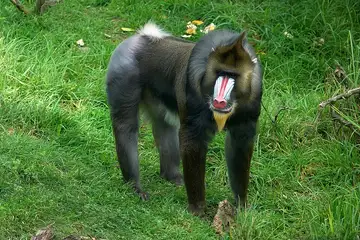
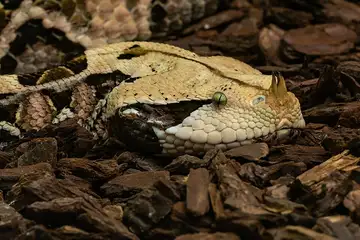
On My Earth Toy you can see St. Michael's Church in the Nkembo district of Libreville, famous for more than 30 wooden columns carved with Bible scenes. Look for two remarkable animals too: the mandrill, with its colourful face, and the Gaboon viper.
Geography and nature
Around 85 to 90 percent of Gabon is covered by tropical rainforest. The coast has lagoons, mangroves and long beaches, while inland there are plateaus, the Crystal Mountains and the Ogooué River, the country's largest. In 2002 Gabon created 13 national parks at once. In Loango National Park, elephants, buffalo and even hippos wander onto the beach, and whales swim offshore. Lopé National Park is a UNESCO World Heritage Site.
People, languages and culture
Gabon has around 40 ethnic groups, with the Fang the largest. French is the official language, and Fang, Myene, Punu and other languages are spoken at home. Most people are Christian. The Bwiti tradition uses music played on the ngombi harp and dance in ceremonies. Gabonese wooden masks, such as the white-faced Punu masks, are admired worldwide. Common foods include cassava, plantains, fish and dishes cooked with odika, a sauce made from wild mango seeds.
History in a nutshell
Pygmy peoples were the forest's earliest known inhabitants, followed by Bantu-speaking groups. Portuguese sailors arrived in the 1470s, and the coast became involved in trade, including the slave trade. France colonised the area in the 1800s; Libreville was founded in 1849 by freed enslaved people. Gabon became independent on 17 August 1960. Oil, manganese and timber have been the main sources of income.
Fun facts
- About two billion years ago, uranium deposits at Oklo in Gabon naturally started nuclear chain reactions, the only known natural nuclear reactors on Earth.
- Gabon is home to more forest elephants than any other country.
- The mandrill is the world's largest monkey.
- The Gaboon viper has the longest fangs of any snake, up to about 5 centimetres.
Famous landmarks in Gabon
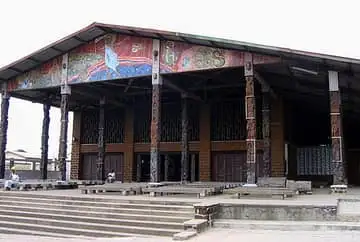
St. Michael's Church, Nkembo
Gabon · Africa
A wide, low-gabled church in Libreville famous for its more than 30 wooden columns carved with Bible scenes by sculptor Zéphyrin Lendogno and its colourful mosaics.
Animals in Gabon
Questions
What is the capital of Gabon?
The capital of Gabon is Libreville.
Which continent is Gabon in?
Gabon is in Africa.
How big is Gabon?
Gabon covers about 267,668 km².
How many people live in Gabon?
About 2.5 million people live in Gabon.
What are the most famous landmarks in Gabon?
On My Earth Toy's free 3D globe, the landmark from Gabon is St. Michael's Church, Nkembo, with a photo and quick facts.
Which animals can you find in Gabon on My Earth Toy?
On the globe you can find Mandrill and Gaboon viper in Gabon.
Sources
Updated: 2026-10-30