
Iceland: landmarks, animals & facts for kids
1 landmark · 1 place to discover
Iceland on My Earth Toy, the free 3D toy globe for kids: 1 landmark, 1 place to discover. Here you can see its flag, capital and size, then fly to every place on the globe.
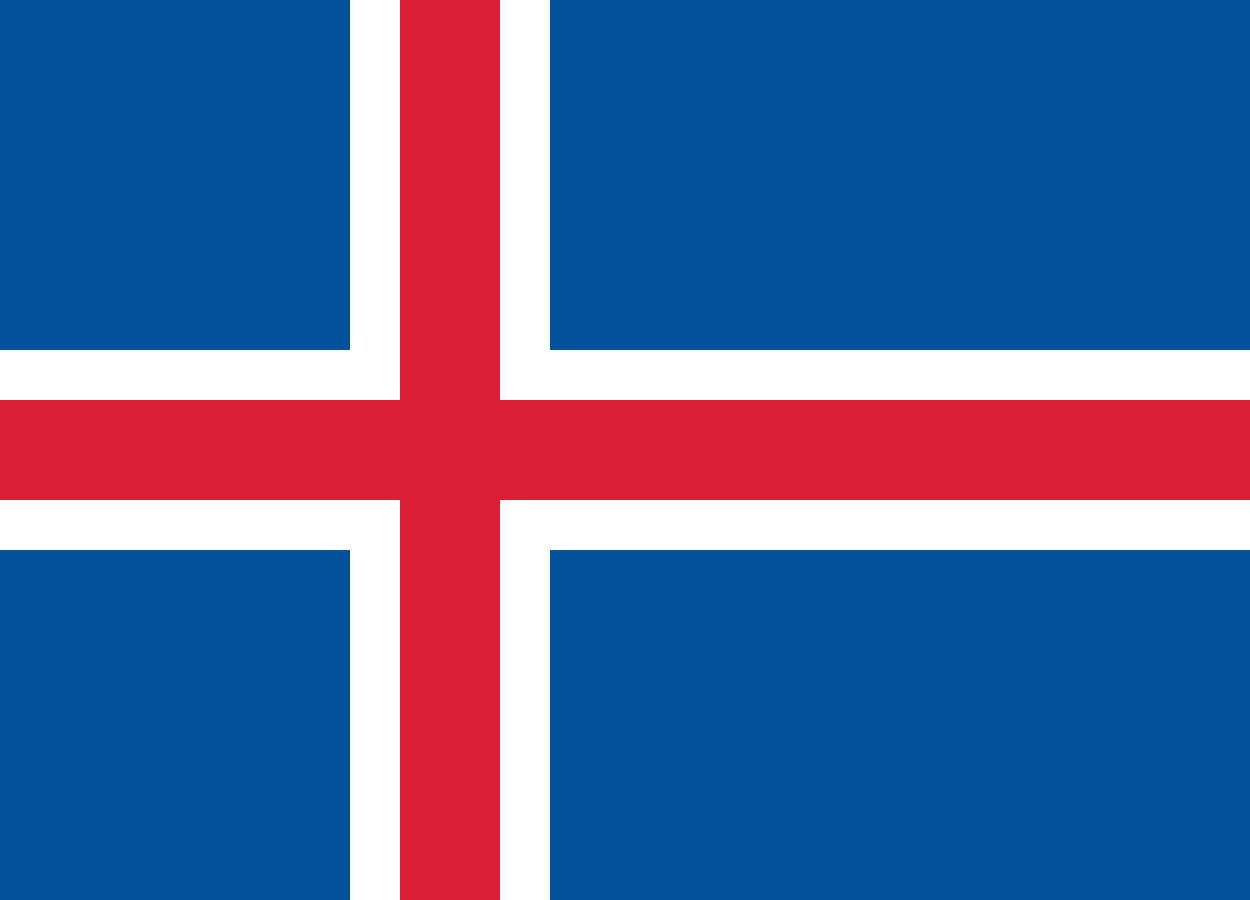
A blue flag with a red cross edged in white; the cross is shifted toward the flagpole, like other Nordic flags.
Read about this flag →Iceland at a glance
- Capital
- Reykjavík
- Continent
- Europe
- Area
- 103,000 km²
- Population
- 0.4 million
Iceland is an island country in the North Atlantic Ocean, just south of the Arctic Circle, between Greenland and Norway. Its capital, Reykjavík, is the northernmost capital of any independent country. Iceland is often called the land of fire and ice, because it has active volcanoes, steaming hot springs and big glaciers side by side. Fewer than half a million people live here, making it the most thinly populated country in Europe.
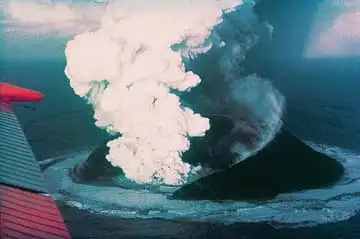
On My Earth Toy you can visit Hallgrímskirkja, a tall concrete church in Reykjavík whose stepped shape was inspired by the basalt columns found in Iceland's lava. You can also discover Surtsey, a brand-new island that rose out of the sea in a volcanic eruption in the 1960s.
Geography and nature
Iceland sits on the Mid-Atlantic Ridge, where the North American and Eurasian plates slowly pull apart, so eruptions and earthquakes are common. The famous hot spring Geysir gave its name to geysers all over the world. Glaciers cover about a tenth of the land; under the great Vatnajökull ice cap stands the highest peak, Hvannadalshnúkur, 2,110 metres tall. In summer, cliffs fill with nesting puffins, and in winter the northern lights dance across the sky.
People, languages and culture
Icelanders speak Icelandic, which has changed so little that people can still read sagas written about 800 years ago. Most Icelanders do not have family surnames: a person's last name usually shows a parent's first name, such as Jónsson (son of Jón) or Jónsdóttir (daughter of Jón). Hot water from the ground heats most homes and fills outdoor swimming pools used all year. At Christmas, children wait for 13 mischievous Yule Lads who visit one by one.
History in a nutshell
Norse settlers, along with people from Scotland and Ireland, arrived in the late 9th century. In 930 they founded the Althing, an open-air assembly that is one of the oldest parliaments in the world still working today. In the 13th century Iceland came under Norwegian rule and later under Denmark. It became a sovereign kingdom under the Danish crown in 1918 and a fully independent republic on 17 June 1944, which is now its national day.
Fun facts
- Iceland has no army of its own.
- Surtsey, born in an eruption between 1963 and 1967, is closed to visitors so scientists can watch how life arrives on new land.
- The word geyser comes from Geysir, a hot spring in southwest Iceland.
- Iceland has more land covered by glaciers than all of mainland Europe put together.
Famous landmarks in Iceland
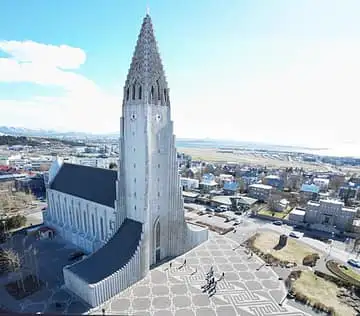
Hallgrímskirkja
Iceland · Europe
A concrete church whose stepped form evokes basalt columns, among Reykjavík's tallest buildings.
Places to discover in Iceland
Questions
What is the capital of Iceland?
The capital of Iceland is Reykjavík.
Which continent is Iceland in?
Iceland is in Europe.
How big is Iceland?
Iceland covers about 103,000 km².
How many people live in Iceland?
About 0.4 million people live in Iceland.
What are the most famous landmarks in Iceland?
On My Earth Toy's free 3D globe, the landmark from Iceland is Hallgrímskirkja, with a photo and quick facts.
Sources
Updated: 2026-10-30