
Meteor Crater (Barringer Crater)
미티어 크레이터
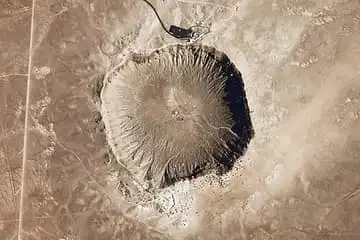
This bowl in the Arizona desert is about 1.2 km wide and 170 m deep. It was blasted out about 50,000 years ago when an iron meteorite roughly 50 m across struck at tens of thousands of kilometres per hour. It is one of the best-preserved impact craters on Earth, and Apollo astronauts trained here before going to the Moon.
See it on the 3D globe →At a glance
- Country
- United States
- Kind
- History
Quick answers
Where is Meteor Crater (Barringer Crater)?
Meteor Crater (Barringer Crater) is in United States.
Meteor Crater, also called Barringer Crater, is a huge bowl in the desert of northern Arizona, United States, about 60 km east of Flagstaff. It is roughly 1,200 m wide and 170 m deep, with a rim that rises about 45 m above the plain. Scientists and museums call it the best-preserved meteorite crater on Earth, and it became a National Natural Landmark in 1967.
It was made about 50,000 years ago, when a chunk of nickel-iron about 50 m across hit the ground. The area was then a cooler, wetter grassland where mammoths and giant ground sloths lived. The crater is still privately owned, by the Barringer family.
How the crater formed
The object that hit was a nickel-iron meteorite. Studies suggest it came in at about 12.8 km per second, or perhaps faster in older estimates, and that about half of it turned to vapour on the way down. The impact released energy estimated at about 10 megatons of TNT. The crater's squarish outline is thought to follow cracks that already existed in the rock.
Why it is so well kept
Most craters on Earth are erased by erosion. Meteor Crater is relatively young and sits in dry Arizona, so it has changed little since it formed. That gave scientists a clear example of a crater made by a space rock and helped them recognise impact craters elsewhere. Fragments of the meteorite are named the Canyon Diablo meteorite, after a nearby canyon.
Fun facts
- Blasted out by a meteorite about 50,000 years ago, it is often called the best-preserved meteorite crater on Earth.
- The rim has lost an estimated 15 to 20 metres of height to erosion since the impact.
- Mammoths and giant ground sloths lived in the area when the meteorite hit.
- About half of the meteorite is thought to have vaporised.
On the globe
Look for northern Arizona in the southwestern United States, east of the city of Flagstaff.
Nearby on the globe



Sources
Updated: 2026-10-14