
Halley VI Research Station
핼리 VI 기지
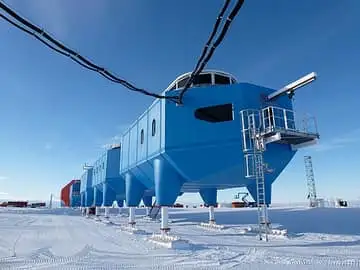
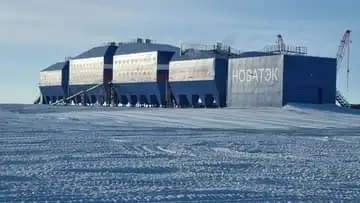
Halley Research Station is a science base in Antarctica, run by the British Antarctic Survey. It sits on the Brunt Ice Shelf, a huge sheet of ice that floats on the sea. The first base was established in 1956 to study Earth's atmosphere. The station is a long chain of modules that sits on the ice shelf above the Weddell Sea.
See it on the 3D globe →At a glance
- Country
- Antarctica
- Location
- Brunt Ice Shelf, Antarctica
- Built
- 2012
Quick answers
Where is Halley VI Research Station?
Halley VI Research Station is in Brunt Ice Shelf, Antarctica.
When was Halley VI Research Station built?
Halley VI Research Station was built in 2012.
A British station of eight modules on hydraulic ski-legs that can be towed as the ice shelf moves; the ozone hole was first detected here.
Measurements made at Halley led to the discovery of the ozone hole in 1985. The current base is the sixth in a line of buildings, and its design tries to solve a big problem: building on a floating ice shelf without being buried and crushed by snow. Its modules stand on hydraulic legs with skis, so they can be lifted and towed when the ice moves.
Discovering the ozone hole
The ozone layer is a thin layer of gas high above Earth that blocks harmful rays from the Sun. Scientists working at Halley measured it for many years. Their data helped show that a hole was opening above Antarctica, and the discovery was announced in 1985.
Life on moving ice
Since 2017 the base has been left unstaffed during winter, because of worries about a crack in the ice and how it might cut off an evacuation route in an emergency. Not far away is the Halley Bay Important Bird Area, where an emperor penguin colony lives.
Six bases and a moving home
Halley is the sixth base on the shelf. The earlier ones were buried by snow and crushed. Halley III, for example, was 12 to 15 metres under the surface after ten years. Halley VI, which cost about 26 million pounds, is a string of eight modules jacked up on hydraulic legs with giant skis, designed in a competition won by Faber Maunsell and Hugh Broughton Architects. It was built in Cape Town, shipped south, and dragged 15 kilometres to its site. In 2016 and 2017 the whole station was moved 23 kilometres because a growing crack in the ice threatened to cut it off. Designers even used special colours and light alarm clocks to help people cope with more than 100 days of darkness each year.
Fun facts
- The first Halley base was established in 1956.
- Data from Halley helped discover the ozone hole in 1985.
- This is the sixth Halley base, built to avoid being buried by snow on a floating shelf.
- Halley VI's legs have giant skis so the whole base can be towed away, and in 2017 it was moved 23 kilometres.
- Halley III ended up buried 12 to 15 metres under the snow within ten years.
On the globe
The model shows the station's modules standing on tall legs on the ice. Look at the legs that let the buildings be moved.
Nearby on the globe

Sources
Updated: 2026-10-14