
Panama Canal
파나마 운하
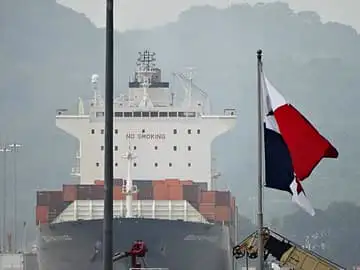
The Panama Canal is an 82-kilometre waterway across the narrowest part of Panama that connects the Atlantic Ocean (through the Caribbean Sea) with the Pacific Ocean. It opened on 15 August 1914 and has become one of the most important shortcuts for ships in the world.
See it on the 3D globe →At a glance
- Country
- Panama
- Location
- Panama
- Built
- 1914
- Type
- Infrastructure
Quick answers
Where is Panama Canal?
Panama Canal is in Panama.
When was Panama Canal built?
Panama Canal was built in 1914.
A lock canal across the Isthmus of Panama linking the Atlantic and Pacific, a landmark of engineering.
Ships do not sail through at sea level. Locks at each end lift them up to Gatun Lake, an artificial lake 26 metres above sea level, and then lower them again on the other side. Without the canal, ships would have to take the long, risky trip around the southern tip of South America. The American Society of Civil Engineers ranks it one of the Seven Wonders of the Modern World.
How the locks work
Locks are huge water-filled chambers. A ship enters, gates close, and water flowing in or out raises or lowers the ship. The original locks are 33.5 metres wide and fit ships called Panamax. A third, wider set of locks, built from 2007 to 2016, now lets even larger 'Neopanamax' ships pass. Each crossing uses about 200 million litres of fresh water.
Before the canal
The idea is old. The Spanish explorer Vasco Núñez de Balboa wrote about a canal after he crossed the isthmus in 1513, and in 1534 the Holy Roman Emperor Charles V ordered a survey for a route. When gold was found in California in 1848, travellers wanted a quick way across Panama, and between 1850 and 1855 a railroad was built from coast to coast. It cost six times its estimate and the lives of between 6,000 and 12,000 workers, many from tropical diseases.
A hard project
France began digging in 1881 but stopped in 1889 because of engineering problems, a lack of money and many workers dying. The United States took over in 1904 and finished the canal in 1914. The US controlled the canal area until 1977 treaties set a handover, and Panama took full control in 1999. Today it is run by the Panama Canal Authority. About 1,000 ships a year passed in 1914, compared with 14,702 in 2008. Dry spells can lower the lake and make crossings harder.
Fun facts
- Gatun Lake was created by damming the Chagres River.
- A ship from New York to San Francisco saves about 13,000 km by using the canal instead of going around South America.
- Each ship's crossing uses roughly 200 million litres of fresh water.
- In 2017 a ship took about 11 hours on average to pass between the canal's two outer locks.
On the globe
The model shows the canal with its locks and ships passing between two oceans. Look for the lock gates and the ships.
Quiz time
Which is older: Panama Canal or Panamá Viejo?
Show the answer
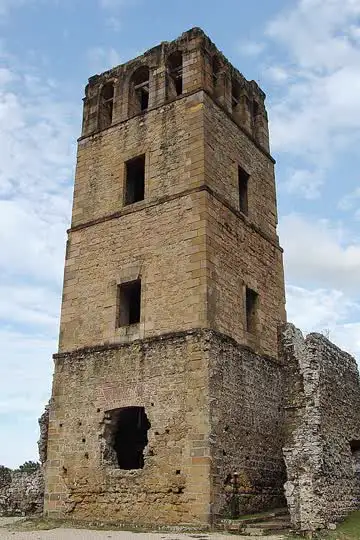
Panamá Viejo. (1914 vs 1519) Panamá Viejo →
Nearby on the globe

Sources
Updated: 2026-10-14