
Asiatic lion
아시아사자
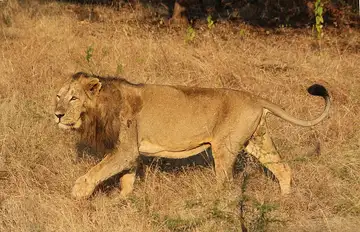
The only wild population lives in the Gir Forest of Gujarat, India. Its mane is sparser than an African lion's, so the ears show, and it has a long fold of skin along the belly. Numbers have recovered to over 600.
See it on the 3D globe →At a glance
- Class
- Mammals
- Lives in
- Gir National Park, Gujarat, India
- Diet
- Meat eater (carnivore)
- Weight
- about 150 kg
- Length
- about 2.7 m
- Top speed
- about 80 km/h
- Lifespan
- up to about 18 years
- Conservation status
- Endangered (IUCN EN)
- Habitat
- forests, grasslands
Quick answers
Where does the Asiatic lion live?
It lives in forests, grasslands. On the globe you can find it near Gir National Park, Gujarat, India.
How big is the Asiatic lion?
It grows to about 2.7 m and 150 kg.
What does the Asiatic lion eat?
Its diet: meat eater (carnivore).
How fast is the Asiatic lion?
It can reach about 80 km/h.
How long does the Asiatic lion live?
It can live up to about 18 years.
Is the Asiatic lion endangered?
It is listed as Endangered (IUCN EN).
The Asiatic lion lives in the wild in only one place in the world: the state of Gujarat in western India, in and around Gir National Park. It is a subspecies of lion and is closely related to the lions of North and West Africa. It is classed as Endangered, listed on CITES Appendix I and legally protected in India.
Adult males reach about 120 cm at the shoulder and weigh around 160 kg. They have sandy to ruddy-tawny fur and a shorter, sparser mane than African lions, so their ears show. Both sexes have a long fold of skin along the belly and a larger tuft at the tail tip.
From many countries to one forest
Until the 19th century Asiatic lions ranged from Saudi Arabia, eastern Turkey, Iran and Mesopotamia through southern Pakistan to central India. Since the turn of the 20th century their range has shrunk to Gir National Park and the land around it. The first scientific description, in 1826, was based on a skin from Persia. In 2017 many scientists began treating it as the same subspecies as the Barbary lion of North Africa, though some still keep the name persica.
A comeback, with new challenges
Only 411 lions were counted in 2010. The number then rose to 523 in 2015, 650 in 2017 and 674 in 2023, and an estimate for 2025 was 891. About a third now live outside the protected area, and conflict between local residents and lions has grown.
Lion life in Gir
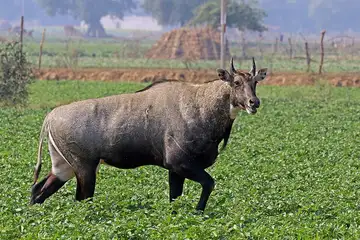
Male Asiatic lions are often solitary or form small coalitions of up to three, while females live in larger prides with the cubs. The sexes usually only meet briefly to mate. In Gir the lions are mostly active at night and defend territories. They prefer thick plants or shaded river areas in dry periods. They hunt large animals such as chital, sambar and nilgai, as well as livestock, and may scavenge or catch wild boar and mugger crocodiles near water.
Fun facts
- The only wild lions outside Africa live in and around Gir Forest in Gujarat, India.
- The only wild lions outside Africa live in Gujarat.
- A long fold of skin runs along its belly.
- Numbers rose from 411 in 2010 to 674 in 2023.
- Its mane is short, so its ears show.
On the globe
The model shows a lion with a short mane, as the card describes. Compare it to an African lion: you can see the ears.
Quiz time
Which is heavier: Asiatic lion or Indian giant squirrel?
Show the answer
Asiatic lion. (150 kg vs 2 kg) Indian giant squirrel →
More like this


Sources
Updated: 2026-10-14